As of this week, my miscarriage memoir, Footprints on My Heart, has finally been published and is now available in eBook format via Kindle and Lulu, Inc. (epub format compatible with Nook and iBooks). There are a few formatting errors and some other general problems (like with the sample/preview–it is totally wonky–and with the lettering on the cover), but guess what, it is DONE, it available, and it is out there. I’m really, really excited about it and I feel this huge sense of relief. I still want to write my Empowered Miscarriage book someday, but for now, this memoir is what I had in me and it will have to do for the time being. I realized after Alaina was born and was, in a sense, the happy “ending” to my Noah story, that in writing my miscarriage blog I had actually ended up writing most of a book. So, the bulk of the book is drawn from my miscarriage blog and from this blog as well (for the pregnancy after loss content). I also included an appendix of resource information/additional thoughts that is fresh.
I’ve felt haunted by the desire to publish this for the entire last year. It took a surprising amount of work, as well as emotional energy, to prepare for publication, even though I actually did most of the actual writing via blog in 2010. Now that it is ready, I just feel lighter somehow and have this really potent sense of relief and ease, as if this was my final task. My final act of tribute. My remaining “to do” in the grief process.
If anyone really, really, really wants it and cannot afford the $3.99 for which I priced it, I do have it available as a pdf file, a mobi file, and an epub file and I will be happy to email it to you in one of those formats.
This is perhaps the most long-overdue post in the history of my blog. Several years ago, The Feminist Breeder wrote a post in which she answered the question, “how do I do it?” I’ve lost the link for her original post, but the gist of her answer was, not alone. She also asked readers to consider who makes up their parenting tribe—who helps them hold it all together. So, I immediately knew that I needed to write about my parents. My original tribe of birth as well as a very significant part of my present-day tribe. Maybe I haven’t written it because I don’t like to feel dependent on other people. I like to feel like I can do everything on my own and that I don’t ever need help. That isn’t true, obviously. (It also isn’t healthy.) So, one of the ways in which I get it all done (which, of course, is actually another post, because I NEVER actually “get it all done”!) is because of my wonderful, amazing, helpful, altogether incredible mom and dad.
I feel in a somewhat unusual situation in that I’m a “second generation” attachment parent. My mom was a homebirthing, breastfeeding, co-sleeping, babywearing, and homeschooling mother before there was even really a name for many of the concepts of gentle parenting, let alone an overarching parenting “philosophy” or, dare I say, dogma surrounding the ideas. (In some ways, I feel like that has added a complication to my own parenting journey—while many parents joyfully discover attachment parenting and then grow into it with the thrill of having found the right fit for their families, I chose attachment parenting before ever having children of my own and thus instead of growing into it, sometimes had to fall from the pedestal of imagined ideals or the pre-conceived ideas I had about what a great, attached mother I was going to be. Again, a subject for another post!)
Anyway, my mom’s own parenting past means I’ve never once had to deal with any kinds of comments questioning my own parenting—she would never dream of asking why I have homebirths or homeschool or when my baby is going to wean. Big grandparenting score right out of the gate! 🙂 Also, they live one mile away. That means my kids get to go visit their grandparents almost every day and I get two hours on my own to do all of my own work. Go ahead and swoon with envy. It is okay. If I didn’t have these two hours (sometimes closer to three), I don’t know how I would do it. I work in my online classes, I grade papers, I write blog posts, I write articles, I work on books, I write assignments in my own doctoral classes. I feel happy and “productive” when the kids come back home and they’re happy too. My parents also will babysit at other times if I need them (for example, having an LLL meeting or a birth class in town). My kids adore them. I don’t know what they would do without them either. It makes me so full of joy to know that my kids have other adults in their lives who love them almost as much as I love them (maybe the same—my dad told me recently that he had no idea he would love his grandkids as much as he loves his own kids).
My dad and my boys
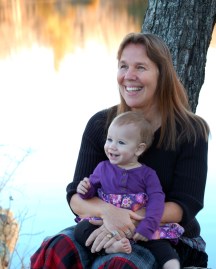
My mom and my girl
Anyway, here’s to my tribe! I love you. I need you. And, I thank you.
In the Winter 2012 issue of The Journal of Perinatal Education I read several interesting tidbits related to women’s experiences of medication during labor, expectations for birth, and thoughts on risk and choice. In an article by Hidaka and Callister titled, “Giving Birth with Epidural Analgesia: The Experience of First-Time Mothers,” I was struck by one mother’s explanation of why she “chose” an epidural: “‘I was nervous about lying down and being confined to the bed again.'” As the researchers explain, “She wanted to stand or sit to cope with labor pain; however, many times she had to lie down for monitoring, and that position made her pain worse, so she was inclined to opt for an epidural” (p. 29).
Some questions immediately arise here. Did this mother actually want an epidural? Do women really need to lie down to be monitored? Was normal labor unbearable without medication? Did she make a free choice? The answer to all is, no. In this case and in so many others around the nation every day, the physiologically normal and fully appropriate need for freedom of movement during labor ran smack into the hospital’s expectation of stillness. And, medication was a consequence of that stillness, not an inability to cope with normal labor–it was an inability to cope with enforced passivity that was directly counter to the natural urges of her birthing body. Where is the “opting” here? When birthing women are literally backed into corners, no wonder epidural analgesia becomes the nationally popular “choice.”
Risk and birth
In another article titled “Risk, Safety, and Choice in Childbirth,” Judith Lothian explores our risk-driven obstetrical model, drawing on material from Raymond De Vries who, “describes that the common strategy of professional groups gaining control is to create risk or exaggerate risk. One ways groups gain power is by reducing risk and uncertainty. Where there is limited risk, it can be ‘created’ by redefining ordinary life events as risky and emphasizing whatever risk exists. The medical model encourages women to see birth as inherently risky for mother and baby…The obstetrician is then in the powerful position of reducing the risk and uncertainty. During pregnancy, women are advised and cautioned about every conceivable, however small, risk; but interestingly, when it comes time for the birth there is little, if any, discussion about the risks of routine interventions, such as continuous electronic fetal monitoring, elective induction, and epidurals…” (p. 45-46).
What are the implications for childbirth educators and doulas? We need to be cautious of perpetuating a medically oriented model that implies that women are responsible for minimizing all possible risks during pregnancy and yet then accepting a climate for giving birth that actually increases risks for both mother and baby. Lothian notes that educators must make it clear “that the current maternity care system increases risk and makes birth less safe for mothers and babies. Women need to know the care practices that make birth safer for mothers and babies and the practices that do not.” She goes on to address a key point, stating that “Childbirth educators need to take a strong stand in support of changingthe system to increase safety for mothers and babies…safety is not about frantically trying to minimize small or exaggerated risks during pregnancy and then giving birth in hospitals that protect obstetricians’ interests while increasing risk for mothers and babies” (p. 47). [emphasis mine]
Storytelling and birth
In a later article by Barbara Hotelling about styles of teaching about medications in birthing classes, she references Lothian who suggests, “childbirth educators replace in-depth discussions of stages and phases of labor, medical interventions, hospital policies, and complications…’Let go of trying to fit everything in. Women don’t need to know everything about labor and birth.'” What to do instead? She suggests replacing traditional forms of education with storytelling and other strategies that recall how women through the ages have traditionally come to know and understand birth, stating that, “‘Storytelling is a powerful way to convey basic information about physiology, coping strategies, and confidence'” (p. 51). I’ve written before that what women need isn’t actually just more information and to get educated and these experienced educators agree, “Now there are many books, videos, YouTube videos, and magazines that give expectant parents the information. In their classes, childbirth educators can add storytelling from friends and family about their experiences with pain medication during labor and birth, allowing educators and their class participants to learn from the wise women who went before them” (p. 51).
I’ve long sought ways to help parents cultivate their inner knowing and body wisdom and to focus classes around the development and enhancement of personal resources, rather than on simple information sharing. I would like to re-vision my own approach to childbirth education into a cooperative, woman-to-woman, birth circle type of environment. Michel Odent describes this in his book Birth and Breastfeeding as “new style” childbirth education: “for the most part, these are mothers who have no special qualification but, having given birth to their own children, feel the need to help other women who could benefit from their personal experience. They organize meetings, often at their own homes. They do not usually encumber themselves with any particular theoretical basis for their teaching, but may find it useful to give this or that school of thought as a reference. Their aim could most accurately be described as being to provide information and education, rather than specific preparation.”
Addressing the subject of pain…
Returning to the first article quoted above, in their discussion, Hidaka and Callister state, “Our findings confirm those of a recent systematic review of women’s expectations and experience of pain relief in labor. Across studies, women underestimated the pain of childbirth, we’re not prepared for the intensity of the experience, and often had unrealistic expectations” (p. 29). I’d like to address the other points in a future post, because I think they are very significant, but for now they offer several good tips for childbirth educators to address the topic of labor pain during birth classes:
Teach that some pain/sensation has a purpose to alert the laboring woman to the need for movement, doing something different to encourage rotation and descent, or to push
Teach that the sense of empowerment for accomplished tasks and goals cannot be replaced only with pain relief
Teach that perception of pain is different for every woman
teach that every situation is unique so that no single pain management strategy works
Teach that the word labor means “hard work” and not “big pain”
teach that labor contractions intensify until about 5 cm, and that other sensations (e.g. “downward pressure”) may seem scary or painful
Teach that the sensations of labor are not all unique to labor (e.g. bad menstrual cramps, back pain, nausea, pressure)–they have lived through these experiences before
“Midwives speak the same language, regardless of politics: women come first.”
–Palestinian Midwife (quoted by COHI)
I have found that it is easy to get so caught up in local or national birth activism that I forget to even consider the birth climate and concerns of other regions of the planet.
Why should we care?
Most simply, because lack of access to good maternity care is a huge issue around the world, with a profound impact on women, mothers, babies, families, and communities. Some selected facts (via COHI):
Nearly 400,000 women will die each year from pregnancy-related causes and 99% of these deaths will occur in developing countries, according to the World Health Organization (WHO).
For each woman who dies, 20 others will suffer from serious complications.
The five leading causes of pregnancy-related deaths are bleeding, infection, high blood pressure, prolonged labor and abortion complications. In poor countries, a mother’s death leaves her newborn at risk of dying as well.
The majority of pregnant women die because of the three major delays that have been identified as:
Delay in the woman, her family or community members’ recognition of a life-threatening problem and the decision to seek care.
Delay in a woman’s access to transportation to a health facility, especially at night.
Delay in the woman’s access to qualified health workers with access to essential equipment and supplies.
Women and children constitute as 80% of the world’s refugees and displaced people.
In areas where conflict and turmoil is rampant, nurses and midwives are the primary reproductive health care providers. They provide up to 80% of direct patient care around the world every day.
Recently, I was asked to participate in a fundraising effort to get midwife Karen Feltham to Haiti. Spearheaded by BirthSwell in connection with the amazing organization Circle of Health International, the fundraiser already reached its goal before my post was scheduled to run! That’s what I call some effective grassroots organizing! The fundraiser is still open for contributions however, and now any additional funds raised will be used to sponsor other midwifery volunteers to disaster areas in need of support. COHI knows that the majority of pregnant and birthing women worldwide are cared for and by midwives and believes that, “midwives should be involved in the effort to foster change by bringing about increased access to services, support and care for women everywhere.”
Get connected! Visit the fundraiser’s indiegogo site and be sure to share it on Twitter, Facebook, and your listserves. (The indiegogo site has great tools and widgets for sharing – try them out!)
Tweet about the fundraiser using hashtag #getkarenthere
I have a personal tradition of getting a new We’Moon datebook every year and I was pleased to notice that part of the proceeds from the 2012 edition goes to support Circle of Health International also. COHI focuses on: “Working with women and their communities in times of crisis and disaster to ensure access to quality reproductive, maternal, and newborn care.”
COHI lists the following as their core values:
Grassroots social change by creating local, community driven collaborations in order to foster social change from the top down, as well as from the bottom up.
Nonviolence in terms of active resistance requiring one to act when faced with injustice. Leadership at COHI is supporting women to lead, to be forces for change in communities healing from conflict and disaster, and in organizational movements to support women in leadership roles.
Volunteerism through the giving of time, money, knowledge, and general support with the goal of easing the suffering of others.
Activism in individual responses to inequity and injustice.
Supporting women and their families in their right to make their own decisions in all aspects of birth spacing and family size, while protecting access to the resources required to honor their choices.
I value all of the above as well, which is why I’m pleased to be involved with the effort to Get Karen There!
At Alaina’s birth time today at 11:15 a.m. I walked our little front yard labyrinth with her while listening to our special song. We got to the middle (and Lann took a picture) and I said, “my baby is here! She’s here! She’s one now!” I also repeated my immediate post-birth comments. Then, we walked out again and I held her up to the sky and she laughed. Then, she directed me with pointing and leaning and uh’ing over to Noah’s tree and put her hand on his plaque. (Lest this sound too shockingly cosmic, I still go out to the tree periodically and put my hand on it, so she knows that is something we do.) It was a nice moment.
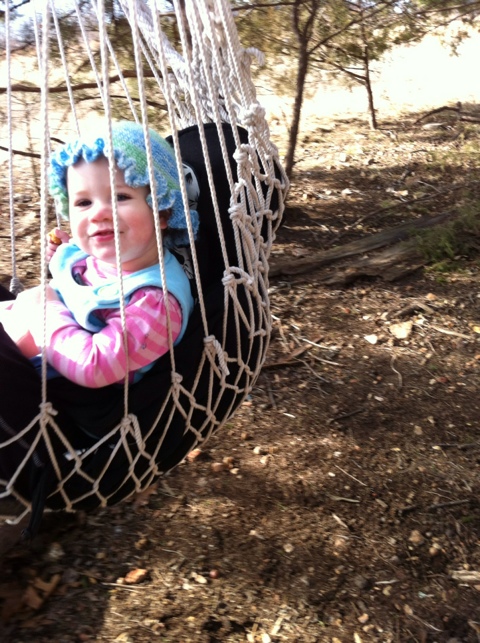
Then, she went for some rides on the hammock swing with Lann!
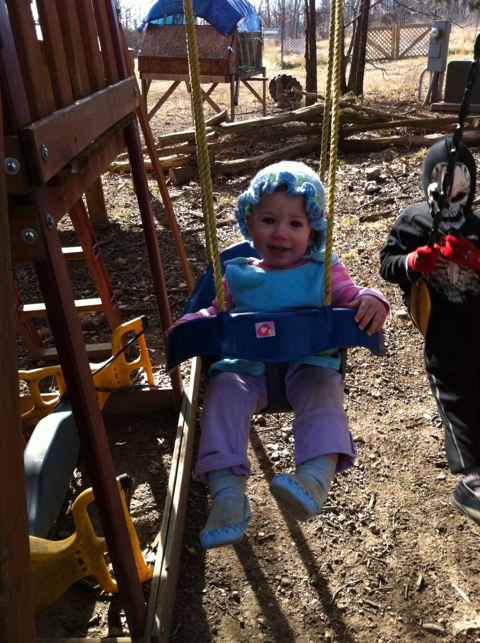
Then, she decided she wanted to swing in the blue swing too!
Looks like a big toddler girl in this picture!
After nap time, it was time for a visit from Baba and Tom and time for some presents! She liked hugging her new Raggedy Ann from aunt Nancy:
“Our lives can sometimes feel like passages through harsh landscapes that shake us to our core. Yet these difficult passages bring us to our most profound transformations. In the midst of heartache and greatest need, we find that grace descends. And at the end of it all, we often discover that we have become someone new, stronger and more alive…the tender moments of heartache, illness and inner strangeness that we all experience at times. They illuminate the path of healing–when awe, self-love and grace touch our very being, leave us breathless, make us whole.” –Carolyn Brigit Flynn (Sisters Singing)
“I have hands big enough to save the world, and small enough to rock a child to sleep.” –Zelda Brown
(I wrote this second quote on the first page of the baby record journal I kept of her first year)
I’ve spent multiple days trying to gather some minutes together to work on a happy birthday reflective post. While sometimes I hesitate to write posts that are “too personal”— thinking things like “who really cares anyway?” and “why do I feel so compelled to share my life online?”—I’m so glad I’ve written regular updates about this first year of life with my baby girl. Even if no one else does really care to read about it–I care and I’m glad to have a “permanent record” of her infancy in this manner. The main thought that comes to mind when I reflect on her first year of life is, but it has all been SO REAL. I’ve expressed that same sentiment previously and maybe it doesn’t make sense to anyone else, but that it is the feeling I return to. This life, this past year has just been so real. By that I mean so vivid, so present, so conscious, so physical, so embodied, so here and now, that I can hardly believe it has now passed. I am likely to never have another crawling, drooly, grabbing, fuzzy headed baby of my own in my house again–and, even if I do. It won’t be this baby. This little walking, minimally talking, amazed, and amazing, energetic and enthusiastic, baby girl. I paid attention, I told about it, I remembered to look, listen, feel, and to embed precious moments and memories as deeply into my soul as I possibly could. I’ve struggled with life balance, come in and out of various states of equilibrium/disequilibrium. I’ve laughed, I’ve cried, I’ve marveled, and I’ve been ragged. And, we’re here. We did it. We’ve taken our first trip around the sun together. After having walked the labyrinth of pregnancy after loss in 2010, in January of 2011 I greeted the labyrinth of birth with wild joy and sweet relief, and now we’ve been on our “return” journey–step by step and in my arms, Alaina and I have now completed our postpartum return labyrinth together (though, I think it might actually last three years…).
Just this time last year I was wondering aloud if the full moon would bring me my baby and sure enough, my labor began that night and she was born at 11:15 a.m. on January 19 (full birth story in case anyone missed it). For me, the first birthday is really as much about memories for the mom as it is about the baby! Some favorite early pictures:
Moments after birth. I tried editing the contrast to make the picture actually visible for this post. I'd just caught her myself. The tenderness and majesty of this moment makes me cry!
On my due date demonstrating how she could still fit!
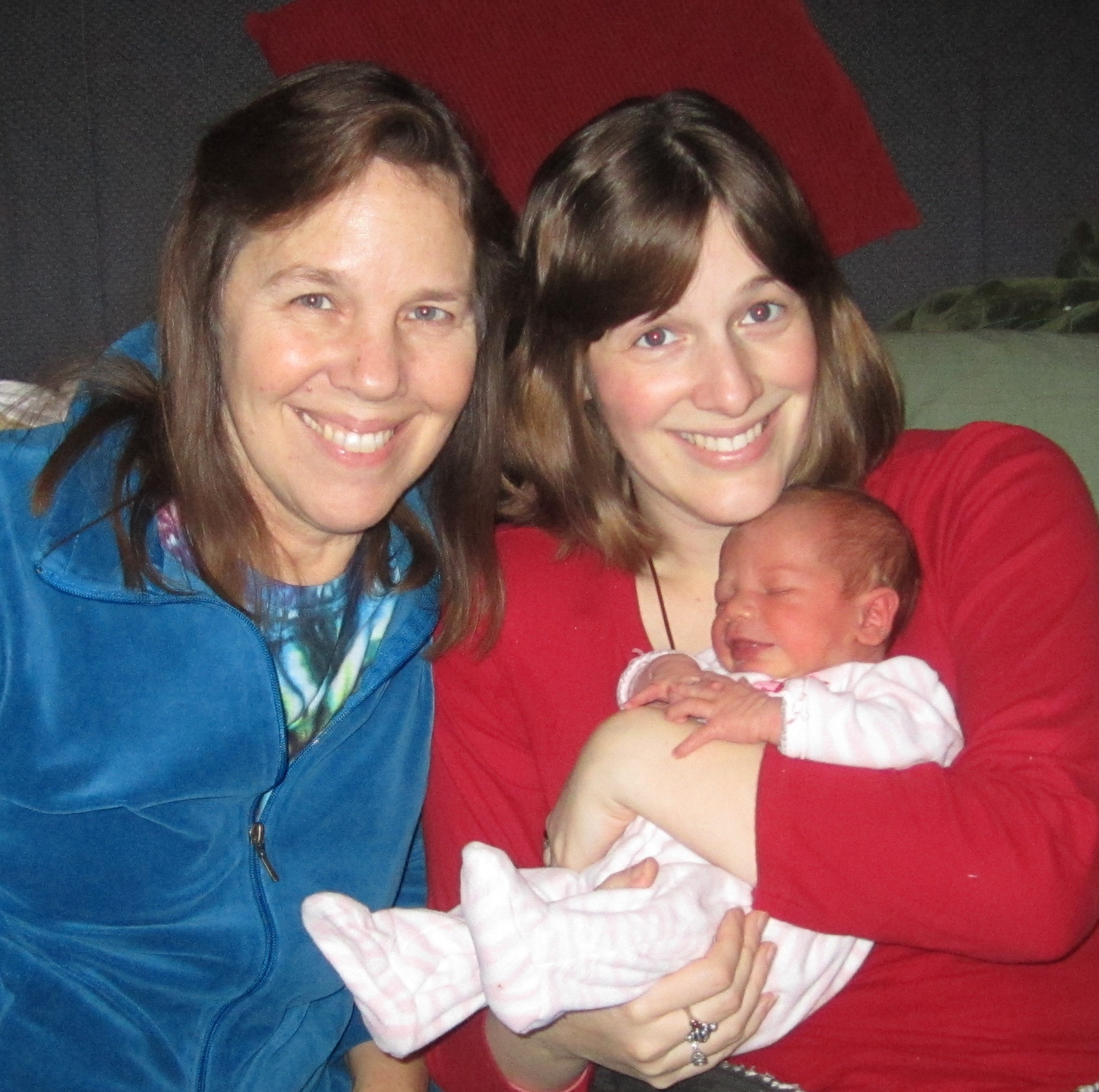
First three generations picture. Look how excited I am!
Here is a video we took for family when she was a couple of days old. I love my voice in this video—in you can hear how marvelous I think she is—and how my fingers tenderly touch and explore her as I talk.
And now, fast forward a year and we’ve got some early steps:
And, then more real walking at Baba’s house:
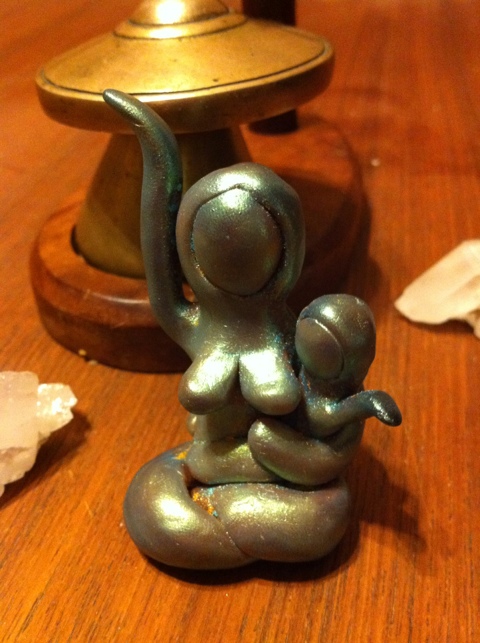
And, of course I had to make some more polymer clay birth art goddesses to commemorate the big birthday! This mama has her baby on her hip, which is still Alaina’s most preferred mode of transport:
This baby is stepping out a little, but still intimately connected with mama. Double spiral symbolizes our interlocking labyrinth path, forever joined, but now able to separate too:
It is a total coincidence that I ended up making 12 figures--I didn't plan it that way and I didn't make one during every month or anything (though, that would have been cool. I wish I'd done that!)
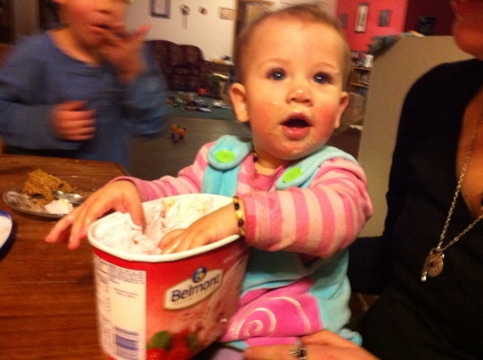
Okay, time for twelve month update too! After many months of posting about the best baby ever, I am here to report that Miss A has taken a turn for the wild. If anyone has been secretly annoyed by my “perfect baby” and wishing to crow with delight, now is your chance! Oh my goodness. I don’t even know where to start. How about with this picture?!
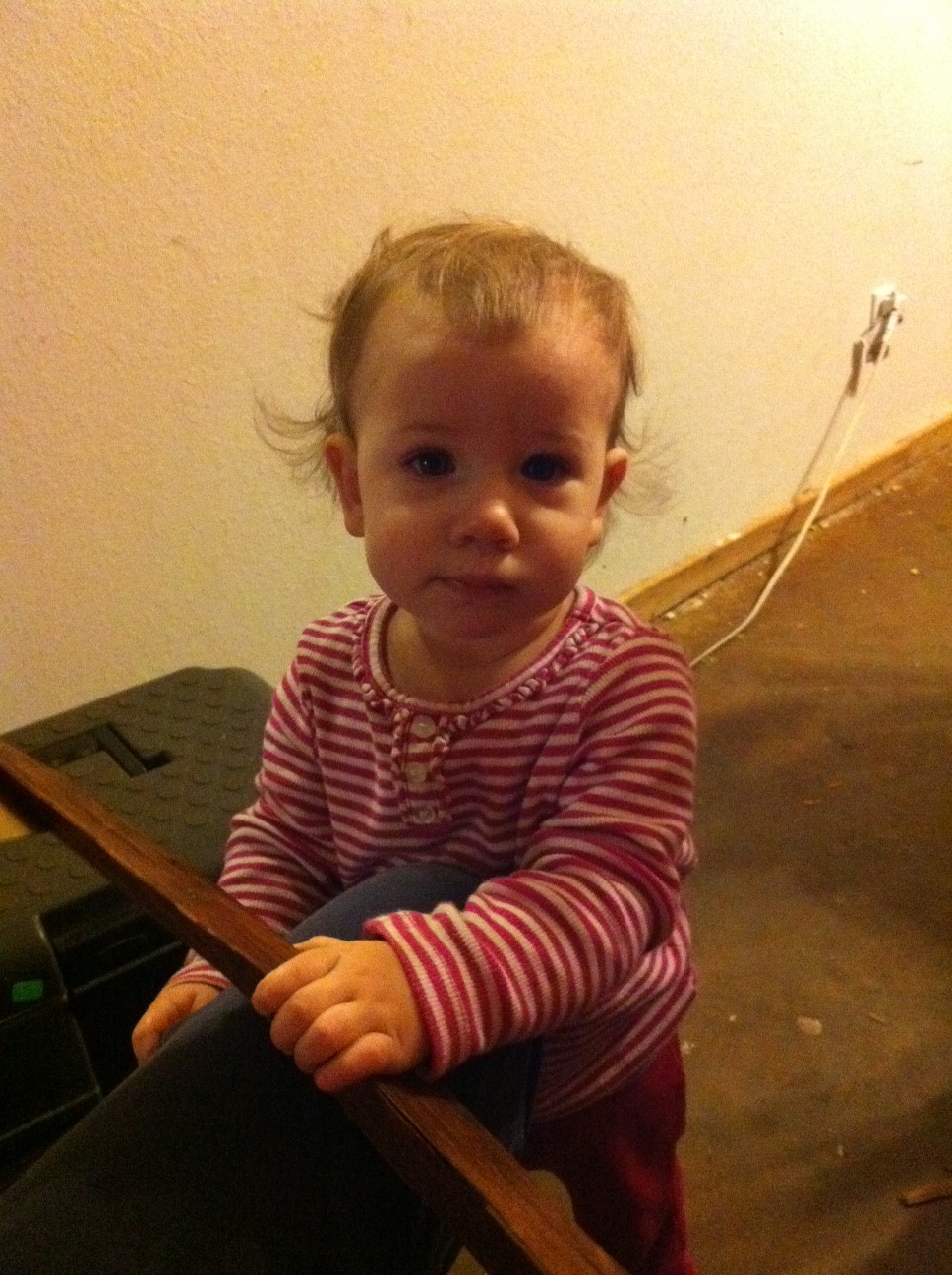
Yes. That would be some of the wood from the back of the kitchen chair. Peeled off by a baby. And, the set of her mouth is because she’s also eating it. The slightly wild, manic-clown-type hair also sums it up. This girl is on the move. She’s into everything. Wants it all. Is constantly making one of two sounds to indicate her many wants–a cute little question-intonation “huh?” sound, or a grating, “aaaaaaaah!” sound that makes you want to yell, JUST STOP. She is incredibly grabby and shockingly destructive. Nurses very roughly (this isn’t new) and uses my skin as a handhold or toehold often enough that my upper arms are covered with little fingertip sized bruises. My thighs near my knees are also covered with small toe-sized bruises from being kick-walked on during lying down nursing. BUT, lying down nursing is pretty rare, since she pretty much will only nurse while standing up in the Ergo. And, that is how she goes down for nap every day (down to only one nap per day now). Nurses lying down during night. Potty strike is finally pretty over, but sitting down to pee just takes too much time. I still mean to write an EC post, a common refrain in which will be, and then I got peed on.
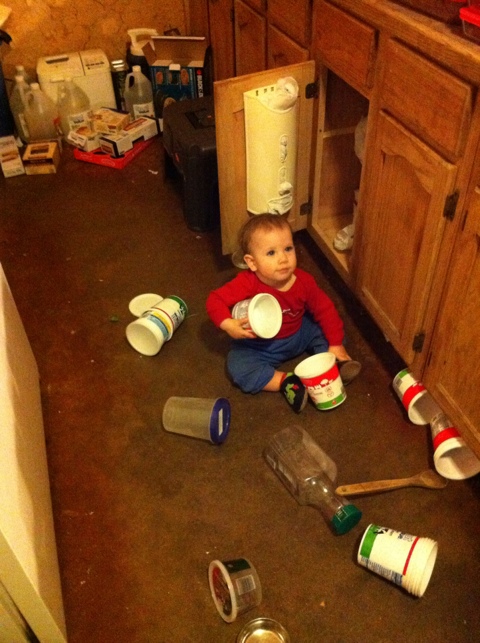
She loves to get into cabinets and also to take lids off of stuff.
Again with that hair and face of mischief-making!
What a sweet face too!
She weighs about 24 pounds and I need to measure her height. Has 8 teeth. Thought recent personality shift might have to do with more teeth or the developmental milestone of walking or the fact that she had a yucky cold, but it seems to be her new way of being. Markedly less verbal than she was last month—I know that is supposed to be a worrisome sign, but I think in this case it is related to the brain being able to concentrate on one significant developmental leap at a time. Right now, walking is primary and language has taken a backseat. I remember the boys doing this too. She often seems disgruntled lately–like whatever we are doing, she wants something different. Wants to get on top of table, counters, and stove. LOVES to be outside and asks all day long to go out (even when it is 10 degrees–then she complains and wants us to make it magically warmer). Has thrown several fits about this (and other things too). Is constantly aggravating the boys by getting into their games and wrecking their stuff.
She is very tough and brave and surprises me still with her unflappability in the face of change or drama. A couple of days ago I accidentally scraped her face with a tree branch when going out to open the chickens and didn’t notice what had happened. She made a small sound and had a turned down lip and I said, “oh, what’s wrong?” Upon getting inside I then noticed the two inch long bloody scratch down the side of her head and face!
Spends a lot of time in-arms still. Really enjoys mama and wishes to be mainly with me, though she does like visiting my parents and playing with daddy too. So far she still prefers to crawl to get things, but on two occasions this week, she has chosen to walk toward something rather than crawling. Crawling will soon be history! I swear, sometimes it feels like my heart is breaking when I think about the little baby of one year ago and how she is growing so fast, but at the same time of course I’m just so happy to see her developing and changing and being amazing. It has been a beautiful year.
Passionate Journey: My Unexpected Life
By Marian Leonard Tompson, Melissa Clark Vickers
Paperback, 176 pages
Published June 19th 2011 by Hale Publishing
Reviewed by Molly Remer
Passionate Journey by La Leche League International co-founder Marian Tompson is the story of a young mother who became known worldwide and was even referred to as “The High Priestess of Breastfeeding Mothers.” Written in a light and casual tone, many of Marian’s stories are familiar if you’ve read The LLL Love Story, Seven Voices, One Dream, or The Revolutionaries Wore Pearls. While theoretically a personal memoir from one Founder, rather than a history of LLL, because Marian’s personal history is intimately entwined with the organization’s history, the end result is very similar to existing books about LLLI.
The writing style is simplistic and ironically often fairly dispassionate in tone, perhaps due to having a co-writer for a first person memoir. Chronology jumps are occasionally confusing.
Several anecdotes made me laugh aloud and read them to my husband–such as a medical intern rushing to the physician after witnessing one of Marian’s three natural hospital births and exclaiming, “oh, doctor! How did you do it?” As a birth activist and feminist, I’m fascinated by the radical courage required at the time to support and promote home birth and breastfeeding. While LLLI has always been a “single purpose” organization, it has also always recognized something that seems to escape the notice of many professionals and consumers: that normal, undisturbed breastfeeding begins with normal, undisturbed birth. Tompson notes: “…having a baby at home is at least as safe as a hospital birth, and in most situations home birth is safer. New sciences and new research are helping us understand why giving birth in your own bed, surrounded by people who care for you, where you feel supported and can celebrate the birth, rather than just endure it, changes both the experience and the outcome.” Tompson had her first home birth in 1955 and went on to have three more children at home. Her daughters carried on her legacy, one of them returning to the family home to give birth to her own daughter. The Tompson family home was also the site of multiple family weddings as well as the almost unheard of home funeral for husband Tom in 1981. In a nice touch, reflective paragraphs from each of Marian’s seven children close the book.
An inspirational story of the twists and turns of an ordinary life with an extraordinary global impact, Passionate Journey reminded me of the deep importance and transformative influence of providing support and encouragement to women who wish to breastfeed.
One of the things I enjoy about the book Mother’s Intention: How Belief Shapes Birth, by Kim Wildner is how straightforward, matter-of-fact and unapologetic the author is when exploring concepts, realities, facts, and beliefs about birth. In a section addressing perceived risk and birth, she shares an effective analogy about health clubs and heart disease paralleling the accident-waiting-to-happen mentality of modern obstetrics:
A multitude of things CAN go wrong with any system in the body, but seldom DO. Take the heart/circulatory system for example. Heart disease is the leading cause of death in the US. 873 per 100,000 die of heart disease (CDC). (Remember, natural birth is between 6 and 14 per 100,000 in the US, depending on the population.) Some have arteries on the verge of clogging. Some have heart defects they are unaware of. Some have damage they don’t know about. Something could go wrong at any minute and immediately available surgery can undoubtedly save lives.
Using the logic of obstetrics, all health clubs should be in hospitals and all fitness trainers should be cardiac surgeons. Any independent health club with ‘lay’ trainers would be ‘practicing medicine without a license,’ subject to prosecution. It’s for your own good.
In fact, in order to know if a problem is developing, close monitoring and ‘management’ is required. We will need to place straps on the muscles to measure the intensity of the workout. of course, it will be restrictive, but we need to know how hard the muscles are working to know if the heart can take it. We’ll need to monitor heart rate, blood pressure, fluid output. We’ll need to give an IV because with sweat excreted, you could dehydrate, and of course, we simply can’t take the risk of letting you drink anything lest you need emergency surgery….
Later in the book, the author employs another helpful analogy, again using cardiology as an example to make a point about inappropriately applied maternity care interventions:
What if…
You went to the doctor complaining of chest pain…not bad pain, but bothersome. To rule out a heart problem, the caregiver listens to your heart. He scowls, then excuses himself to make a phone call. He comes back in and tells you that you need to be admitted to the hospital for a test that requires the use of a drug. The drug has a low risk of serious complications, which is why you must be in the hospital, but he feels confident in taking that risk.
You go, and within minutes of having the drug administered, you have a heart attack. You are rushed into emergency open-heart surgery. Complications arise, but they are dealt with. You nearly bleed to death, but with a blood replacement you recover.
The repair doesn’t go well, which may mean you will need further surgery later…maybe even a heart transplant. You definitely will need to change your previously active lifestyle.
Later, you discover the call your care provider places wasn’t to a specialist, but an HMO lawyer who advised him not to let you walk out the door, just in case the routine examination missed a serious problem. You also learn there were less dangerous ways to determine if there could be a minor problem.
It turns out, you really did have a minor case of heartburn. All you have been through was avoidable, but “As long as everyone’s ok now…that’s all that matters”…right?
A comment like that, to a mother who has suffered unnecessarily, when she would have–or could have had–the result of a live, healthy baby without such sacrifice, disregards her feelings of loss.
Parents should be expecting more!
In Open Season, by Nancy Wainer, she refers to OBGYN care is referred to as “gynogadgetry.”
In The Doula Guide to Birth, I marked another quote that feels very relevant to the others above: [a March 2006 study in the American Journal of Obstetrics & Gynecology] “reviewed all fifty-five of ACOG’s current practice bulletins, calling these articles ‘perhaps the most influential publications for clinicians involved with obstetric and gynecological care.’ The study concluded that ‘among the 438 recommendations made by ACOG, less than one third [23 percent] are based on good and consistent scientific evidence.'”
We took lots of pictures to try to chronicle the sweet, perfect texture of our lives with her in it. I continued to make lots of birth art. I also published several of my originally-in-print articles in blog post format:
I made slight revisions to the two posts that consistently get a high number of hits each week and didn’t make any changes to the post about good foods to eat during labor that continues to top my blog’s personal charts:
In addition to some of my articles-turned-posts, several new posts that I wrote in 2011 received a lot of attention, thanks to Facebook shares, and a guest post about alcohol and breastfeeding was enormously popular for the two weeks between Christmas and New Year’s Day.
My final post of 2011 also received quite a few hits via Facebook in the last few days, but has not received any comments on the post itself (only FB!):
I also started to write a little about homeschooling.
I feel like I spent a lot of 2011 in a writer’s prayer—trying to tell about it—trying to preserve in time these high, sweet, clear, delicious, beautiful notes that composed my year with my new baby.
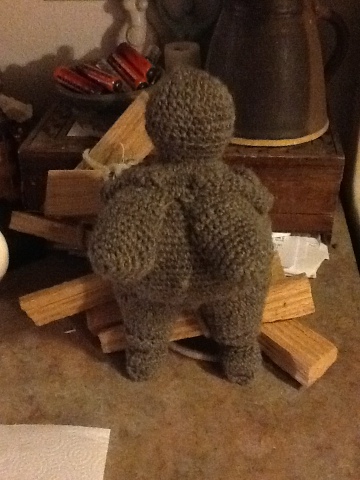
I made sweeping promises about all of the fabulous posts I was going to write over my break and apparently I only had ONE in me. I find a good blog post really takes a minimum of three hours to write and that is after having the idea, taking notes, collecting links, etc. Someday I envision cleaning out my intense drafts folder, but that day has not yet come. So, for now, I want to share a picture of the delightful Goddess of Willendorf my talented mother crocheted for me for Christmas this year:
Isn’t she a beaut? Who is the real Yarn Goddess here? My mom! I am also enjoying some lovely new handknit socks in solid black at my request (so that I can wear them to teach in).
Speaking of teaching, the new session is about to begin! One of my classes got cancelled, which is really a great thing, because I only have one separation per week from Alaina now. I was really nervous about how all of us were going to manage two and I’m glad I don’t have to find out. I did get a second section of my online class, which I have been hoping for for about a year. So, I’m super excited about that! Let’s hope it scrapes up enough students at the last minute to actually run.
Also, went back via my BlogBooker (which I think I’m going to re-do shortly and make available for download for any die-hard “fans” out there), and want to share my post from this exact date last year. Seems so recent in many ways, but also like an eternity in others! I just said to Alaina today, “remember I used to be pregnant?!”
This is my first post constructed entirely on my new iPad–photo and all. 🙂
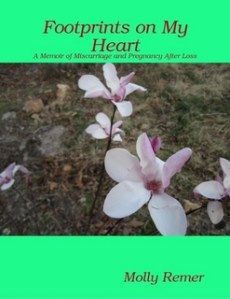 Kindle and Lulu, Inc. (epub format compatible with Nook and iBooks). There are a few formatting errors and some other general problems (like with the sample/preview–it is totally wonky–and with the lettering on the cover), but guess what, it is DONE, it available, and it is out there. I’m really, really excited about it and I feel this huge sense of relief. I still want to write my Empowered Miscarriage book someday, but for now, this memoir is what I had in me and it will have to do for the time being. I realized after Alaina was born and was, in a sense, the happy “ending” to my Noah story, that in writing my miscarriage blog I had actually ended up writing most of a book. So, the bulk of the book is drawn from my miscarriage blog and from this blog as well (for the pregnancy after loss content). I also included an appendix of resource information/additional thoughts that is fresh.

 “Midwives speak the same language, regardless of politics: women come first.”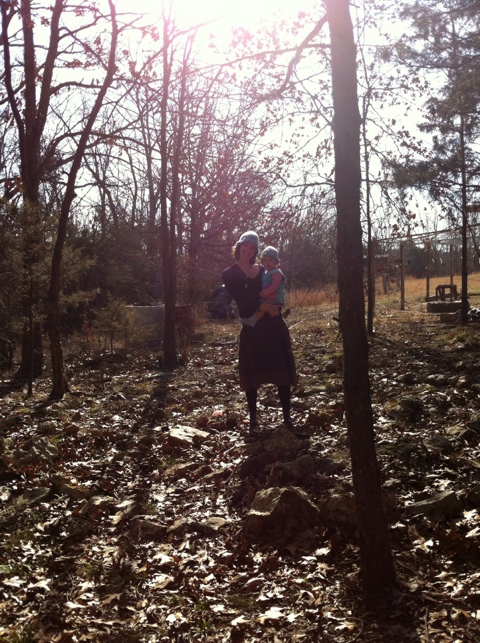





 !
!


 Talk Birth