Archives

Creative Ceremony Academy

May 2015 028The Creative Ceremony Academy is a community of members who celebrate lifecycle transitions and pivotal moments through art and ceremony and use artistic expression as our means of story-telling and experience-sharing. We create art and ceremony in order to “tell about it.”

Upcoming classes from the Creative Ceremony Academy branch of Brigid’s Grove:

Facebook Group!

If you want to make sure you see our posts regularly, to engage with the birth art community, and to ask questions or share ideas about seasonal rituals, mother blessings, women’s ceremonies, or life cycle ceremonies in a safe space, feel free to join our new Facebook community! You will also be the first to know about new classes, books, and projects and will get sneak peeks of new sculpture designs and special bonuses not available to the general public. It is here that we’ll also offer rock bottom deals on sculpture seconds! (i.e. we’ve got a bunch of our Squatter’s Rights figurines with flawed hands right now. I don’t want to list them all separately on etsy, so they’re going to be offered on our FB group for a bargain bin price!)

May 2015 109The_Red_Tent_Resourc_Cover_for_Kindle


Restoring Women to Ceremony: The Red Tent Resource Kit

 “… Every day, we witness the positive, transformative effects of, ‘restoring women to ceremony’…another reason it is vital that we continue our work…”

–D’vorah Grenn (Stepping into Ourselves, p. 56)

We’ve been hard at work over the last three months giving birth to a new project!

Introducing…The Red Tent Resource Kit

redtentkit

I actually ended up sort of accidentally writing a whole new book to go with this kit. It was originally going to be a collection of handouts as a pdf. However, as I put the handouts together, I realized I was actually writing a short book or manual instead. I also reflected on how I am tired of only getting pdf manuals and ebooks when I sign up for different programs, rather than an actual, printed book. One of my mottoes this year is to follow the inspiration, so I went with it, and at the end of last month our new books arrived and they’re beautiful and I’m so excited about them!

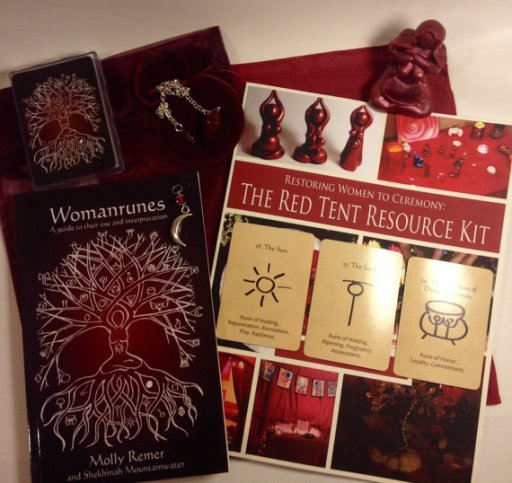
Our unique, signature Red Tent Kit includes ALL of the following resources:

  • Womanrunes Book and Card set: ideal for personal guidance and self-development, or for the inspiration and renewal corner at your Red Tent Circle.
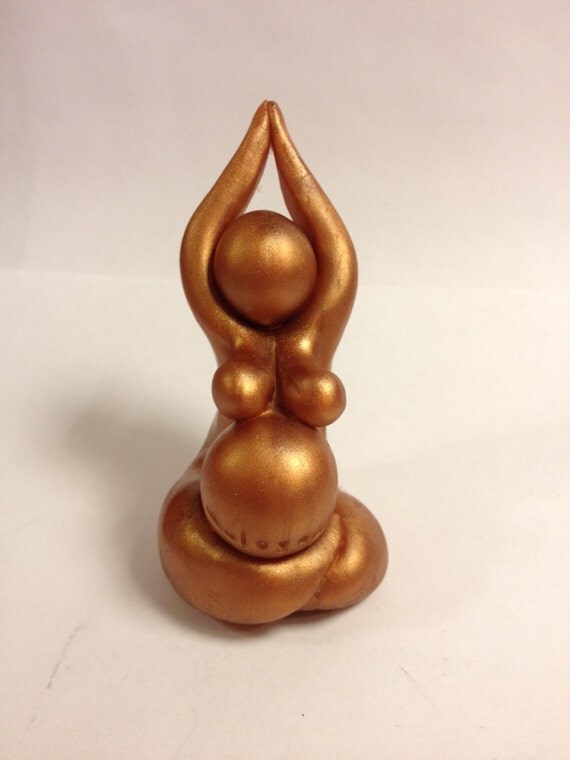
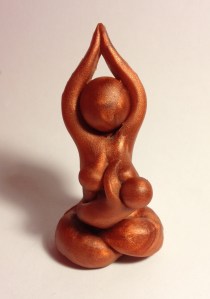
  • Red Tent Goddess Sculpture: symbolic of self-care and of both receiving and giving.
  • Carnelian Pendulum (kit exclusive!)
  • Brand new 58 page book: Restoring Women to Ceremony, The Red Tent Resource Kit, written exclusively for this kit. In this collection of essays and ritual resources, you will find a complete Red Tent “recipe,” circle leadership basics, moontime musings, and readings, quotes, and poems to help you facilitate a rich, inviting, welcoming, creative space for the women of your community.
  • Moontime pendant with silver-tone, solid crescent moon charm
  • Red altar cloth
  • Red organza bag to store your resources
  • Coupon for $100 off the companion Red Tent Initiation online training to be held in July-August
  • Extra surprise bonus goodies intuitively chosen for you!

The contents of this Kit are valued at $100 when sold separately!

When I was taking pictures for the Kit, I randomly drew three Womanrunes cards to include in the pictures. The ones I drew were absolutely perfect for sharing the message of what this collection has to offer to others and what we hope to create in restoring women to ceremony:

IMG_4889


April Newsletter

The April newsletter from Brigid’s Grove came out last week. If you missed it, you can view it here! We have launched some new cesarean mama goddess designs (see more about them in the newsletter). We’re also offering a new free birth education handout in the newsletter and a discount code for 15% in honor of Cesarean Awareness Month (use code: CAM15).

Cesarean birth VBAC goddess sculpture (birth art, c-section, doula, midwife, mother)Make sure you’ve entered your email address on the right hand side of the BG site to receive future newsletter and special offers and product announcements.

11150546_1614074768804739_5920468981887497904_nOur May newsletter will include free printable birth affirmation cards, a Mother’s Day special offer, new mama goddesses (one catching her baby and one by request with her hands on her belly instead of above her head), and will feature the launch of our new ceremony kits! We’re particularly excited about our Red Tent Resource Kit, for which we published a new book/manual. We are currently working on developing an online class to go with it too as well as a Womanrunes immersion e-course.

The_Red_Tent_Resourc_Cover_for_Kindle

Tuesday Tidbits: Cesarean Awareness Month

11148668_1614543705424512_3613965156253725168_nIt is Cesarean Awareness Month! We finished several new mama goddess designs this month and have a CAM-themed April newsletter ready to go out (subscriber freebie in this newsletter is a new birth education handout: “Can I really expect to have a great birth?” Sign up for the newsletter at Brigid’s Grove!)

Some Cesarean Awareness Month themed posts for this week. First, a meditation for before a cesarean:

You say you honor choices. 11108844_1614067252138824_1518757261202060615_n
Can you really honor mine?
I will always honor the process which
brought forth flesh of my flesh.
I honor your births too.
Can you ever honor my experience, or will I
forever be a part of your statistics on
the way things shouldn’t be?

via Birthrites: Meditation Before a Cesarean | Talk Birth.

And, some past thoughts on helping a woman give birth…what is the balance between birth interference and birth neglect?

There can be a specific element of “smugness” within the natural birth community that has been gnawing at me for quite some time. A self-satisfied assumption that if you make all the “right choices” everything will go the “right way” and women who have disappointing or traumatic births must have somehow contributed to those outcomes. For example, I’m just now reading a book about natural mothering in which the author states regarding birth: “Just remember that you will never be given more than you can handle.” Oh, really? Perhaps this is an excellent reminder for some women, and indeed, at its very core it is the truth—basically coming out alive from any situation technically means you “handled it,” I suppose. But, the implicit or felt meaning of a statement like this is: have the right attitude and be confident and everything will work out dandily. Subtext: if you don’t get what you want/don’t feel like you “handled it” the way you could or “should” have, it is your own damn fault. How does a phrase like that feel to a woman who has made all the “right choices” and tried valiantly to “handle” what was being thrown at her by a challenging birth and still ended up crushed and scarred? Yes, she’s still here. She “handled it.” But, remarks like that seem hopelessly naive and even insulting to a woman whose spirit, or heart, has been broken. By birth. Not by some evil, medical patriarchy holding her down, but by her own body and her own lived experience of trying to give birth vaginally to her child.

via Helping a Woman Give Birth? | Talk Birth.

An educational video and some cesarean infographics from Lamaze: Lamaze for Parents : Blogs : How to Avoid a Cesarean: Are You Asking the Right Questions?

And a VBAC Primer from Peggy O’Mara: VBAC Primer | Peggy O’Mara

Some thoughts on the flawed assumption of maternal-fetal conflict and how that impacts the climate of birth today:

I think it is fitting to remember that mother and baby dyads are NOT independent of each other. With a mamatoto—or, motherbaby—mother and baby are a single psychobiological organism whose needs are in harmony (what’s good for one is good for the other).

As Willa concluded in her CfM News article, “…we must reject the language that portrays a mother as hostile to her baby, just because she disagrees with her doctor.”

via Maternal-Fetal Conflict? | Talk Birth.

And some past thoughts on Birth Strength:

“Women are strong, strong, terribly strong. We don’t know how strong until we are pushing out our babies. We are too often treated like babies having babies when we should be in training, like acolytes, novices to high priestesshood, like serious applicants for the space program.” –Louise Erdrich, The Blue Jay’s Dance

via Birth Strength | Talk Birth.

(I would revise this slightly to say “until we have birthed our babies,” since strength is found in many different birth, postpartum, breastfeeding, and mothering experiences, not only in pushing out our babies. I still love the quote though!)

11150546_1614074768804739_5920468981887497904_n

What Should I Feed My Baby? Answers through the ages…

“My doctor said since my baby is four months old, I can start giving him solid foods.”

“My mother-in-law said that if I give my baby rice cereal at night, she will sleep better.”

“My friend says her six month old eats three jars of baby food a day, but mine doesn’t seem interested.”

“At the La Leche League meeting I went to, no one seemed interested in starting their babies on solids and one mom told me that babies don’t really need rice cereal.”

IMG_3314A lot of conflicting advice and opinions about babies and solid foods swirls around the internet and in the opinions of others around us. Why is there so much concern and conflict about what babies should eat and why? What should you feed your baby? Interestingly enough, the answer depends very much on your time and place in history, rather than on any hard and fast rules about what a baby actually needs! If you were a mother at the turn of the twentieth century, you would get a much different answer than a mother in the 1930’s!  Many contemporary people express a lot of concern about wanting their babies to try a variety of foods and sometimes a bit of a parental competition can emerge regarding whose baby has the most varied palate. However, if you were receiving advice as a parent in 1906, you would have learned from doctors at that time that eating many different foods would likely result in child death: “And how many [parents], after a time, do we hear lamenting the loss of this child saying: ‘Poor thing! He was eating everything when he died.’ They do not understand, unfortunately, that it was precisely this that caused the baby’s demise more than anything else.”*  Something that doesn’t change is the value of watching your baby rather than the calendar and listing to your instincts rather than the experts.

So…what ARE the medical answers through the ages to the question of what should I feed my baby…

When should I introduce solids?

1906: 12 months, 10 at the earliest.

1927: Six to eight months old.

1932: Eight, or better yet 10, months.

1947: six months

1979: three months

2008: 6 months

2015: once baby has doubled birth weight and weighs at least 13 pounds and is around six month olds

What should I feed my baby?

1906: At one year old—3 breastfeedings per day, plus at night after midnight. Also, gruel made with flour only (no fats) at noon + breastfeeding for dessert. At 7:00 p.m., you may give 130 g of milk.

1927: First food should be a bread and garlic soup. At one, baby should be having four breastfeedings a day, plus salty soup at noon and sweet gruel at 7:00. Salty soup contains bread, salt, and garlic and sweet gruel contains oat or rice flour and milk.

1932: Garlic and bread soup.

1947: “salty soup,” which can include cheese, chicken, or fish. At 7-8 months old some children can tolerate half an egg yolk or a teaspoon of grated cheese or a teaspoon of butter, or a teaspoon of pureed liver. Offer a different food each day.

IMPORTANT: “At one year old, it is essential that the child eat more than just breast milk. If the child is raised only on this lacteal secretion, he will become white and flabby. These are ‘curd babies.’” ( 😉 )

1979: At three months, begin with two servings of flour and milk gruel and one serving of fruit. At four months, add vegetables. At six months give egg yolk and liver (you may possibly begin this at four months).

At six months to one year, for breakfast baby should have sweet gruel with crackers or bread. For lunch, soup or strained vegetables or potatoes with added meat, liver, brains, etc. Fruit for dessert or some cheese. Afternoon snack should be strained fruit or fruit yogurt or crackers. For dinner, offer sweet gruel with egg yolk or soup with egg yolk, ham, fish, or white sauce.

At one, you may begin to give cocoa, dried legumes, fruits, sauces, candies, and cakes.

2008: Cereal should be first food. Once your baby learns to eat cereal, gradually introduce other foods such as strained vegetables, fruit, and meat. Give one new food at a time, and wait at least 2-3 days before starting another. Give eggs last, because they occasionally cause allergic reactions.

Your baby can start drinking juice at this time also. Apple juice and white grape juice are well tolerated by most babies. You may want to dilute the juice with an equal amount of water, as undiluted juice can cause diarrhea, diaper rash, and excessive weight gain. Many babies are sensitive to orange juice and other citrus fruits, so they should not be given before 6 months of age.

Within 2 or 3 months of starting solid foods, your baby’s daily diet should include breast milk or formula, cereal, vegetables, fruits, and meat given over three meals.

Once your baby is sitting up, you can give him finger foods to help him learn to feed himself. Some examples include well-cooked and cut-up squash, peas, potatoes, and small pieces of wafer-type cookies or crackers.

2015: For most babies it does not matter what the first solid foods are. By tradition, single-grain cereals are usually introduced first. However, there is no medical evidence that introducing solid foods in any particular order has an advantage for your baby.

Though many pediatricians will recommend starting vegetables before fruits, there is no evidence that your baby will develop a dislike for vegetables if fruit is given first. Babies are born with a preference for sweets, and the order of introducing foods does not change this. (via Switching To Solid Foods – HealthyChildren.org.)

What should my 14 month old be eating?

1906: Once your baby is 14 months old, you can add one egg yolk to the morning gruel and give an additional serving of plain gruel in the afternoon.

At fifteen months, you can add egg yolk to both gruels.

1927: At 15 months, two servings of gruel made of flour, four nursings. An egg yolk may be added to the gruel once a day.

Between 15-18 months, you can introduce mashed potatoes, eggs, and pastas.

1947: four to five daily nursings, plus strained fruit with crackers in the morning and strained vegetables with liver at noon. You should also give one feeding of gruel with strained egg yolk. At 8:00 p.m., give wheat, tapioca, or oatmeal gruel and juice, plus additional gruel at 11:00 pm.The child may have 2 crackers per day or a small piece of bread.

2015: Generally, meats and vegetables contain more nutrients per serving than fruits or cereals. Many pediatricians recommend against giving eggs and fish in the first year of life because of allergic reactions, but there is no evidence that introducing these nutrient-dense foods after 4 to 6 months of age determines whether your baby will be allergic to them.

Within a few months of starting solid foods, your baby’s daily diet should include a variety of foods each day that may include the following:

Breast milk and/or formula
Meats
Cereal
Vegetables
Fruits
Eggs
Fish

via Switching To Solid Foods – HealthyChildren.org.

What should my 18 month old eat?

1906: At 16-18 months, add broth, legumes, and crackers (no more than once a day!).

1927: Between 18-24 months, meats and fish.

Pureed vegetables can be given in small quantity, they are not very nutritious.

At 18 months, you can give fruit, but only if it is cooked. Only during the 3rd year will we authorize the use of fresh fruit in small quantities.

1932: You can start bread with butter, egg yolk, tomato, grape and orange juice, pasta and legumes.

When should I wean?

1906: At 20-21 months cease breastfeeding and give crackers three times a day. At 22-24 months, you may add chocolate, fish, and brains.

At 3 years, you may give whole egg and chicken croquettes (make sure to follow special recipe). Three 10 g servings of milk per day also.

At 3 ½ you may introduce fruit and vegetables at 4 years, but only a little, the same with veal

1932: You may give fish at 2 ½ years and chicken at age three.

1979: 10-12 months

2008-2015: Breastfeeding should continue for 12 months and then as long thereafter as desired by both mother and child.

IMG_3317  *This tongue-in-cheek look at the solid food advice given by medical professionals during different decades of American history was gathered from information provided by the wonderful book My Child Won’t Eat by Dr. Carlos Gonzalez.


Home Remedy for Plugged Ducts

November 2014 195It doesn’t work for everyone, but I have repeatedly found ginger to be the most miraculously fast and effective cure for plugged ducts for me ever. I unintentionally pushed myself kind of hard the last week and noticed over the weekend that I had a lot of tenderness and several hard, knotty lumps in one breast. It went on all day and was getting worse even with plenty of nursing and I started to worry about mastitis (especially because I had a headache too). So, I rubbed on a paste of ginger, turmeric, and coconut oil and literally within fifteen minutes all the plugs were gone. I’m not quite sure how it works, but I can actually feel the lumps “dissolve” as I apply ginger. It has never failed me–whether a paste like this, a ginger tea compress, or just kitchen ginger straight from the shaker and held against the breast with a warm washcloth.

Use 2TB each turmeric and ginger and stir together with enough coconut oil to form a paste. Heat lightly and apply or just spread on like a salve.

My mom was the one who first tipped me off to this remedy and it works so well!

Warning: if you use the version with turmeric, it will stain your skin and clothing. I suggest nursing baby while applying it or immediately after (use caution not to get in baby’s mouth) and then taking warm shower right after.

IMG_0663

Not so beautiful, but effective!


Wednesday Tidbits: Mother Care

“I watch her face become alight with joy and ecstasy. ‘You’re here, oh look, you’re here! You’re so beautiful! I love you! We did it!’ It hasn’t been easy, but it was worth it…She knows–in a way that can never be taken from her–the story of her own courage and strength.”

–Jodi Green in SageWoman magazine

Photo: "I watch her face become alight with joy and ecstasy. 'You're here, oh look, you're here! You're so beautiful! I love you! We did it!' It hasn't been easy, but it was worth it...She knows--in a way that can never be taken from her--the story of her own courage and strength." </p><br /><br /> <p>--Jodi Green in SageWoman magazine
After talking with my doula last week about my own powerful need for postpartum care, I re-read my own past post about “birth regrets” and was reminded again how the theme of inadequate postpartum care in my own life resurfaces multiples times. I told my doula that I’ve never really been happy with my postpartum care, recovery, and experience until I hired her for my last birth and became very, very, very clear about exactly what I needed from the people around me following birth. This is despite having an extremely helpful mother who cooked and cared for me very well and lovingly after each birth AND an extremely involved, nurturing husband. I still needed MORE. Postpartum is hard! Many hands, helps, and small care-giving tasks are needed.

It is interesting to me to see that this is where my regrets and “things to fix” come from, rather than from the births themselves. It is kind of hard for me to write about clearly because I did get good care every time from my mom and from Mark, but I still needed MORE. And, I don’t think it is necessarily “fair” to them to skip bonding with the baby because they’re so busy helping me crawl to the bathroom, or whatever! I also didn’t take particularly good care of myself–emotionally, mainly–following birth.

Midwives are wonderful and midwife-attended birth is wonderful, but it feels like very often birth is the moment and then they fade away and the mother must pick up the early postpartum pieces herself, when perhaps her vulnerability and need for support and physical care is highest then, definitely more than prenatally and, I would argue, often more intensely than during the birth itself.

(Oh, and by the way, I still joke that what I’ve really needed is a continuous postpartum doula for the last 11 years…when my first son was born).

My birth regrets post is a companion to my “bragging rights” and birth post:

‘…Frankly, I think all mothers get bragging rights on their babies births. Birth is awesome and amazing and power-full. Every mother must face it. Sure, she may face it differently than me, but it IS a labyrinth we all go through. This is the way of life. So, mothers, brag away. Brag about whatever part of your labor and baby’s birth made you feel empowered….find that piece, even if it’s just a tiny moment, and cling to it. Shout it from the rooftops!…’

via Tuesday Tidbits: Bragging Rights | Talk Birth.

Speaking of doula Summer, Rolla area families should take note that she is available for a variety of different birth and postpartum packages as well as birth classes: Summer Birth Services. I’m looking forward to her care again in October when I have my baby!

And, still speaking of Summer, I am so excited to share that she is moving forward with the Womanspace community resource center idea that we have talked over and visioned for so many years.

…I visualize a center. A place where women can come together to learn, to talk, to develop, to grow. A safe place. A nurturing place. A supportive place. Hostess to LLL meetings, book clubs, birth circle, birth info nights, prenatal yoga classes, birth classes, birth art workshops, pregnancy retreats, journaling workshops, craft classes, crafty mamas meetings, a miscarriage support group, postpartum mamas support group, birth counseling/consultation sessions, dancing for birth, prenatal bellydance, drop-in support chats, blessingways, red tent events, meet the doulas night, Mother’s Guide to Self-Renewal groups, women’s spirituality circles, playgroups, baby massage classes, baby/tot yoga, girls’ coming of age classes, an ICAN chapter, Friends of Missouri Midwives meetings.

A gathering place. A woman’s place.

It will have a large, open meeting room, access to a bathroom and another, smaller room that could be an office, consult room, or playroom. We will have counter space to plug in some minimal cooking implements like a microwave. There will be comfy couches, chairs, toys, a lending library of books and films as well as perhaps toys/games/puzzles. There will be big pillows on the floor and beautiful art all over the walls. Other women wishing to have groups/classes for women, could also use the space for their groups/events.Think we can do it? And, if so, what can I not do to make space in my life for it? In a way, my vision is that this will be that classic “room of one’s one” that every woman needs access to. WomanSpace…

via WomanSpace | Talk Birth.

The above is an excerpt from a post I wrote four years ago! It is so exciting to have it going somewhere. Summer posted on her blog today with her expanded and deepened vision of this space: WomanSpace ~ Making the Vision a Reality

Related to celebrating women and mothers, I updated my mother blessing/women’s ritual page this week: Blessingways / Women’s Programs | Talk Birth.

And, returning to the need for mother care, it so important to recognize that women need support following birth regardless of the week of gestation at which she gives birth. Personally, I was knocked off my feet by my need for immediate support following my first miscarriage. I had never once dreamed miscarriage would be such an intense, physically demanding birth experience. I’m glad this information is now reaching others via Stillbirthday…

When a mother is experiencing pregnancy & infant loss, she needs immediate support.

If you’re a bereaved mother on facebook, it is extremely likely you’ve heard the cry of the newest bereaved mother, sharing that she just very recently endured the death and birth of her beloved baby.

What is some practical support she can use? We have three little buttons published in several places throughout the website, for support prior to, during and after birth in any trimester. Here’s a link for support in the earliest days and weeks after birth:

Photo: If you're a bereaved mother on facebook, it is extremely likely you've heard the cry of the newest bereaved mother, sharing that she just very recently endured the death and birth of her beloved baby.</p><br /><br /> <p>What is some practical support she can use?  We have three little buttons published in several places throughout the website, for support prior to, during and after birth in any trimester.</p><br /><br /> <p>Here's a link for support in the earliest days and weeks after birth:</p><br /><br /> <p>http://www.stillbirthday.com/after-the-birth/

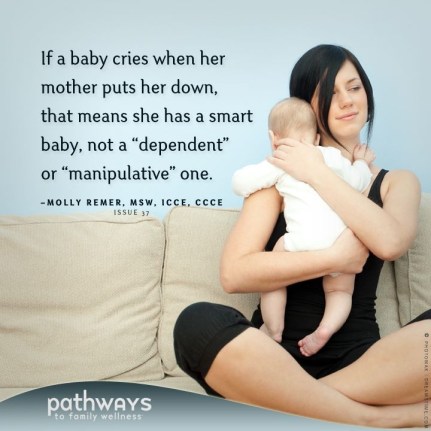
Switching gears somewhat, another one of my quotes from a Pathways magazine article was turned in a Facebook meme and has been shared on Facebook over 3,000 times. I again would have missed it except for two of my friends tagging me in the post!

August 2014 047Remember that in honor of National Breastfeeding Month, we’re offering a 10% off discount code on any of the items in our shop through the end of August: WBW10OFF.

I am 30 weeks pregnant now! I had a bit of an “OMG, can I actually DO this?!” moment last night when the new session of classes began for me. My students asked me how much longer I have left of my pregnancy and my answer was, “about ten weeks.” I have 8 weeks of class…

August 2014 046It is a hot time of year to be pregnant and while I feel good and healthy over all, I am noticing some different things compared to past pregnancies. I weigh 165 pounds now, which is pretty big! I have way more round ligament pain than I’ve ever had before, including just randomly while walking or sitting, rather than exclusively related to getting up “wrong” or twisting in a not pregnant-friendly way. I also keep having some mild heartburn. And, getting up from the floor is a much bigger challenge than ever before.

I’ve mentioned several times in recent posts that Mark and I have been working on birthing a big project together and it is finally here!
August 2014 049Our first collaborative book project! I did the writing and he did all the illustrations, layout, and formatting. This has been a project about 18 months in the making, a more significant undertaking and more significant expenditure of energy than I could have guessed when I began.

I like how the experience of the final stages of the book have paralleled my own pregnancy. As I mentioned a couple of posts ago, our co-creative work on our business endeavors this year is really entwined with the progress of gestating and preparing to welcome our new baby.

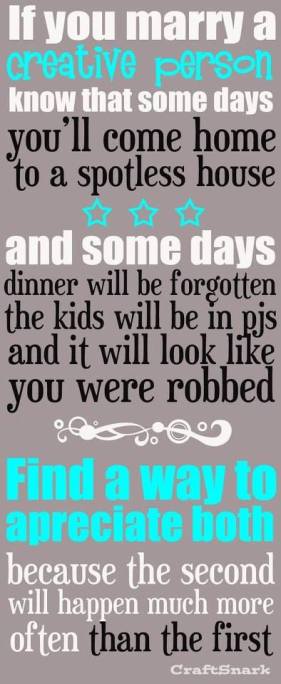
As we’ve worked over the last weeks on the final push to finish the book, I saw this meme on Facebook:1479335_10153562403855714_35111715_nI shared it on our page and noted that when you’re both creative and you’re both home, the effects may be even more dramatic!

Our Embrace Possibility pendant is the design that has perhaps always held the most personal meaning for me, but as we continue to focus in on our shared vision and to embrace new directions, ideas, and projects in the context of our co-created business, she returns to me as very personally meaningful.


“Encoded in her cells,
written on her bones…
The mantle settles around her shoulders.
Sinking into belly, bones, and blood,
until she knows,
without a doubt,
that this is who,
she really is…”

(Embrace Possibility Pewter Goddess Priestess by BrigidsGrove)

And, I shared this on our page recently since it has spoken to me anew in multiple ways this month:

“…These waves of power. February 2014 007
They are you.
You are doing it.
You ARE it.
This is energy, this power, this unfolding might of creation.
It’s you.
Your body
your power
your birth
your baby…”

Birth Spiral Chakra Blessing | Talk Birth.

Tuesday Tidbits: Human Rights and Birth

“It takes force, mighty force, to restrain an instinctual animal in the moment of performing a bodily function, especially birth. Have we successfully used intellectual fear to overpower the instinctual fear of a birthing human, so she will now submit to actions that otherwise would make her bite and kick and run for the hills?”

–Sister Morningstar (in Midwifery Today)

486253_470181139659475_1370955888_nWhen I end my introduction to human services class and then again when I begin my social policy class, I ask my students to consider the above: What would happen if everyone cared? What would happen if our first reaction was compassion? What would happen if we focused on what matters? What would happen if we assumed everyone had inherent worth and value and deserves humane care and compassion?

I have said for a long time that women’s rights in birth represent a human rights issue, so I was very interested to receive word of a Human 10360685_10152979214427627_4161278366266845515_nRights in Childbirth campaign:

Women do not lose their basic human rights once they become pregnant. And yet, across the globe, women’s human rights are compromised and violated around childbirth. Examinations, interventions and procedures that pose risks to both mothers and their babies are routinely performed without informed consent, or through coerced compliance via threats or fear. When women come out of childbirth with post-partum PTSD from disrespect, abuse, or obstetric violence, the goal of a “healthy mother and healthy baby” has not been met.

via Home | Human Rights in Childbirth.

Childbirth IS a women’s rights issue and a reproductive issue:

Childbirth is a women’s rights issue and a reproductive justice issue. The United States maternity system is one of the costliest in the developed world, yet our birth outcomes compare poorly to those of other industrialized nations. Among industrialized countries, we consistently rank last or second to last in perinatal and maternal mortality rates. Moreover, birth is depicted in mainstream media with fear, medical intervention, and crisis…

via Business of Being Born: Classroom Edition | Talk Birth.

But, childbirth is also, quite simply, a human issue:

This is the whole point—women’s rights aren’t about “taking” rights from anyone else OR about demanding “special treatment,” they are important for a HUMANE WORLD for all people. I think it is hilariously awful that “women’s rights” are considered a political issue and that there is a section about “women’s rights” in the “opposing viewpoints” database for my social policy class. As long as women’s rights are considered a political issue or as something about which an opposing viewpoint can be held, rather than as self-evident, we are in continued, desperate need of revolution.

via Women’s Power & Self-Authority | Talk Birth.

Human rights in childbirth include access to the provider of one’s own free choice, so on a related note check out this set of consumer-oriented materials about the midwives model of care offered by collaborative effort of several midwifery organizations and endorsed by several others:

“Normal Healthy Childbirth for Women & Families: What You Need to Know” clearly explains and advocates the benefits of normal, physiologic birth for the average health care consumer. This helpful tool was created from a 2012 consensus statement developed by ACNM, the Midwives Alliance of North America, and the National Association of Certified Professional Midwives.

via OMOT Normal Birth Document Feature Page.

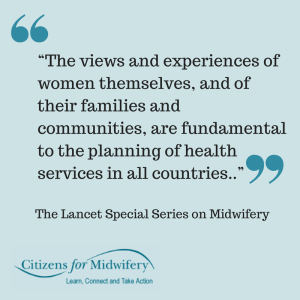
The below quote may seem obvious to birth advocates, but it is revolutionary in terms of health care. When Citizens for Midwifery shared this quote, they noted that, “One the KEY findings of the Lancet Special Series on Midwifery affirms the importance of women and their families participating in planning of health care.” For more from this special series on midwifery, go here: TheLancet.com.

10455322_10152508291549483_5155910343021300458_n(1)

And, in case we get so caught up in theorizing about appropriate care that we forget the lived experiences of the women who need it, read this tough, sobering article about why “going in pushing” does not a VBAC birth plan make:

Karen’s story is not uncommon and nor is the advice she was given about “going in pushing” but when we tell women they can not be cut unless they consent are we telling the truth? Whilst it’s true that legally the hospital can not physically force you into an operating theatre without your consent, they are not afraid to gain consent using underhand methods…

via Go In Pushing – It’s not a VBAC Birth Plan – Whole Woman.

And, of course, some relevant quotes to remember:

“If women lose the right to say where and how they birth their children, then they will have lost something that is as dear to life as breathing.” –Ami McKay

“Mothers need to know that their care and their choices won’t be compromised by birth politics.” – Jennifer Rosenberg

via As dear as breathing… | Talk Birth.

Is there anything that can be done, or are we facing an insurmountable struggle? I think we can remember that our “small stone” birth activism does matter:

While reading the book The Mother Trip by Ariel Gore, I came across this quote from civil rights activist Alice Walker: “It has become a common feeling, I believe, as we have watched our heroes failing over the years, that our own small stone of activism, which might not seem to measure up to the rugged boulders of heroism we have so admired, is a paltry offering toward the building of an edifice of hope. Many who believe this choose to withhold their offerings out of shame. This is the tragedy of our world.” Ariel adds her own thoughts to this: “Remember: as women, as mothers, we cannot not work. Put aside your ideas that your work should be something different or grander than it is. In each area of your life—in work, art, child-rearing, gardening, friendships, politics, love, and spirituality—do what you can do. That’s enough. Your small stone is enough.”

These quotes caused me to reflect on the myriad methods of “small stone” birth activism that can be engaged in as a passionate birth activist mother embroiled in a season of her life in which the needs of her own young family take precedence over “changing the world”…

via Small Stone Birth Activism | Talk Birth.

And, on a fun note, you might enjoy this lovely homebirth treasury on etsy: Home Birth by Kayleigh on Etsy. 🙂

“Thousands of women today have had their babies born under modern humanitarian conditions–they are the first to disclaim any knowledge of the beauties of childbirth…” –Grantly Dick Read, Childbirth without Fear

“I am not free while any woman is unfree, even when her shackles are very different from my own.” –Audre Lorde

“Humanizing birth means understanding that the woman giving birth is a human being, not a machine and not just a container for making babies. Showing women—half of all people—that they are inferior and inadequate by taking away their power to give birth is a tragedy for all society.” –Marsden Wagner

IMG_6046

Press Release: New Crowdfunding Campaign Helps Those Grieving Pregnancy And Infant Loss

(Guest post)Baby in My Heart Pendant (pewter, babyloss, miscarriage, stillbirth).

Press Release: New Crowdfunding Campaign Helps Those Grieving Pregnancy And Infant Loss

View PDF Version: http://goo.gl/9cQRKy

Reconceiving Loss, an online resource center for pregnancy and infant loss and healing is working to develop a digital archive to document the experience of loss from miscarriage through to neonatal death. The project is being put together in partnership with the film Return To Zero, starring Minnie Driver (in July 2014 Minnie was nominated for Emmy as the best actress in this film).

The genesis of the project was the stillbirth of the co-founder’s second child in 2005.  1 in 4 pregnancies end in miscarriage. 1 in 160 children are stillborn, and 25,000 die within thirty days of their birth in the US alone. As Co-Founder Tara Shafer explains, “We were fortunate to be able to access resources that helped us navigate this bewildering and lonely loss. Many families are not as fortunate.”

Reconceiving Loss (http://reconceivingloss.com/about-us) invites individuals to participate in a public project to document pregnancy and infant loss. Anyone who has suffered the fear, guilt, loneliness and trauma of losing a child either in the womb or stillborn knows how far-reaching the psychological impact can be. This is a chance to heal through telling your story. Your participation both as a reader and creator is crucial for others.  Reconceiving Loss has a number of digital resources to support healing from baby loss.  With a goal of just $10,000 USD all donations will help them to provide supportive tools to individuals as they work to develop their own healing narrative. “We hope that in building this archive (growing, publicizing, curating) we will also be able to develop additional supportive materials so that people who participate can receive high levels of care and support as they work through traumatic events.”, explains Shafer.

Speaking in such a public way about something that is almost never discussed and considered ‘socially taboo’ shifts the way in which July 2014 157individuals, and families address and understand those who have experienced baby loss.  This crowd sourced Indiegogo campaign is a meaningful and healing way to show support and solidarity anyone impacted (husbands, siblings, and mothers). Donations of any size are welcome and rewards include books, DVDs and even tea.  The first 25 people to donate $50 will receive a copy of graphic novel, “Goodbye, Au Revoir, and Slan.” This novel describes the experience of stillbirth through the eyes of a young sibling. For $100 you can get the Return to Zero DVD complete with all bonus materials. This DVD features an extra on the Reconceiving Loss digital archive. Help break the silence and enable everyone to connect through their shared loss.

This project is making a difference for those following a difficult path. “The long-term psychological impact is profound and is still not talked about. …Since we launched the archive, we have received submissions from people who suffered loss decades ago. They have carried it with them in silence they have longed to break.”This project will help many individuals to share their own stories while learning about others. Donate what you can and help break the silence.  The biggest perk of all is knowing that you are helping many people now and in the future. Even if you can’t donate – share the links widely. See the links below for more information.

Reconceiving Loss Indiegogo Campaign

For more on this topic check out the articles by Reconceiving Loss Co-Founder Tara Shafer in Psychology Today (Begin Again) and in the Huffington Post
For more information on this press release visit:
http://www.getnews.info/new-crowdfunding-campaign-helps-those-grieving-pregnancy-and-infant-loss_5274.html

Media Contact
Company Name:
 Reconceiving Loss
Contact Person: Tara Shafer
Email: tarashafer1@gmail.com
Country: United States
Website: https://www.indiegogo.com/projects/reconceiving-loss-archive-documenting-loss

April 2014 121

Tuesday Tidbits: Miscarriage

In the book A Silent Sorrow, the authors quote a responsive reading from the book Bittersweet…hellogoodbye (a book for creating memorial services for miscarried or stillborn babies). The responsive part of the reading from the other people assembled can be unique to your own spiritual path, so “Be with us [divinity name]” or “Hear us, [divinity name]” or ‘[divinity name] grant us healing and strength. Personally, I would simply leave off any divinity name and use plain old “Hear us” or “grant us healing and strength,” because then each person present is able to attach whatever additional meaning to the words they prefer, rather than having it represent any sort of specific belief.

July 2014 014

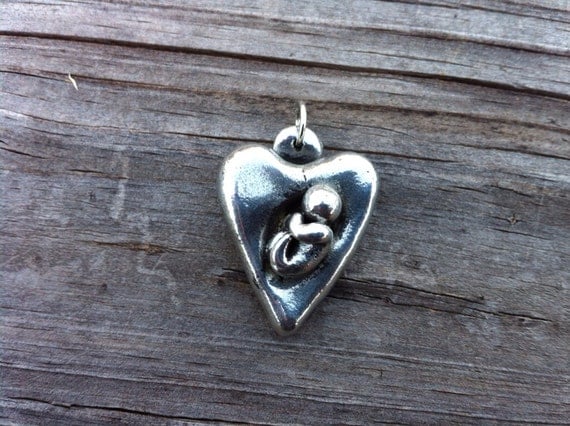
Some “seconds” of our baby in my heart design were added to our etsy shop this month.

Leader:

For the time of unending tears, pain, and struggle;

times of not being understood by family, friends,

times of longing and emptiness,

times of not being in control,

times of searching within and without.

We pray…

(response)

Leader:

For all the memories of our baby;

for any brief moment of being with our baby,

for those who walked the journey of mourning with us,

for each time of remembering.

We pray…

(response)

Leader:

For the times of letting go.,

for the times of reaching out,

for each new day and each ray of hope,

for the gifts our baby left us:

in giving us new eyes with which to see,

new ears to help us hear others,

a new heart to love more deeply,

and for new values in our lives.

We pray…

(response)

[p. 233]

I’m also letting go of the book Avoiding Miscarriage by Susan Rousselot (see previous post for bookshelf reduction currently in progress). In it, she acknowledges the depth of the experience of miscarriage:

A miscarriage is, by its nature, a life-changing event. From the moment a woman knows she is pregnant, she wonders how that pregnancy with change her life—she imagine the future with that child. How will this impact my work? What changes will need to be made to the house? And what sort of mother will I be?… That unborn child can turn out to be anything, and because of that it is a dream of the future. When that dream is shattered, we don’t just lose a few weeks or months of pregnancy; we don’t even just lose a ‘fetus’ or a ‘baby.’ It is as though we lose a whole lifetime—the lifetime we were going to share with that child. We didn’t mean for the idea to take on such huge proportions, but it did because we are human, and as humans we think about the future, and we wonder.

Like any traumatic event, there is no ‘right way’ to deal with a pregnancy loss. Some women will grieve as intensely as they would the loss of a full-term birth. Others will feel they are doing okay. Some women will react by resolving to take life less for granted. Others may harbor a lingering distrust of their own bodies. Some women may want to take a long time to grieve. Others may want to put the experience behind them by redoubling the pace of their lives…

…Many women who experience a miscarriage feel a powerlessness stemming from the fact that they couldn’t control what was happening inside their own bodies. This feeling is often exacerbated by the good, but often misplaced, intentions, of doctors or others who take charge of the miscarriage—or dismiss it—in an attempt to spare the woman further distress. (p. 67-68)

Regarding the use of the word “worse” in categorizing grief and loss, I shared with a friend recently that one of the things I learned from my own losses and working with other mothers through the organization I co-founded (The Amethyst Network), is that there is no hierarchy of loss and grief. They are all real. They are all valid. There is no prize for the worst experience. And, we can hold the experiences and feelings of each as valid without needing to categorize by who had it worse. Each is hard and “worst” in its own way. It is okay to let the pain hurt and to take as long as you need.

Last week I read this very raw and real miscarriage story and shared the link on TAN’s Facebook page:

“As glad as you were to tell who you told about the pregnancy, you are exactly a hundred thousand times as unglad to bear this news. You call your boss first, because the primary impact on your immediate life is that you will need to be off work for at least a couple of weeks. This is what they call a “missed miscarriage,” where the fetus lived to perhaps eight or nine weeks of gestation, but your body stayed pregnant all the same, put you through that nightmare of sickness and stress for nothing. Less than nothing. That anger comes a little later, not just yet. In any event, you won’t be back at your desk until the material of the pregnancy is gone, one way or another…”

How to Have a Miscarriage | The Hairpin

And, I received an announcement of a new book from a woman who previously emailed me to talk about my own miscarriage memoir. I look forward to reviewing her book soon.

At 33 weeks pregnant, Amy is certain something bad will soon happen, it had too many times before. Deep down she fears it’s only a matter of time before the baby she’s carrying will die. Despite the fact that Amy had been repeatedly slapped in the face with multiple miscarriages, she still can’t seem to quiet that tiny voice in the back of her head that’s screaming at her to not give up hope. Follow Amy’s true story as she stumbles through her journey with humor and warmth, all while dealing with the neuroses that came along with getting her hopes shattered time and time again. All she has to do is close her eyes and she’s lurched back to the memories of her losses; on the floor in her bathroom, in the hospital, and even at her place of work. No one knows what the internal mind of a woman who’d lost five babies and suffered so many let downs goes through. Can Hope ever truly survive memories such as these?

Chasing Hope: A Mother’s Story of Loss, Heartbreak and the Miracle of Hope

Last week, we decided to design some new European charm bracelets to honor the experience of babyloss, whether through miscarriage, stillbirth, or infant death. Half of the profits from these bracelets will be donated towards a scholarship to help a local bereaved mother attend Stillbirthday’s Love Wildly event in Kansas City in December.

July 2014 157

“Miscarriage is a death in the heart of life, a death that happens inside the body of a woman. Sometimes a child just brushes the earth lightly, and is gone before the embryo is anything more than a few cells. Even so, there may already have been a strong connection, love, the beginning of hopes and dreams for the child. Later in a pregnancy, when the being has made itself known through kicks and a visible bump, a whole community may have already begun to make a place for it. Whenever a miscarriage happens, it is a loss that cuts deeply, and needs to be grieved…” –Jackie Singer (Birthrites)

via Birthrites: Miscarriage | Talk Birth.