Archives

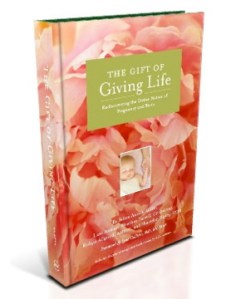
Book Review: The Gift of Giving Life

Book Review: The Gift of Giving Life: Rediscovering the Divine Nature of Pregnancy and Birth
Authored by Felice Austin
Authored with Lani Axman, Heather Farrell, Robyn Allgood, Sheridan Ripley
ISBN: 9780615622521
542 pages, softcover
http://thegiftofgivinglife.com/

Reviewed by Molly Remer, Talk Birth

Written for women who wish to delve into the divine nature of pregnancy and birth from a Christian perspective, The Gift of Giving Life is co-authored by several childbirth educators and doulas who are also members of the Latter-Day Saints (LDS) church. The book is rich with the stories and experiences of dozens of LDS women who share their birth stories and reflections. These additional stories are sprinkled throughout the body of the text, making it very easy to read and “digest” in small sections. The stories represent a wide breadth of experiences—I anticipated many of them to gloss over the difficult parts of pregnancy and birth, but they address both the nitty-gritty, challenging aspects and the transcendent. I especially appreciated that women’s experiences with pregnancy loss and baby loss are integrated throughout the book rather than relegated to a specific subsection. A helpful touch is that stories dealing with loss are indicated with an awareness ribbon symbol, so that if a reader does want to avoid these stories, she is readily able to do so.

As a non-LDS woman as well as someone who does not identify as Christian, I did encounter many segments that had little relevance to my own experience of or interpretation of the world. For example, it was startling for me to come across repeated statements that seemed to hold a literal view of “Satan” as a real entity holding some kind of power or control over people. That said, I was impressed with how deeply and solidly integrated the text is with the spiritual teachings of the LDS faith. For women who wish to permeate their pregnancy and birth experiences with an intimate and intricately woven connection to Christian theology and scripture, The Gift of Giving Life is a faith-based treasure.

As I noted in my recent interview with one of The Gift of Giving Life‘s co-authors, I am fascinated by the concept of Heavenly Mother and really enjoyed the sections of the book that touched on the relationship with Her. I also enjoyed the book’s explanation of Eve’s pivotal choice in the Garden, which was very meaningful framing of the event in a way that was completely new to me.

The Gift of Giving Life has much to offer both to pregnant women and to birth professionals. It will likely have most appeal to those with LDS connections and to members of other Christian traditions who are familiar with scripture and wish to apply these messages to the childbearing year.

Disclosure: I received a complimentary copy of this book for review purposes.

DVD Review: Expecting More


DVD Review: Expecting More
Prenatal exercise program
Two disc set, 230 minutes
$39.95
Daily Sweat, 2011

http://sarahaley.com/about/expecting-more/

Reviewed by Molly Remer, Talk Birth

Fun, energetic, and challenging, Expecting More is a prenatal exercise program developed and hosted by prenatal fitness expert, Sara Haley. Developed and filmed during her own pregnancy, Sara created Expecting More out of her desire to offer a prenatal fitness experience that is vigorous and more fast-paced than the routines typically offered by prenatal exercise videos.  Offering lots of encouragement to stay “sexy and strong” during pregnancy, the DVD set of two discs includes six different workouts:

Synergy: Create SYNERGY within your body by alternating between Sara’s signature cardio and strength exercises.

Sweat Sport: Discover your inner athlete as you execute sports drills in a cardio session with modifications for all stages of pregnancy.

Sweat Funk: Embrace your sexy pregnant body as you get your FUNK on with hot dance cardio moves.Sweat Strong Down: Sculpt your body DOWN on the floor in a safe and effective way that supports your core and your baby.

Sweat Strong Up: Stand UP and sculpt your body in all the right places to keep you sexy and strong during your pregnancy.

Salutations: Designed to sooth and calm, you’ll breath, stretch, and move with this expression of good will to your baby and your body, your SALUTATION.

The Salutations portion is clearly inspired by both dance and yoga and is based on standing exercises that are less vigorous than the other workouts on the discs, but still very lively and movement oriented. Expecting More is led by a cute, contemporary fitness trainer with a pleasant voice. During some of the workouts, two additional women perform modified versions of the exercises in the background so that it is easy for women with different needs to follow along. I appreciated that the DVD contains lots of reminders about the importance of listening to your body. Expecting More presents exercise as a fun and engaged time to be close to your baby and to pay attention to your body and I feel like this approach contributes to a healthy, active attitude towards giving birth as well.

Disclosure: I received a complimentary copy of this DVD for review purposes.

I am a Midwife Campaign

MANA has a great educational campaign going on right now called I am a Midwife. The campaign involves a series of short videos released once a week about a variety of topics. More than just a general education campaign, each video includes a variety of different women–midwives, mothers, public health activists, maternity care activists, authors—speaking out on important topics in maternity care. Each woman also identifies, “I am a Midwife.” This week’s video is about health disparities in maternity care, which is a very important and too-often ignored topic. It raises the concern that African American women and their babies are more likely to die than their Caucasian counterparts even when other variables are equalized (i.e. same socioeconomic status, same education, etc.) and moves into wider discussions about racism and the treatment of minority group members. It then focuses on the value and role of midwifery care in addressing these concerns.

As MANA states in relationship to this campaign: “For midwives, sharing is daring. We dare to challenge the status quo. We dare to speak up for women’s innate wisdom in pregnancy and birth. We dare to assert that there is a better way for our babies to be born. And we dare to insist that birth belongs to families.

Absolutely! The I am a Midwife public education campaign is extremely powerful. I have to confess that when it originally launched, I didn’t personally make time to watch the videos right away, somehow assuming that they were “generic” videos with a “rah, midwives!” type of message. Don’t make the same mistake I did. These are quality videos with important messages, powerful voices, and essential education and information. You will definitely learn something from watching them!

The videos aren’t only of use to birth professionals, when I teach community organizing at the college level I show videos like this as examples of activism strategies. In fact, for the final exam in that course I show the Crisis in the Crib video about infant mortality and disparities from the Office of Minority Health’s A Healthy Baby Begins With You campaign. This MANA video could be an interesting follow-up addition to the video I already use. As a related side note, during this class I also show footage from The Doula Story, a project by the Georgia Campaign for Adolescent Teen Pregnancy Prevention (whose program director I heard speak at the CAPPA conference in NC in 2010—she was amazing!). So, people do not leave my class without having heard of doulas and midwives and their relationship to community health. Go me and my mad birth activist skills! ;-D

Book Review & Giveaway: The Wisdom of the Healing Wound

The Wisdom of the Healing Wound: A New View on Why We Hurt & How We Can Cure Even the Deepest Physical and Emotional Wounds
by David Knighton M.D.
Paperback:216 pages
Publisher: HCI; 1 edition (June 1, 2011)
ISBN-13:978-0757315619

www.wisdomofthehealingwound.com

Reviewed by Molly Remer, Talk Birth

Written by a vascular surgeon who specializes in working with and healing nonhealing wounds, The Wisdom of the Healing Wound is a book addressing the many types of wounds we all experience in our lives: physical wounds, psychological wounds, and spiritual wounds. After discussing the mechanisms of healing, types of wounds, and the value of wounds, David Knighton moves into an explanation of strategies to help yourself heal, caring for scars, getting help, and lifetime healing. I especially appreciated his explanation of how we have both physical and emotional “skin” and that in a relationship there is a “relationship skin” that envelops both people (i.e. a mother and her baby). In various ways that emotional skin can become damaged, rough, thick, or thin, just as our physical skin can be damaged.

Some of the stories/case studies of the wounds experienced and shared in the book are difficult and disturbing to read about (particularly sexual abuse), so be prepared for that.

From the press release:

Dr. David Knighton has some remarkable insights about wounds and our ability to heal ourselves. “We’ve all been wounded,” he writes. “But, paradoxically, wounding is probably our greatest stimulus for health. As we heal, we grow.”

A leading expert on wound healing, Dr. Knighton delves even deeper into the mystery of human nature with his new book The Wisdom of the Healing Wound: A New View on Why We Hurt and How We Can Cure Even the Deepest Physical and Emotional Wounds. (Health Communications, Inc.)

“The goal in working with wounds of any kind — from the physical to the emotional to the spiritual — is to restore structure and function,” Dr. Knighton says. “That is the healer’s role. Ultimately, The Wisdom of the Healing Wound is about being human — about living fully as body, mind, and spirit. More importantly, it is about the powerful, transformative, and often surprising ways we can heal and thrive in the face of our wounds.”

“Life is full of wounds–physical, emotional, and spiritual. The wounded psyche and spirit heal in much the same manner as physical wounds,” Dr. Knighton explains. “It’s what gives the book a universal appeal.” People in 12-step recovery groups, people facing surgery or who have physical wounds that are slow to heal, people with emotional trauma or PTSD, military and abuse victims and the healing professionals who work with all these types of wounds are sure to see the usefulness of The Wisdom of the Healing Wound.

While not specifically intended for birth professionals, I think those interested in helping women process birth trauma as well as anyone working in a helping profession would find nuggets of wisdom and healing in this book.

You can also listen to a talk from the author here.

***Giveaway is now closed. Shawna was the winner!****

I also have one extra copy of The Wisdom of the Healing Wound to give away! To enter, just leave a comment telling me what type of wound you’re interested in healing/learning more about! Giveaway will close one week from today (on May 22, 2012).

Disclosure: I received a complimentary copy of this book for review purposes.

Book Review: Into These Hands

Into These Hands: Wisdom from Midwives
Geradine Simkins
Paperback, 300 pages
Published by Spirituality & Health Publisher, 2011
ISBN: 9780981870854
Wisdom from Midwives

Reviewed by Molly Remer, Talk Birth

Into These Hands is an amazing anthology of midwives’ retrospectives about their careers and midwifery journey. You won’t find birth stories here–this is book about women’s lives and journeys to midwifery. A book of midwife stories–how women are birthed as midwives, rather than about births they attended–Into These Hands is great reading for aspiring midwives or for currently practicing midwives who wish to feel a sense of solidarity with their sisters. There are many paths, many lessons, many voices and each midwife clearly loves women and has a passion for birth.

From the press release:

We are eager for you to meet some modern-day wise women, healers, revolutionaries, and reformers. Into These Hands, Wisdom from Midwives© is a comprehensive anthology of the life stories of 25 remarkable women who have dedicated their lives and careers to the path of social change through midwifery. These exemplary midwives are all over 50 years of age with 25-40 years in the field. Collectively, they have over 800 years of experience and have assisted in over 35,000 births.

The midwives whose voices are included in the anthology come from diverse backgrounds, training, experiences, and range of practice settings. Quite a few of the stories are from “bridge club” members–women who began as direct entry midwives and later became CNMs. These midwives have a foot in both worlds and insight into the politics of the profession. In general, Into These Hands is a good look at the politics of midwifery both past and present. Almost all of the midwives in the book have homebirth roots or orientation.

Since there are lots of voices represented, the tone or style of some stories is more compelling than others. Some within-story chronology jumps were a little confusing and there were a couple of stories in which I had to do some re-reading for clarity.

Into These Hands is likely to be of particular interest to midwifery activists, aspiring midwives, or current/retired midwives and may hold less appeal for general birth enthusiasts, doulas, or childbirth educators. The stories are rich, insightful, thought-provoking, and diverse and they brought tears to my eyes several times. This book is a treasury of women’s wisdom and a powerful legacy for the generations of women to follow.

20120402-120957.jpg

An indicator of how much I like a book is how many page corners I turn down in order to come back to re-read those sections and write blog posts based on them/share quotes/etc. This is Into These Hands last night as I was finishing it...;-D

Disclosure: I was provided with a complimentary copy of the book for review purposes.

Book Review: More Than a Midwife

More Than a Midwife: Stories of Grace, Glory, and Motherhood [Paperback]
by Mary Sommers
MavenMark Books (HenschelHAUS Publishing) (October 1, 2011), 148 pages
ISBN-13:978-1595981066

Reviewed by Molly Remer, Talk Birth

More Than a Midwife is a thoroughly delightful little volume by experienced and resourceful midwife, Mary Sommers. One of the things that makes the book particularly distinctive is the impressive diversity of Mary’s work experience. The book includes stories from her work as a midwife in urban Chicago as well as in Africa and Mexico. As always, glimpsing the dire situations facing birthing women cross-culturally is a sobering reminder of the immense challenges international midwives face with few physical resources—they accomplish an amazing level of care with only their heads, hands, and hearts.

Each story shared in the book is selected with care and has an important message to share. The stories are about unique women and their unique births and what Mary (and the reader) can learn from them. From empowering and exhilarating, to difficult and heartbreaking, particularly notable are the stories that remind us all to treat every woman with dignity and respect, regardless of her life’s circumstances or choices. Mary is clearly a midwife who loves women and birth and practices with sensitivity, respect, and positive regard.

More Than a Midwife is a slim paperback. It is nice size to hold easily and the stories are short and easy to read in small chunks of free time. It is occasionally erratic in the organization/flow of a story and in a few of them I had to re-read segments to understand chronology. However, this  was a negligible issue in the context of this thoroughly enjoyable small book.

Mary Sommers has written a true gem of a book. I feel honored to have read More Than a Midwife and I highly recommend it to anyone interested in birth, homebirth, midwifery, or women’s health. Most excellent!

Disclosure: I was provided with a complimentary copy of the book for review purposes.

Talk Less, Learn More: Evolving as an Educator

Since late 2006, I have written at the top of each of my teaching outlines: “Talk less, listen more.” This simple reminder has  fundamental importance and has completely revolutionized how I structure and guide my childbirth classes. During each series that I teach, I realize how listening to the women and giving them a space in which to share, is one of the most important things I can offer. Though I studied principles of adult learning and designing effective curricula during my certification program, I started out my childbirth education journey with a lecture and information-heavy approach I’ve since heard called, “opening their heads and dumping information in.” As I continue to teach, I’m continually discovering ways to talk less, but hopefully, impart more, creating a guiding philosophy of “talk less, [they] learn more” for myself as I plan and implement my classes.
Real birth preparation

After my first year of teaching, I realized that couples that sign up for my classes are not really looking for pregnancy and prenatal care information, but for real birth preparation. They are there because the women want to learn, “Can I do this?” and “How will I do this?” and the men are asking, “How I can help her do this?” It feels almost insulting to meet this quest for inner knowing with a discussion about the benefits of prenatal vitamins. I had to confront the fact that some of the things I was teaching seemed irrelevant, redundant, or obvious.

It became clear to me that I had to tackle the slightly embarrassing reality that I was following a model of prenatal education that was not in line with the true needs of the women in my community. I teach independent, natural childbirth classes privately in people’s homes. Maybe with a different population, my original approach would be more successful or I would take a different approach altogether. Also, just as students have different learning styles educators naturally have preferred methods. I have an information-heavy personal style that spilled into my teaching. I continue to wrestle with this tendency and struggle to rein in the information overload approach I gravitate towards.

Action!

As I made my discoveries, I began to drastically cut my talk time (lecture) and focus on action instead. Though it felt nearly sacrilegious to do so, I trimmed many things out of my outlines that were about nutrition, prenatal testing and so forth, because many of the women I work with have already read a great deal and don’t need to hear it again from me. I’ve come to see I really need to skip a great deal of the “book learning” and get them actually moving and practicing and using skills. Then, the “book learning” naturally arises during the course of the class, either via questions or via me needing to explain why something is useful or helpful during pregnancy or in labor.

I totally restructured and rearranged my class outlines to include a whole class about the mind-body connection and psychological preparation for birth. This class took the place of a previous class about birth planning. I was finding that many people already had a birth plan written and/or the birth plan information naturally comes up during the course of the six weeks without my needing to spend an excessive amount of lecture time on it. I tell them that I have the information, ask if you want it! I also dedicated a whole class to labor support with plenty of time to practice hands-on support techniques. In addition, I created a brand new class called “Active Birth” that involves lots of moving and positioning as well as many helpful ways to use a hospital bed without lying down. Informed consent, consumerism, and birth planning naturally arise as topics during this class, rather than being separately scheduled topics.

Information overload

Many pregnant women have information overload. They are faced with more information than they know what to do with. They are bombarded by it. What they really need is “knowing.” They need to know: “What skills do I possess or can learn that will help me greet my birth with anticipation and confidence? What are my tools? My resources? Can I just let it happen?” As an educator I ask myself, “What will help them feel confident? Feel ready? Trust their bodies and their capacities?”

I want people in my classes to learn material that is dynamic, active, exploratory, self-illuminating, supportive, positive, enriching, and affirming. I created a vision statement and asked myself where my classes stood in relationship to my vision. The answer was, “not as close as I want them to!” My vision statement for my classes is: to focus on celebration, exploration, motivation, education, inspiration, validation, initiation, and dedication.

I know I’m hitting the mark when couples comment, “Oh, this makes so much sense! I see how this works!” Or, “This was a really good illustration of what you were just talking about.” In this way, class participants readily reinforce (or modify) my own presentation style and I learn from series to series what to change, continue using, discard, or alter.

“Talk less…” teaching tips

I have many ideas of ways to “talk less” in birth classes, here are a few:

  • Media portrayals of birth—show two contrasting clips, such as a birth from a popular TV show (I often show Rachel’s birth from the show Friends) paired with an empowering birth from a film like Birth as We Know It and then have students discuss the two.
  • Use “The Ice Cube Minute” exercise from Family-Centered Education: The Process of Teaching Birth. In this exercise, couples hold an ice-cube in one hand for one minute and see what coping measures spontaneously arise for them. I do this exercise fairly early in my class series, before we’ve done a lot of formal talking about coping measures. It is very empowering for couples to discover what tools and resources come from within as they try the ice-cube minute.
  • To illustrate the potency of the mind-body contraction, practice two pretend contractions while holding ice. One contraction has an accompanying “stressful” paragraph read with it (“your body fills with tension…it hurts! Oh no!”) and the second contraction has a soothing paragraph read with it (“you greet the wave….it is YOUR power….”). This illustrates the fear-tension-pain cycle viscerally.
  • Use a five minutes series of birthing room yoga poses to begin the class—birth happens in our bodies, not our heads. Practicing the poses opens space to simultaneously discuss and practice: squatting, pelvic rocks, optimal fetal positioning ideas, healthy sitting, pelvic floor exercises, leg cramp prevention, back pain alleviation, and more.
  • Role playing cards—talk through various scenarios. I’ve found that couples are more receptive to talking through the cards than actually getting into a role and playing it through.
  • Values clarification exercise–participants cut out values from a list and arrange them in a grid to help them figure out if they are in alignment with each other and with their caregivers.
  • Leg stretch exercise to explore the use of vocalizations and other coping mechanisms during labor.
  • Ask plenty of open-ended questions that stimulate discussion and ideas, “what have you heard about XYZ?” or “what is your experience with…?”

Evolutionary spiral of a childbirth educator

After I had already done all of this self-inquiry and curriculum modification, I discovered Trish Booth’s concept of “The Evolutionary Spiral of a Childbirth Educator.” I quickly recognized myself and my experiences along the loops of the spiral. In the Early Stage of the spiral, educators are focused on “content and presenting the information.” This perfectly matches where I was when I started out with my “open heads and dump information in” approach. The Intermediate Stage is focused on the “group as a whole” and also “emphasizes learning rather than teaching.” Though I tend to teach one-to-one private classes and not groups, this seems to clearly be the stage I was in when I looked at my vision and realized that I needed to talk less so people would learn more. In the Advanced Stage, the educator “understands the meaning of the childbearing experience” and the focus is on the “individual learners.” This feels like the stage to which my teaching has spiraled. Further along the spiral is the Master Stage in which the educator “integrates the first three stages and moves gracefully between them” with a focus on “cognitive, emotional, and spiritual needs of the group as well as the individual learners” (Booth, 1995).

Perhaps my insights are old news to experienced educators, but they have made a profound difference in the quality of my classes. I’m sure as I continue to teach, I will continue to deepen and refine my approach and will continue to blossom as an effective educator.

Molly Remer, MSW, ICCE, CCCE is a certified birth educator, writer, and activist who lives with her husband and children in central Missouri. She is the editor of the Friends of Missouri Midwives newsletter, a breastfeeding counselor, a professor of human services, and doctoral student in women’s spirituality. She blogs about birth, motherhood, and women’s issues at https://talkbirth.me/posts.

Modified from an article originally published in the International Journal of Childbirth Education, December 2008.

References:

Booth, Trish. Family-Centered Education: The Process of Teaching Birth, ICEA, 1995.
Virtual Screening of More Business of Being Born!

How exciting! Tonight birth activists and pregnant women across the country have the chance to virtually attend a free screening of one of the More Business of Being Born films: “Special Deliveries: Celebrity Mothers Talk Straight on Birth” on The Huffington Post.

From the press release:

LOS ANGELES, CA – Executive Producer Ricki Lake and Filmmaker Abby Epstein present an online screening of Special Deliveries: Celebrity Mothers Talk Straight Talk on Birth from their highly influential four-part DVD series More Business of Being Born on Monday, March 5th at 6:00pm PST on The Huffington Post.  Lake, Epstein and special guests from the film including Kellie Martin will host a live Q&A chat following the film beginning at 7:10pm PST. Viewers are encouraged to ask questions and engage in conversation with Lake, Epstein, and Martin by directing messages via twitter to @rickilake with #mbobb as the hash tag.

More Business of Being Born, a follow up to their landmark documentary, The Business of Being Born, offers a practical look at birthing options as well as poignant celebrity birth stories from stars. The virtual screening will air on HuffingtonPost.com and MyBestBirth.com. BabyCenter will host the virtual screening on their Facebook fan page.

I’m also excited that the Classroom Edition of the film premieres today. I would definitely like to add it to my birth class library.

More about the episode of MBOBB airing during the screening tonight:

Special Deliveries: Celebrity Mothers Talk Straight on Birth

Featuring celebrity moms Laila Ali, Gisele Bundchen, Cindy Crawford, Alyson Hannigan, Melissa Joan Hart, Kellie Martin, Alanis Morissette, Christy Turlington-Burns and Kimberly Williams-Paisley, Special Deliveries is a collection of intimate birth stories from a diverse group of mothers. Whether they chose to deliver at a hospital, home or birthing center, these heartfelt and humorous testimonies speak to the lasting power of the birth experience.  True inspiration for any mother-to-be, this group of women trusted their bodies and intuitions, taking responsibility for their birth decisions even when things didn’t go according to plan. None of these courageous women has ever spoken on the record in such compelling detail, and, on this DVD, the filmmakers weave together their passionate narratives as a celebration of the journey to motherhood that will leave viewers with a renewed sense of amazement about the power of women.
(Running Time: 74 min)

 Enjoy!


Honoring Miscarriage

When I had my first miscarriage, I vowed several things in the immediate aftermath. One was that I was going to write a book about it so that other women would not have to experience the same total dearth of resources about the physical process of coping with home miscarriage. While I did publish my miscarriage memoir this year, I am still collecting stories and experiences for a different, more comprehensive book on this theme. However, in the time since I made that vow and since I had my miscarriages, a new resource emerged for women: Stillbirthday. This is the website I NEEDED when I was preparing for the birth of my tiny, nonliving baby. While I received emotional support from a variety of sources, I found a void where the physical information I sought should be. That information is skillfully covered in the birth plans section of the Stillbirthday website. I reprinted information from their “early home birth plan” in my Footprints on My Heart memoir, since it was the information I was desperately seeking during my own home miscarriage-birth. I am grateful the information is now available to those who need it.

My second vow was that, if I knew about it, I would never leave another woman to cope with miscarriage alone on her own. My third vow came a little later after more fully processing and thinking about my own experience and that was to always honor and identify miscarriage as a birth event in a woman’s life.

A friend’s loss

In March of 2010, my good friend, who had doula’ed me very gracefully and respectfully and lovingly through my miscarriage-birth postpartum experience and processing, experienced a miscarriage herself. She didn’t call me while she was experiencing it, so I couldn’t go to her as I had imagined I would if needed, but afterwards I went to her with food and small gifts and hugged her tightly, recognizing all too well that hollow, shattered look in her eyes and the defeated and empty stance of her body. Later, I bought her a memorial bracelet. However, I was still in the midst of coping with my own grief and loss process—my second miscarriage having just finally come to a long-drawn out end only a month before and the experience of which having brought another friendship to an almost unsalvageable point—and my dear friend’s own process, her feelings, got lost along the way. She recently wrote about the experience on her own blog and it was harder for me to read than I would have expected. As she noted, I agree that doesn’t matter how little the baby, or baby-start, or baby-potential that is lost-–there is no quantifying loss and no “prize” for the “worst” miscarriage. It is a permanent experience that becomes a part of you forever. Also permanent for me is the empathy and caring showed to me by my friend/doula during my time of loss and sorrow. I regret that I was not able to be that same source of solace, companionship, and understanding to her. I thank her for having held space for me to grieve “out loud” and I’m really sorry that part of the cost of that was the suffocating of her own sadness or minimization of her own experience. While I do feel like I did what I could to acknowledge her miscarriage at the time that it happened I really wish I would have done more, particularly in terms of acknowledging how very long the feelings of emptiness and grief persist. I made a mistake in taking her, “I’m okay” remarks as really meaning it, rather than being part of the story that babyloss mamas often tell themselves in a desperate effort to “get over it” and be “back to normal.”

That said, I also compassionately acknowledge that it can be hard for people to know what it is that we need if we don’t tell them. So, now I’d like to hear from readers. What are your own thoughts on recognizing and acknowledging miscarriage—how do we best hold the space for women to experience, identify, and honor miscarriage as a birth event in their lives?

Charm & book giveaway (**Giveaway is now closed. Veronica was the winner***)

In harmony with my question and associated thoughts, I am hosting a giveaway of a sterling silver footprints on my heart charm exactly like the one I bought for myself after Noah’s birth and that I gave to my husband and my parents afterward (my husband carries his on his keychain). If you win the charm, perhaps it is something that will help you to honor your own miscarriage experience or that you can give to someone else to acknowledge their loss. This giveaway is in concert with the blog contest on Stillbirthday and will end on March 20. Additionally, everyone who enters will receive a free pdf copy of my miscarriage memoir.

To enter the giveaway, please leave a comment addressing the subject of honoring miscarriage. I am wondering things like:

What did you need after miscarriage?

What did you wish people would do/say to honor your miscarriage experience?

How could people have helped you more?

What do you still wish you could do/say/write/share about your miscarriage experience(s)?

What do you wish you had done for yourself?

What did you want to tell people and what do you wish you had been able to say?

What did you want to do that you didn’t feel as if you had “permission” to do? (personal, social, medical, cultural, whatever type of permission…)

I will share my answers to these questions in a later post, but I do want to mention that one of the things that was most important to me to have acknowledged was that this was REAL. That was one of the first things I said to my parents about it when they came over to help me immediately after Noah was born—this is real.

Water babies

I continue to honor the experience of miscarriage and babyloss in my own life in various ways. Recently, I found a buddhist monk garden statue from Overstock.com that reminded me of the “jizo” sculptures that honor and protect “water babies” in Japan (mizuko is a Japanese word meaning “water baby” and specifically refers to babies lost during pregnancy—the only specialized word that exists). I have a small jizo inside on my living room windowsill, but I’ve wanted one that could weather the outdoors by Noah’s tree.

20120222-115308.jpg

20120222-115315.jpg

I took this one for size perspective, but you can barely see the sculpture in the shadow to Alaina's right.

I believe I may be partially responsible for the widespread usage of the following quote on the internet now with regard to babyloss mamas:

Miscarriages are labor, miscarriages are birth. To consider them less dishonors the woman whose womb has held life, however briefly.” –Kathryn Miller Ridiman

I found it in an issue of Midwifery Today from 1995 and shared it multiple times on Facebook and on my blog. I have since seen it in many locations around the web and I feel happy that I was able to be a conduit for the sentiment and the increased recognition of miscarriage as a birth event.

To participate in the Stillbirthday blog contest/carnival go here. And, make sure to check them out on Facebook too.

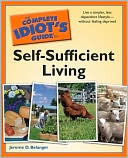
Book Review: The Complete Idiot’s Guide to Urban Homesteading & to Self-Sufficient Living

The Complete Idiot’s Guide to Urban Homesteading
Sundari Elizabeth Kraft
Paperback, 352 pages
Published by Penguin Group (USA)
ISBN: 9781615641048

And

The Complete Idiot’s Guide to Self-Sufficient Living
Jerome Belanger
Paperback, 400 pages
Published by Penguin Group (USA)
ISBN: 9781592579457

Reviewed by Molly Remer

Written in clear, straightforward language and covering an impressive array of topics, Urban Homesteading and Self-Sufficient Living, are excellent resources to those on a sustainable living path. At first I expected them to be “too basic,” but discovered useful information and resources applicable to people at various stages and experience levels. Because they are so comprehensive, the books both serve primarily as a broad overview of relevant topics, rather than as in-depth how-to guides. They serve to whet your appetite for further resources for a sustainable lifestyle.

I’m not a fan of the title Complete Idiot’s Guide in general, finding it unnecessarily insulting rather than amusing, but that is a minor drawback to these thorough, useful guides.

Of the two tomes, The Complete Idiot’s Guide to Urban Homesteading really shines. The focus is on micro-farming and self-sufficiency for the city dweller. It covers gardening (including options for those without yards), chickens and other small livestock, food preservation and preparation (including cheesemaking and various recipes for food prep), soapmaking, composting, foraging, and off-grid living. It also includes information about zoning laws and working with landlords. As someone who has homesteaded in a rural area for a number of years, I still found the Urban Homesteading book quite useful and informative.

The Complete Idiot’s Guide to Self-Sufficient Living focuses on living a self-reliant lifestyle and on sustainable living. It covers topics such as gardening, kitchen coordination, raising animals, and self-sufficient housing.

Disclosure: I received complimentary copies of these books for review purposes.