Birthrites: Birth as a Rite of Passage

“Woman-to-woman help through the rites of passage that are important in every birth has significance not only for the individuals directly bellypictureinvolved, but for the whole community. The task in which the women are engaged is political. It forms the warp and weft of society.” –Sheila Kitzinger (Rediscovering Birth)

“I love and respect birth. The body is a temple, it creates its own rites, its own prayers…all we must do is listen. With the labor and birth of my daughter I went so deep down, so far into the underworld that I had to crawl my way out. I did this only by surrendering. I did this by trusting the goddess in my bones. She moved through me and has left her power in me.” ~Lea B., Fairfax, CA (via Mama Birth)

I have long held that birth is a rite of passage worthy of acknowledgement, care, and deep respect.  This post is second in a series of short posts from the book Birthrites by Jackie Singer (the first was about ritual). Singer writes powerful about birth as a rite of passage here:

Birth is the archetypal rite of passage for a woman, containing the essential elements of any ritual: separation from normal life, a profound transition during which the participants occupy a timeless time, followed by re-entry into society in a changed state. It can also be seen as a holy sacrament; the entry of a soul from another plan into this earthly dimension. Birth has always been, and still is, a momentous event, attended by great hopes as well as genuine risks, and one in which people call on a variety of powers for support and protection…

…such a calling in of the spirit is still possible today, whether the birth is at home in a candle-lit pool, or by Caesarean in a brightly lit hospital…

Some collected quotes from past posts on this theme…

‘All cultures believe that women become better and more generous through the process of giving birth. That is why some cultures use words such as ‘sacrifice,’ ‘suffering’ and ‘labour.’ These terms can seem overwhelming and to be avoided’ however, seen from a different viewpoint, childbirth helps us to become strong, resourceful and determined.’ (The Pink Kit)

via Birth as a Rite of Passage & ‘Digging Deeper’ | Talk Birth.

‘Birthing is also a rite of passage–into parenthood–and like any other passage, it comes upon us and we just have to deal with it. It’s an awe-inspiring experience, and it would be perfectly natural to want to prepare in some way. And you can do that. But to some extent the experience is still out of your control.’ (The Pink Kit)

via Birth as a Rite of Passage | Talk Birth.

“Childbirth is a rite of passage so intense physically, psychologically, emotionally, spiritually, that most other events in a woman’s life pale next to it. In our modern lives, there are few remaining rituals of initiation, few events that challenge a person’s mettle down to the very core. Childbirth remains a primary initiatory rite for a woman.” –from the book MotherMysteries

via Thesis Tidbits: Birth as a Shamanic Experience | Talk Birth.

‘So how can today’s modern goddesses, and in particular mammas-to-be, prepare themselves for life’s many transitions? A good starting point is to create your own rite of passage for whatever transition you may be going through. Pregnant women could change their planned baby shower to a Mother Shower (also known as a Blessingway). Mother Showers celebrate and nurture the mother rather than focusing exclusively on the child and are a growing trend amongst women. They offer pregnant women a chance to honour their pregnancy journey, to enjoy symbolic rituals of preparation for the labour and birthing ahead and indulge in an afternoon of loving, nourishing attention from their closest friends and family. And yes, there are still cupcakes!’ –Kat Skarbek

via Rites of Passage… Celebrating Real Women’s Wisdom | Talk Birth.

December 2013 009

Birthrites: Ritual

October 2013 021“This is my body; this is the temple of light. This is my heart; this is the altar of love.”

–Sufi song (quoted in Birthrites)

I received a lot of wonderful books for Christmas this year. One that particularly caught my attention was Birthrites: Ceremonies and Rituals for the Child-bearing Years by Jackie Singer. While it doesn’t contain any ritual outlines, per se (which I had been hoping for), it does contain a lot of thoughtful information. I especially appreciated that it includes information about creating ceremonies to acknowledge a variety of outcomes during the childbearing year, including infertility, abortion, and miscarriage, as well as full-term birth. Two quotes from Birthrites about the value and purpose of rituals in general:

Making ritual diverts our attention from the everyday tasks of survival, and for a brief time allows us to notice and comment on where we are. Faced with the awesome experience of findings ourselves conscious in an unpredictable universe, making ritual is a noble attempt to confer rhythm and coherence to our lives…

…there is a paradox inherent in the whole concept of new ceremony, because part of the power of ceremony is that it has the weight of tradition behind it. In times of continuity, ritual would be something handed down by the elders. Perhaps this is an ideal, but we do not live in times of continuity. Rather than abandoning the whole idea of ritual as irrelevant, we need to respond to the challenges of our fast-changing age by renewing ritual practise in a way that honours the past but makes sense to us now.

This reminded me of my own previous post about blessingways and the role of ritual:

…We’re blessing each other. When we “call down a blessing” we’re invoking the connection of the women around us, the women of all past times and places, and of the beautiful world that surrounds us. We might each personally add something more to that calling down, but at the root, to me, it is an affirmation of connection to the rhythms and cycles of relationship, time, and place. Blessings come from within and around us all the time, there’s nothing supernatural about it.

I also think, though I could be wrong, that it is possible to plan and facilitate women’s rituals that speak to the “womanspirit” in all of us and do not require a specifically shared spiritual framework or belief system in order to gain something special from the connection with other women.

In another book I finished recently, The Power of Ritual, the author explains:

“Ritual opens a doorway in the invisible wall that seems to separate the spiritual and the physical. The formal quality of ritual allows us to move into the space between the worlds, experience what we need, and then step back and once more close the doorway so we can return to our lives enriched.”

via Blessingways and the role of ritual | Talk Birth.

This post is part of a four-part series of short posts from Birthrites.

Product Review: Squeez’Ems

There’s something about kids and squeezable pouches of food. There’s also something about toddlers and not eating. Therefore, when I got a Screen Shot 2013-08-14 at 8.31.28 AM copyrequest to review Squeez’Ems reusable food pouches, I suspected this might be a winning combination. At around 2-3 years old, I’ve noticed that all of my kids sleep better at night if they eat a good bedtime snack. This is also the age at which I night wean them, but then find I’m still awakened all night by a kicky toddler who seems to be hungry. So, we work hard to get a nutrient dense bedtime snack in them before bed and eventually the sleep for all improves. The sticky point can be what snack to offer. When Zander was little, we tried all kinds of different smoothie recipes, hoping for a magic combo. With Alaina, we do string cheese a lot and she rejects a lot of our other suggestions. Enter these little reusable pouches. Food is infinitely more intriguing to a little child when it is in a squeezable pouch. The first night, I filled it up with Greek yogurt and she slurped it all down and asked for more. Zander, who is seven now, also enjoyed two pouches worth of yogurt. See what I mean? Instant intrigue! However, there are two other great features about using the Squeez’Ems pouches instead of buying pre-pouched food: you know exactly what is going into it (no weird, additive-filled store purees) AND you can just wash it out and refill it, rather than trashing pouch after plastic (or foil) pouch! I call that a win for the ecologically-minded as well as for the bedtime snacking toddler. The company also notes that they are a good match for children with food allergies who may not be able to eat the same pouched foods being eaten by their contemporaries. I look forward to experimenting with some additional smoothie recipes and trying them out in these pouches!

Alaina is a fan!

For more info on Squeez’Ems, please visit www.booginhead.com.  Squeez’Ems are available at BabiesRUs stores and Amazon.com.

Disclosure: I received a complimentary two-pack for review purposes. I have no further relationship or financial benefit from this company.

Thesis Tidbits: Mary Christmas

Mary Goddess with child Paola Suarez sm

Mary and Child painting by blogging friend Paola Suarez

“…When I say painless, please understand, I don’t mean you will not feel anything. What you will feel is a lot of pressure; you will feel the might of creation move through you…”

– Giuditta Tornetta in Painless Childbirth

I am outsider to Catholicism and other branches of Christianity, but I see Mary as an aspect of the sacred feminine that weaves its way through a variety of religious traditions and practices. As a Unitarian Universalist myself, I believe there are many ways to touch the “chord of the sacred” within each of us and that we can find threads of commonality and expression in most religions. Since it is Christmas today, I wanted to share some intriguing excerpts from several different Mary-themed blog posts that touched me this week and that also relate to my dissertation topic of birth as a spiritual experience…

The first is from a birth blogging friend Kelli, who writes with love and tenderness about what the Christmas story can teach us about giving birth:

Another thing that Mary surely understood was that she was specially chosen to bring this new life into the world through the capabilities of her own body alongside that unconstrained power that placed him there in the first place. For birth is about releasing expectations and trusting that you are supported. It is knowing that just by the way your body was designed and grew this life, you are capable of bringing this life forward. In our modern world, what birth is all about hasn’t changed. It isn’t about dreading pain. It isn’t about wondering if “they” will let you do this or that. It isn’t about enduring it until it is over. It isn’t about being afraid and resigning to hope simply for a healthy baby. The child you carry is destined to impact the world. We may not know how, but we can know it is for certain. As the mother of this child, you matter. Mary is revered as holy by many of varying faiths. If giving birth is not sacred work, then what is? Birth, mamas, is about knowing. How this special and amazing child you carry comes into the world matters a great deal. How this child’s mother is revered before, during, and after the process of birth matters a great deal…

via How Can the Christmas Story Teach Us About Birth? – Confluence Mama.

Then, from a pagan blogger from whom I borrowed my post title today, this post about being pregnant with divine potential:

What could be more magical than conceiving, gestating, and giving birth to the embodiment of Christ consciousness?

What could be more magical than birthing the return of light into a darkened world?

What could be more magical than dissolving shame and restoring the brilliant shine to a woman’s life?

For all its shrillness and glitter, the Christmas season offers us images of Mary, big-bellied, pregnant with the Power of Being, however you might name it.

Allowing ourselves to deepen into those images might well dissolve the shame that so often obscures the light imbuing our bodies. Allowing ourselves to resonate with Mary might well unleash the life-celebrating energy already radiating from our bellies, our body’s core…

via Mary Christmas! Being Pregnant with God – PaganSquare.

And, of course, the breastfeeding activist in me thrilled to read this article about Pope Francis supporting public breastfeeding and this juicy, relevant snippet caught my eye about the image of the nursing mother—Mary—as historically symbolic of God’s love:

The cultural shift was so great that even Catholics soon came to regard the breast as an “inappropriate” image for churches. Instead, the sacrifice of the cross – the suffering Jesus – became the dominant motif of Christianity while the Nativity was sanitized into a Hallmark card.

“Ask anybody in the street what’s the primary Christian symbol and they would say the crucifixion,” said Margaret Miles, author of “A Complex Delight: The Secularization of the Breast, 1350-1750,” a book that traces the disappearance of the image of the breast-feeding Mary after the Renaissance.

“It was the takeover of the crucifixion as the major symbol of God’s love for humanity” that supplanted the breast-feeding icon, she said. And that was a decisive shift from the earliest days of Christianity when “the virgin’s nursing breast, the lactating virgin, was the primary symbol of God’s love for humanity…”

via Pope Francis backs public breastfeeding! And that makes him traditional… | Sacred and Profane.

On a related note, I also recently enjoyed seeing a picture on my Facebook feed of one of my birth goddess sculptures standing on shelf next to a Lego Pope and a lovely nativity set.  🙂

Merry (or Mary!) Christmas to you and may we all celebrate the birth of divine potential as we greet the dawning of a new year.

November 2013 041

Good Birth Books to Gift to Others

I’ve recently had several requests from friends asking about the best birth books to give as gifts to pregnant relatives. After sending my third response, I realized that there’s a blog post in here somewhere!December 2013 010

Here are my current recommendations:

Sacred Pregnancythis book is simply beautiful. My past review is here.

Giving Birth with Confidence—this is the well-known childbirth education organization Lamaze International’s guide to pregnancy and birth and it is one of my favorites. My review of a past edition is here.

The Birth Partnerthis guide by Penny Simkin is a classic for helping fathers or other birth partners serve during labor

The Greatest Pregnancy Everfocused on positive mental attitude during pregnancy and cultivating a mother-baby bond prenatally (caveat: I’ve not actually finished reading this one, so I’m not sure if I have any reservations about it or not. I bought it at the last CAPPA conference)

Birthing from Within—the original birth art resource and a fabulous “out-of-the-box” handbook for preparing for birth. It is not attached to a particular outcome and can help mothers dig deep whether experiencing a home birth or a cesarean. This book is my all-time favorite, but my recommendation comes with a caveat that the short breastfeeding section is terrible.

The Baby Book-a comprehensive, reassuring look at baby’s first year by Dr. and Martha Sears.

For birth stories, I love and adore Simply Give Birth (past mini-review is here). I also like Journey Into Motherhood (available as a free digital copy here) and Adventures in Natural Childbirth.

I used to recommend The Thinking Woman’s Guide to a Better Birth, but is has been replaced by an updated version called Optimal Care in Childbirth and I’ve not yet read that one. My educated guess is that it is still an excellent recommendation! 🙂 I also used to recommend The Birth Book by Dr. Sears. It is still a good suggestion, but it is now an “older” book and so I don’t put it at the top of my list any longer.

Also, make sure you grab a copy of the free Guide to a Healthy Birth from Choices in Childbirth. I love this little booklet so much! It is my top favorite resource for tabling at community events. Another free educational resource that I recommend (particularly for women planning natural births in hospital settings) is Mother’s Advocate. There is a free booklet and a series of videos that explore Lamaze’s Six Healthy Birth Practices (which all mothers deserve as part of evidence-based care during birth, regardless of birth location).

Past book lists and related suggestions:

What To Do When Newly Pregnant and Wanting a Natural Birth…

Suggested Reading

Postpartum Reading List

Book list: Preparing Children for Homebirth

Non-Advice Books for Mothers

2012 Book List (all kinds of stuff, not just birth)

In addition, all the books I’ve reviewed in the past are available on my website from this link, so make sure to browse and see if anything else jumps out at you as a good match.

“Everyone who interacts with a pregnant woman is, in some way, her ‘teacher.’ Telling birth stories, sharing resources, imparting obstetrical information, giving advice or warnings—these are all direct or indirect ways of teaching about birth and parenting. Whether you currently identify yourself as a ‘childbirth teacher,’ or you are a midwife, doctor, doula, yoga teacher, nurse, therapist, breastfeeding counselor, or you are simply a woman or man who cares about the power of the childbearing year, you already hold the power of mentoring within you.”

–Pam England

Happy Holidays! (link round up)

I’ve already offered a holiday greeting from Talk Birth:

cropDecember 2013 019And, here’s one from my family:

postcard


I’d also like to share this quick post round-up on relevant posts from prior years. The first is one of the most popular guest posts on this blog: Guest Post: Alcohol and Breastmilk

The second is a guest post about toddlers and Christmas: Guest Post: 8 Toddler Pitfalls to Avoid on Christmas Morning

And, a related post on Top 10 Kid Gadgets for Holiday Road Trips

The third is my own little ditty, the Twelve Days of Birth Activist Christmas

I’ve also written about Last Minute Gift Idea: Rescue Gifts

While not specifically holiday in nature, I also wanted to share that the winter edition of the Friends of Missouri Midwives newsletter is available online. Lots of great birth stories in this issue! This is my last issue as the newsletter editor and I’m stepping down after seven years of volunteer work in this role.

I want to take a moment too in acknowledgement of those whose grief is fresh, current, and raw at this time of year and for whom the holiday plans and dinners and parties may feel frivolous and painful. I will never forget that the holidays may hold memories of loss and suffering or current experiences of loss for many people (see: Holidays After Loss). I spent a very painful Thanksgiving, Christmas and New Year’s Day myself following my miscarriage-birth in 2009 and I always remember those feelings at this time of year, even though the grief is no longer fresh and urgent. Mark’s dad died on Dec. 18th in 1998 and a part of us will always associate this time of year with weeping in that frozen cemetery, rather than making plans for Christmas dinner. My grandma often visited us for Thanksgiving and the passing of October also marked the passing of an entire year since we last saw her in person. We unpacked a lot of Christmas ornaments this year that she made for us and my mom and my aunt both shared similar experiences—there are many signs of her busy, creative hands on all of our trees. Thanks to my mom’s courier services, I also have this massive holiday penny rug on my kitchen wall that I couldn’t stand leaving behind in California. We’re not 100% sure that my grandma actually made it, since it doesn’t quite look like her style. However, she did make a lot of different things, including several regular sized penny rugs. And, there is are unfinished elements to this piece that make me think she did make it. Regardless though, someone put a lot of work into this enormous masterpiece!

December 2013 002

The 12 Days of X-Files Christmas

IMG_0085

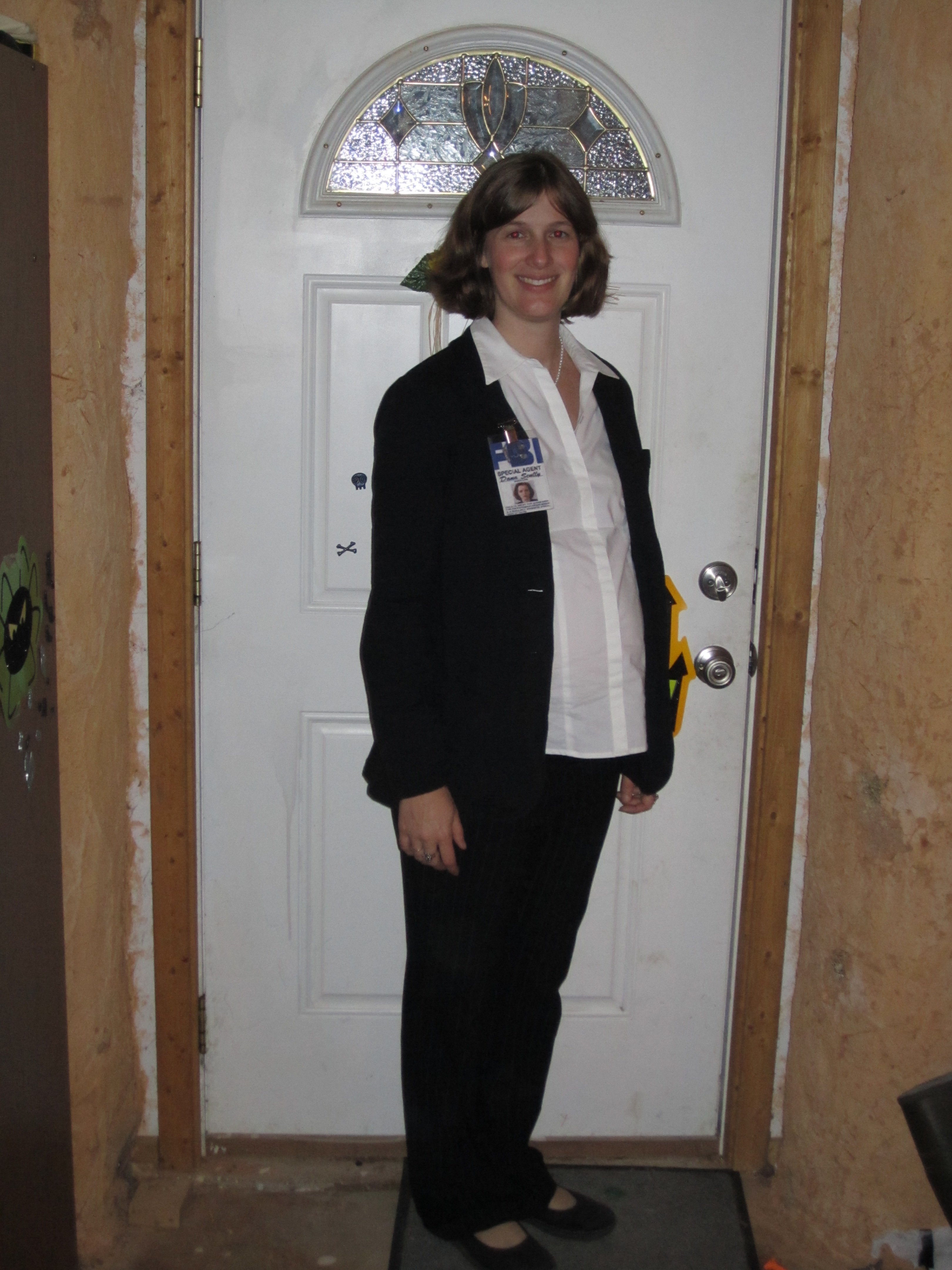
Dressed up as Scully on Halloween, 2010

I’ve already shared my 12 Days of Birth Activist Christmas, but I also have a lesser-known masterpiece to treat you with today. Once upon a time, many years ago Mark and I collaborated with my parents to come up with a lovely rendition of The 12 Days of X-Files Christmas. (We both used to be huge X-Philes, to the extent that in my pre-kid life I lovingly handcrafted a diorama of Mulder’s apartment, complete with tiny made-from-craft-foam porn videos, for which I printed small, smutty covers via the internet. Oh, and a fish tank.)

Sing it…

12 Days of X-Files Christmas

On the first day of Christmas, Mulder gave Scully
Some parts from a dead body (or: a government conspiracy)

On the second day of Christmas, Mulder gave Scully
Two UFOs and some parts from a dead body

On the third day of Christmas, Mulder gave Scully
Three Lone Gunmen, two UFOs…

On the fourth day of Christmas, Mulder gave Scully
Four abductees, three Lone Gunmen…

On the fifth day of Christmas, Mulder gave Scully
Five cell-phone rings, four abductees…

On the sixth day of Christmas, Mulder gave Scully
Six Chaco chickens, five cell-phone rings…

On the seventh day of Christmas, Mulder gave Scully
Seven swarms of bees, six Chaco chickens…

On the eighth day of Christmas, Mulder gave Scully
Eight Syndicate members, seven swarms of bees…

On the ninth day of Christmas, Mulder gave Scully
Nine black oil victims, eight syndicate members…

On the tenth day of Christmas, Mulder gave Scully
Ten little green men, nine black oil victims…

On the eleventh day of Christmas, Mulder gave Scully
Eleven gross autopsies, ten little green men…

On the twelfth day of Christmas, Mulder gave Scully
Twelve reprimands from Skinner (or: twelve nice big kisses)…

Totally off-topic? Yes. And that’s okay. 😉

Thesis Tidbits: Exceptional Human Experiences

December 2013 032“Not every woman experiences unaided, natural childbirth, yet many women hope for it. To strive for birth as a peak experience—to withstand this ‘trial by fire’–a woman must learn what labor pain is and be prepared to accept and work with it. And she must also prepare for the unexpected.” –Karen Fisk

Women are as nervous and unsure of themselves as ever, and they need to learn to trust their bodies. Birthing is much more that eliminating pain. It is one of life’s peak experiences.” –-Elisabeth Bing

From Nane Jordan’s MA thesis, Earthdance, Birthdance, my attention was caught by a reference to Exceptional Human Experiences and whether birth qualifies as such:

I liked the idea of researching what are known as ‘Exceptional Human Experiences’ by Rhea A. White (1998). White does not mention birth in her discussion of what EHEs are, describing the importance of near-death experiences, mystical revelations, psychic and ‘wonderstruck’ sensations. I posit that women can access and experience ‘mystical’ states when giving birth. EHEs contribute to overall human development but in order to contribute they need to be spoken of and integrated as much as painful or traumatic experiences, not suppressed within a person’s life experience. The huge oversight of birth as an EHE speaks to our cultural denial of the revelatory aspects of women’s birth experiences (gestation and birth as perhaps the first ‘mystical’ revelation), and birth’s overall impact within the developmental lives of women…(p. 21-22)

I’ve previously referenced the idea of childbirth as a “flow experience” in this post:

In the textbook Childbirth Education: Practice, Research, & Theory the concept of birth as a peak, or “flow” experience is addressed several times:

The joy and personal growth that can result from successfully meeting challenging experiences has been described as ‘flow experiences’…such experiences are generally better understood in athletics than in childbirth because the public understands athletic events to be character building and an effort or a struggle that requires skill, practice, and concentration and is not without pain. As such, athletic accomplishments are widely recognized for both the product and process…Society focuses the celebration of birth almost totally on the product–the baby–and is rather neutral about the process as long as the mother emerges healthy.

via Childbirth and ‘Flow’ Experiences | Talk Birth.

And, about birth as a peak experience in my own life in this one:

Birth is (or can be) a “peak experience” for women (and families). I want all women to have a chance to experience that. I certainly do not want her to feel diminished, unworthy, inferior or lacking if birth is not a peak experience in her life, but I also want all women to certainly be given a reasonable opportunity to let birth unfold in all its power and be treated respectfully and humanely by those around her—regardless of what is going on or the eventual outcome.

I love birth and cherish my memories of my sons’ births and consider them to be some of the most transformative, empowering, and significant single days in my life—peak experiences, powerful memories—and I also feel that birth matters as a distinct (and relatively rare) occurrence in a woman life. I believe birth has inherent value and worth on its own terms.

via Birth, Motherhood, & Meaning | Talk Birth.

What do you think? Was a birth a peak experience for you? Does birth belong on the list of potential exceptional human experiences? What do you know of birth’s potential to be a mystical experience?

Talk Books: Laughter & Tears: The Emotional Life of New Mothers

Laughter and Tears: The Emotional Life of New MothersBecause books are my first and longest-lasting love, I began my blogging career with a book blog. I eventually gave it up when I felt I no longer had time for it and turned my attention of other blog work. However, I occasionally mine the old blog for content here and I’ve realized that rather than doing traditional reviews, I really, really like doing my somewhat-new “talk books” posts on this blog. I’ve mentioned before that one of my reasons for blogging is simply to store information in one place that I want to remember or come back to later. If I’ve typed up everything I like from a book, I don’t really need to hang onto the book and the “essence” of many books (or at least what I got from them) is all compiled in one place. So, what follows is one of those mined posts (though at the end, I got caught up in the topic and went off into some related thoughts).

Laughter and Tears: The Emotional Life of New Mothers was written in 1997 by Lamaze co-founder Elisabeth Bing. I found myself with a dearth of postpartum resource books after giving birth to my first child and desperately hungered for them. I went on a dogged mission to locate them, finding them somewhat difficult to unearth, and eventually I think I read basically every book ever written on the postpartum period.  I started out enjoying Laughter and Tears, but found it less and less engaging as it went on. I think there is such a great need for books about postpartum out there—ideally, for women to read before their babies are born. I wish I would have had one already on my shelf when my first baby was born, instead of having to discover the niche later. However, part of why the book was not engaging by the time I actually read it was simply because it is geared toward women in the immediate postpartum (and also first time mothers primarily)—when I read it, I was no longer there and so my interest in the book waned fairly quickly. I also found a the heavy emphasis on “reclaiming your body” off-putting—there was even a comment like, “now that your baby is a robust two month old, you can begin to reclaim your body by reducing or eliminating feedings at night.” Excuse me? “Robust” TWO MONTH OLD? That is practically still a fetus as far as I’m concerned!

Several quotes I marked to share:

“Our society is profoundly ambivalent about children. On one hand, we praise family values, but on the other, we emphasize individual liberty and the rights of women to have as many freedoms as men. We encourage mothers to desire to have it all, but do not guarantee maternity leave, health insurance, or day care. We use babies to sell products, from laundry detergent to automobile tires, but we don’t want a mother with a toddler in the seat next to us on an airplane. We question the legality of abortion but threaten to withdraw welfare benefits from disadvantaged children. We celebrate children and praise parents for having them, but we do not provide structures or systems to help nurture them.”

And, one I still find extremely relevant:

“The degree of pleasure you take in your mothering is not the same thing as loving the baby or being an effective parent. Keep in mind there is a distinction between mother love and maternal satisfaction. You may love your baby very much but be dissatisfied with your life circumstances.”

There was also a quote that I find a new relevance in today now that our household structure has changed to both parents being home nearly full-time. I’ve been confronted over and over again in the last several months with how many “keys” to the household and family life that I’ve held over my ten years as the primary parent in the home and that, at some level, there is a power in being the one who knows (even if it just where the mustard is, for example) and that switching over to sharing those household details doesn’t actually come easily for either parent, no matter how we’ve said we wish to share them. I’m also noticing how very, very many details of the somewhat invisible work of parenting are still very much my responsibility—such as planning birthday parties or taking kids to playgroup or making dentist appointments or making sure Christmas presents are purchased and equal—and apparently, I do not know how to let those go or start transferring some of the responsibility without feeling put-upon, annoyed, demanding or like, I’ll just do it myself, since I’m the expert anyway. And, as this quote below references, I also have enjoyed being the primary emotional parent as well and still hold on to that terrain—essentially, what I want to share is the cooking and towel-folding responsibilities, while still getting to be the one run to for security and snuggles.

“Men are challenged by their attempts to be more involved and more nuturant than the ‘traditional’ father. Women are challenged not only by developing an identity in the world outside the home, but also by opening up and truly incorporating men into the intimate life of the family. You may have a concept of what a more involved father should be like, but if you are honest with yourself, is your image truly about sharing the love and nurturance? Or is it actually about wanting your partner to help with domestic chores? Are you really imagining a co-parent, or are you thinking of something more like a regular baby-sitter and handyman?”

Whatever it’s shortcomings, this book again reminded me of how vital postpartum support is for families in our society and reminded me of why I originally wanted to be a postpartum doula and how called I felt to that work. In 2004, I trained with DONA as a postpartum doula and felt 100% certain that I had found where I belonged (indeed, I still get Christmas cards and updates from one of my first postpartum doula clients—I was good at the work and they liked me a lot!). I stopped working as a postpartum doula in 2006 though. My biggest reason for discontinuing postpartum work was because at this point in my life I couldn’t reconcile taking care of someone else’s family while my own needed me so much. There I would be washing my client’s dishes and thinking that I have a huge pile unwashed at my own house (that my husband then did at night when he got home) and/or folding their laundry and thinking of the two full baskets at my own house in my own living room as yet not put away. Also, I recognized that I felt more comfortable with and am temperamentally more suited for educational/”academic” types of support  rather than the “intimate” hands-on support that postpartum or labor support requires. For a time after quitting, I really felt embarrassed about it because I was SO sure it was my “calling” and because I spent so much money on training, books, supplies, certification packet, etc. (Luckily, I totaled it up when I was preparing to quit and I made enough money from my clients to at least more than pay myself back for the training!)

I feel fervently that women/families need postpartum doula support (sometimes desperately) and I felt depressed to realize that I wasn’t the person for the role after all. I didn’t understand at the time, but I quickly figured out why the majority of the women in the postpartum doula training with me were middle-aged. They had the energy to “mother-the-mother” and “nurture the family” at that season in their lives, whereas I am still in a season in which I need to nurture my own family before I have the energy to spare to nurture someone else’s. There were also a handful of women in the training, like me, who had very young children. There were no in-betweeners, like where I am right now. I’ve begun to notice this in birth activism work (and to a lesser, but still noticeable extent, in breastfeeding support work) as well—passionate mothers-of-infants or toddlers and gray-haired sage-women are the ones who come together for the bulk of the birth activist workload in various organizations.

I’m also reminded again, however, of why breastfeeding support holds such a lasting pull for me and that is because postpartum is where it is at, that is where we are so very, very deeply needed as support people. Birth is amazing and exhilarating and women most definitely need us there too, but in the nitty-gritty, day-to-day, unglamorous, nipples and breast infections, teething, crying, dirty-haired, exhausted, wrung-out maternal web of daily being is a very tender and delicate beauty that becomes visible only when we’re willing to spend months and months, or even years, serving as a listening ear, a medication lookup, and someone to trust with both her laughter and her tears.
December 2013 018Additional resource: Non-Advice Books for Mothers

Tuesday 10% off!

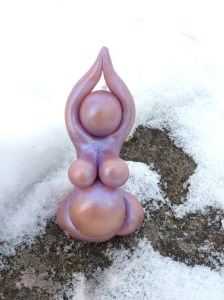
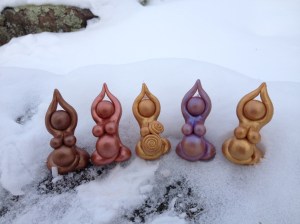
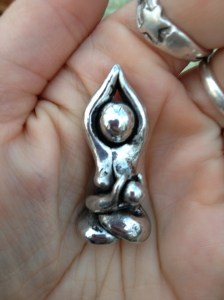
Instead of my usual Tuesday Tidbits news-type post, we decided to run a “Tuesday 10% off on the 10th” sale in our etsy shop! Use the code HOLIDAYS10OFF to get 10% off any of our jewelry or sculptures though next Tuesday (the 17th) 🙂 I just finished a small new batch of my polymer clay birth goddesses…

December 2013 037

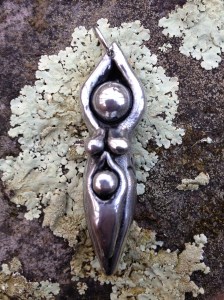
And, our pewter figurine and pendant listings are all up to date and waiting to ship….

My husband and I have been having so much fun building our shop’s inventory and working on our projects together. I hope to write more about that process soon, after I finish with all this darn end-of-session paper and exam grading! Then, I’m off work for a month, with lots of time to make sculptures and cast pewter. And, hopefully lounge around reading and making treats with my kids. 🙂