Happy Anniversary!

“Let’s work together, you and I,
alongside earthsongbeat,
heartfirst, handtouch
souldance.
please.”

–Holly Wilkinson
(in We’Moon on the Wall, 2014)

cropMolly 199Today is our 17th anniversary! When we got family pictures taken in May, the one above was kind of an “outtake,” but it ended up being one of my very favorites from the photo shoot.

We had a date last night courtesy of my parents and went out for sushi, alone, for the first time in what feels like a long time. After sushi, we went to A Slice of Pie and got a piece of apple pie with cinnamon sauce to share. While we love our children very much, we marveled quite gleefully at how delightful (and cheap!) it was to buy just one piece of pie and have it be enough. We went to the video store to rent a movie and as we walked in holding hands, we said, “remember what it was like to just do things together?” We were laughing, talking, and enjoying each other’s company and I had the realization that I also had when I went on my own with my mom to Kansas last year to wait for the birth of my nephew: oh, yeah. I’m actually a happy, funny, nice, and helpful person. Sometimes I feel like that gets drowned out or even obliterated by the mental fragmentation, constant distractions, and simple life management of parental life. We were together for eight years before our first baby was born and we had lots of shared, non-parental experiences. I realized last night that miss that. By the same token, we rarely spend time with any of the kids on their own either, they’re more of a group unit to be managed. I feel sad about that sometimes—wondering who they each are on their own terms and what our relationship, 1:1, is like.

While our goal for basically our entire marriage has been to live a home-based life with life and work seamlessly integrated together, the side effect of that home-based life is a type of oversaturation or enmeshment, wherein it is hard to appreciate each person, instead of working around, over, and through them. It also means that it feels good to sometimes get out and do other things. I love my home. I love being home and I love having a home-centered life. I don’t like driving places and rushing from place to place. My ideal week pretty much involves no more than two trips to town, preferably one. However, I also like small adventures and enjoying new experiences with my family. While you would think that day-in and day-out at home all together would be enough “togetherness,” it actually isn’t, because of that working around each other thing I already mentioned. Early this week, we all went to Six Flags near St. Louis and had a fabulous time. Next week, we’re going to stay in a cabin by the river. I’m not quite sure how we’ll do it, but I think we need to try harder to build in some couple time on our own, outside of the house as well.

(This is a little bit more of a depressing quick anniversary blog post than I meant to write! Sorry!)

On our anniversary, I always like to share this blog post with the poem a friend wrote about our rainy wedding:

We cannot know what will bring perfection. cropMolly 143
They had supposed that it would be a day
of exalted blue heights,
a tree-columned cathedral day
in the loftiest, most elegant
sapphire domed summer.

Sun blessing stone,
birds blessing sky
and in the gentle benevolence of that day
the bride and her ribboned maidens
would drift, pale and clear as flowers
toward the welcoming arms of her groom…

via Rainy Wedding | Talk Birth.


What should I pack in my hospital bag?

Mollyblessingway 037Packing a bag of labor and birth supplies to bring to the hospital or birth center has become a modern-day ritual of birth preparation. Plan to have your bag packed and stored close to the front door of your home (or in the trunk of your car) several weeks prior to your due date.

Here are some ideas of what to pack in preparation for birthing day:

General

  • A sign for your door indicating your desire to labor without medication (if this is part of your birth preferences).

Edible Supplies

  • Hard candy or little lollipops for a quick boost of energy.
  • Honey sticks: These sealed, clear plastic straws hold about a tablespoon of honey and are another excellent source of quick energy. You can often find them at farmer’s markets or health food stores.
  • Clear liquids to drink: Herbal tea, sports drinks, apple juice, or white grape juice.
  • Water bottles for you and your partner.

Personal Supplies

  • Lip gloss or lip balm (many women find their lips getting dry during labor).
  • Your own nightgown or large, long t-shirt to wear instead of a hospital gown. (Why wear your own gown in the hospital? Many women find this comforting, comfortable, and an excellent reminder of personal autonomy and individuality).
  • Warm socks: Many women’s feet get cold during labor.
  • Toiletry bag with toothpaste, deodorant, etc.
  • Hair ties or elastic bands to hold long hair away from your face

Comfort Supplies

  • Back massager (or, simply, a tennis ball for someone to roll over your back).
  • Your own favorite pillow.
  • Flexible straws and a cup to make getting a drink easier.
  • Special picture or artwork to look at during labor (if you’ve created a birth plan poster bring it to hang on the wall of your room)
  • If you are planning to use aromatherapy during labor, pack your special essential oils.
  • Supplies for a birth altar for inspiration, encouragement, and support during labor. (I make birth art sculptures as well as birth blessing pouches that can be wonderful for this purpose.)
  • A “touchstone” object to hold during labor—this could be a special smooth rock, a little stuffed animal, a piece of jewelry, or other meaningful small object that feels good in your hand.
  • Special birth music on a birth playlist on your phone or MP3 player.

Birth Partner Supplies

  • Snacks: Things like granola bars, fruit leathers, or other quick snacks that do not have a strong smell are ideal.
  • List of people to call with the happy news.
  • Toiletry bag with toothpaste, deodorant, etc.
  • Change of clothes.

After the Birth Supplies

  • Nursing nightgown (any gown that opens in the front for breastfeeding).
  • Breast pads (disposable or washable cotton).
  • Pads for post-birth bleeding (lochia).
  • Clothes for baby to wear home.
  • Comfortable clothes for you to wear home (loose cotton pants—even maternity pants—work better than jeans)

Supplies That Won’t Fit Into a Bag

  • Birth ball (some hospitals have them available to use).
  • Car seat for your newborn properly installed in the backseat of your car.

Best wishes for a beautiful birth!

July 2015 116Sign up for the Brigid’s Grove Newsletter for resources, monthly freebies, and art announcements.

Guest Post: How does your body know when to go into labor?

Mollyblessingway 011I recently received the following news story to repost. Many women have questions about when they will go into labor or concerns about pre-term labor. They may also worry about “never” going into labor on their own and may face pressure from care providers or family members towards induction. We often rely on signs like cervical changes, contractions, and increased cervical fluid (as well as proximity to due date) in order to help us anticipate the birthing day. I distinctly remember the interesting and counterintuitive experience of having the question of, “WHEN,” somehow feeling more and more mysterious and hard to predict the closer I drew to my own due dates (when really, the closer you get, the fewer birth-day possibilities remain! While it is very normal for babies to be born after their estimated due date, the possible window of when the baby will be born narrows with each day of pregnancy, simply because: babies do come out). Turns out, your baby’s birth-day timing has more to do with what is going on at a molecular level, than what you can observe from the outside!

(If this guest post is too heavy on molecules and too light on personal experience, you might want to check out one of my most popular blog posts: How do I know I’m really in labor? | Talk Birth.)

Key components of interest from the research below:

  • The molecule that triggers birth is the TLR4 molecule.
  • This molecule is activated by other molecules produced in the mothers tissues due to uterine stretch, by proteins that are released from a baby’s lungs just before birth, and by the placenta as it begins to reach the end of its life.
  • Factors that can contribute to a surge inTLR4 and lead to premature birth are:
    • Bacterial infections
    • Damage to the placenta
    • multiple pregnancy

Here is the guest post with more!

———————————————————————————————————————————-

RESEARCHERS at the University of Adelaide have identified that the activation of the TLR4 molecule is key in controlling the timing of birth, acting as a trigger common to both preterm and on-time labour.

Professor Sarah Robertson, Director of the Robinson Research Institute and lead author of the study published this week in Endocrinology, said the research was likely to lead to new therapies in preventing preterm labour.

“Preterm labour, birth at less than 37 weeks gestation, affects 5-13% of pregnancies worldwide. It accounts for 28% of all neonatal deaths and can result in major health consequences for surviving children,” says Professor Robertson.

“In order to prevent preterm birth, we need to understand the physiological responses which lead to normal on-time birth, and our new research pinpoints a ‘master switch’ that influences the timing of birth.

“We know that several agents can bind and trigger the molecule TLR4 after release from fetal and maternal tissues in late gestation, including proteins that are released from a baby’s lungs just before birth.

“Other molecules that activate TLR4 are produced in the mother’s tissues due to uterine stretch, or when the placenta begins to reach the end of its life.”

Professor Robertson says that there are other factors that lead to a surge in TLR4 and premature birth, including local bacteria infections, damage to the placenta due to inflammation, or even multiple pregnancy.

“This is a surprising finding because TLR4 is generally thought to be involved in the immune response to infection, and had not previously been linked with normal processes in pregnancy,” says Professor Robertson.

“Now that we know how critical TLR4 is in regulating the timing of birth, we can commence testing drugs that target the TLR4 pathway.

“While this is yet to be looked at in a clinical setting, we believe this finding will ultimately lead to methods to effectively protect women at risk of going into labour early,” she says.

This work was supported by project and fellowship grants from the National Health and Medical Research Council of Australia, the Canadian Institutes of Health Research and the Australian Research Council.

Key contacts

Professor Sarah Robertson Director, Robinson Research Institute University of Adelaide
08 8313 4094 sarah.robertson@adelaide.edu.au

June 2015 012

Tuesday Tidbits: Does Giving Birth Have to Be Terrible?

July 2015 116“To nurture life is to . . . embody the intelligent Love that is the ground of all being.”

— Carol Christ

Does giving birth have to be a terrible experience involving screaming, swearing, and pooping on the sterile “delivery” table? Anyone who has followed my blog for a while, already knows what my answer to this question is (no!), but here are some additional resources that caught my eye this week. First, erase the idea of maternal-fetal conflict, reinforced insidiously all across the internet and the media, and keep your expectations high:

Birth doesn’t have to suck. Keep your expectations high and do the work to have those expectations met. Don’t let anybody convince you that you need to step aside for your baby. You need to step up for your baby.

via Dear Friend, Birth Doesn’t Have to Suck | ImprovingBirth.

Next, choose your care provider very carefully. Remember, this baby only gets to be born once! Don’t wait for “next time,” to find a respectful provider and the birth setting your heart desires.

But, I have a doula, surely she’ll protect me from my less-than-ideal doctor!

No, again. Protection from other care providers is not a doula’s job. This is a multilayered issue, but here is a good post with some reasons why:

“My own doula and I have had more than one conversation about why she didn’t warn me about my own provider—someone who I now know has a reputation for not following through on promises to patients. “But I asked you!” I’ve said to her. “Why didn’t you tell me?” She has explained patiently, each time, that she gave me the information I needed to make my own decision. What I wanted from her—to say, “Oh, Cristen, you need to switch providers right now!”—is not something she would ever say to a client. Instead, she gave me specific questions to ask. She encouraged me to talk to my provider about my wishes and pay attention to the conversation, to trust my instincts, and to be honest with myself about whether or not I thought my provider was really going to follow through with what she’d promised.”

via Birth Monopoly | Three Things Your Doula Can’t Tell You.

I know you want your doula or childbirth educator to be able to tell you these things straightforwardly. I wish they could. I’ve had birth class clients ask me the, “why didn’t you tell me” question too and it is a very fine balance for birth professionals. I often longed for the freedom to take the Dr. Pig-Face approach, described by Nancy Wainer Cohen in her class birth activism book from the 1980’s, Open Season:

“If childbirth classes really ‘worked,’ more women would be having babies without interference. More women would be recognizing the complete naturalness of birth and would remain at home, delivering their infants with feelings of confidence and trust. More and more, midwives would be demanded. The names of those hospitals and doctors who treated women and babies with anything less than absolute respect would be public knowledge, and childbirth classes would be the first place these names would be discussed. ‘You’re seeing What’s-His-Face? He’s a pig! In my opinion, of course,’ I tell people who come to my classes. I then proceed to give them the names of people who have used Pig-face. They can always ask Dr. P. for the names of people who have used him and been satisfied with their births, for balance.”

–Nancy Wainer Cohen, Open Season

via Honesty in Birth Preparation | Talk Birth.

In addition to high expectations and careful assembly of the birth team, you may also want to keep secret the Mollyblessingway 027sensations of early labor. I followed this advice with all of my babies and have no regrets.

When you begin to have sensations, do your best to ignore them as long as you possibly can. You may want to consider keeping these feelings to yourself and having a “secret sensation time” with your unborn baby. Get in as dark a space as you can. Minimize what is happening with your husband, family and the birth attendants. You have control over your body and a say in your hormone activity. Help your pituitary gland secrete oxytocin to open your cervix by staying relax in a dark, quiet room with your eyes closed.”

via Words of Wisdom: Keep the “Sensations” of Early Labor a “Secret” | NüRoo.

Another way to prepare for a wonderful birth is through connecting with your body. One way to do this is through prenatal yoga. The movements and sensations of prenatal yoga sink into you and become a part of your body memory, guiding you through birthing:

“…Anyone involved with educating adult learners (in any context) is likely to be familiar with the concept that people are most likely to retain information that they have actually practiced (versus reading about, hearing about or seeing demonstrated). I have found that incorporating a few simple yoga poses into each class session is a beautiful way of illustrating and applying many important elements of childbirth preparation. In approximately 10 minutes of movement, important points can be underscored without having to actually say anything or “lecture” to clients. The hope is that as we move together through a carefully chosen series of poses, subtle emotional development and trust in birth occurs—again, in a more effective manner than by the childbirth educator saying during class: ‘Trust birth!'”

via Incorporating Prenatal Yoga into Childbirth Education Classes | Talk Birth.

Also, prepare yourself for a nurturing postpartum. Your baby will arrive primed for connection rather than separation. The more you are cared for by those around you during this vulnerable and magical time, the more embracing you can be of the delicate, fierce, and encompassing neediness of your dependent newborn:

“The cutting of the umbilical cord tends to herald the arrival of a new and unique life. Though this tiny being began its existence many months before, growing nestled and protected within the womb, the just-born infant is seen as an individual apart from his or her mother. There is, however, a significant error in this thinking, for baby and mother are one, so to speak, and severing this unit denies an empirical truth. Birth should not be a celebration of separation, but rather a reuniting of mother and baby, who joins her for an external connection.”

–Barbara Latterner, in the book New Lives

via Inseparable | Talk Birth.

I’ve spent a lot of time exclaiming: I JUST want to transform the birth culture in the U.S.! Now, you have a chance  to share your opinions and experiences in this new survey: Transforming Birth Culture in the United States Survey.

molly37weeks 071Other tidbits this week:

  • Lann has a new YouTube channel for his Minecraft and other gaming videos. You can check out Zall Craft here.
  • I finally took the leap and signed up for Leonie Dawson’s Shining Year Academy. I’ve been buying her annual workbooks for four years, but it is time to grow! We’ve been working through the Double Your Biz Intensive and it has already been worth the price! (*links are affiliate links)
  • I updated the links/print layout for my three e-booklets. These were all written prior to my birth work. Hope you might find them helpful! Free e-Booklets | Talk Birth

Red Tent Initiation Program Launch

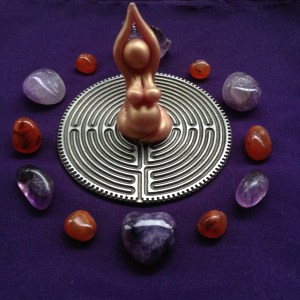
Mollyblessingway 372Following the spiral path of maiden, mother, and crone…

Do you want to take a journey into a deeper understanding of yourself? Do you wish to unlock insight and understanding? Do you want to reach out to other women in sisterhood and co-create a powerful circle experience?

This new online program is both a powerful, personal experience AND a training in facilitating transformative women’s circles. You will listen to your deep self, access your inner wisdom and prepare to step into circle as guardian and guide for other women who are hungering for depth, connection, restoration, and renewal in today’s busy world.

This intensive course is limited to 15 women, to allow for deep connection and dedicated attention.

August 29-October 12, 2015

Your online experience includes…

  • Asix week immersive journey over the course of the spiral path
    • Knowing Self (Maiden Unit)
    • Might of Creation (Mother Unit)
    • Gathering the Women (Crone Unit)
  • Each unit includes a ceremony, meditations, discussion questions, journaling exercises, projects, and prompts designed to take you deep into the Red Tent process.
  • Live interaction, support, feedback, and conversation via a private Facebook group

With your registration, you will also receive an incredible resource package valued at more than $100 including:

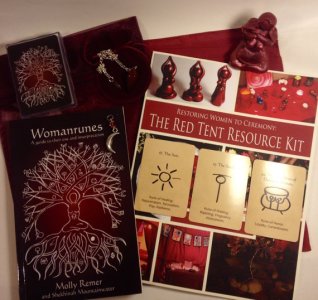
  • 58 page manual: Restoring Women to Ceremony, The Red Tent Resource Kit, written exclusively for our Red Tent redtentkitKit and Initiation Program. In this collection of essays and ritual resources, you will find a complete Red Tent “recipe,” circle leadership basics, moontime musings, and readings, quotes, and poems to help you facilitate a rich, inviting, welcoming, creative space for the women of your community.
  • Womanrunes Book and Card set: used throughout the program for personal guidance and self-development. And, perfect for ongoing use in an inspiration and renewal corner at your Red Tent Circle.
  • Red Tent Goddess Sculpture: symbolic of self-care and of both receiving and giving.
  • Carnelian Pendulum
  • Moontime pendant with silver-tone, solid crescent moon charm
  • Red altar cloth
  • Red organza bag to store your resources
  • Altar Candle
  • Head wreath kit and tutorial
  • Special Red Tent Circle Leader initiation gift (to be opened only upon program completion!)
  • Red silken cord
  • Moon or spiral goddess pendant

After your process is complete you will also receive:

  • Certificate of Completion
  • Ritual Recipe Kit e-book
  • Circle-ready digital files of the rich meditations and insightful readings used in the program
  • Ongoing support and guidance through continued participation in our private Facebook group

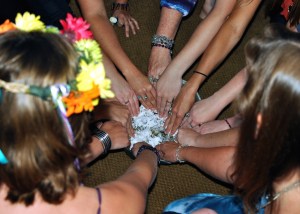
Mollyblessingway 238For inspiration on your own path, feel free to listen our local Red Tent Circle singing the beautiful chant Dance in a Circle of Women during our May Circle

Register via our website or check out via Etsy here.


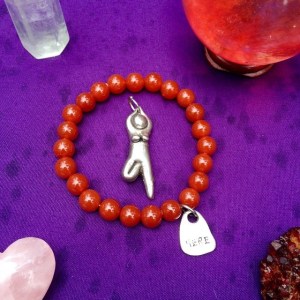
Telling About It: Tree Pose Yoga Goddess Pendant

In tree pose, she finds her balance 11223536_1643434975868718_5733380625052658785_n
despite asymmetry.
Flexible, yielding,
strong, and steady.
One-legged and whole…

I created our Tree Pose pendant to remind me that “balance” does not need to be perfectly symmetrical or even. Balance is about finding your center (even if one “leg” of your life is taking more time/attention than others…)

I encounter many other women who express teetering on the edge of finding that elusive and possibly-not-actually necessary “balance” in their work tasks and mothering tasks. I have a friend who describes balance not as making things “equal,” but as being like tree pose in yoga—you want one leg to be firm underneath you so you can stay standing up, but your two sides do not have to actually be “equal” in order to be balanced. Sometimes my balance is weighted towards work-at-home tasks, sometimes toward parenting, sometimes toward teaching, but I know it will continue shifting and I’ll still be standing. Find your center. That is the mental reminder that instantly pulls my own literal tree pose into balance for me during my daily morning yoga practice. Find your center.

I’m in one of those off-balance positions right now while I finish up the summer school session, work with my Womanrunes class, and prepare for our Red Tent Program beginning in August. I got out my tree pose goddess and put her on as a reminder to me, both to find my center, but also that this sensation is not new or terrible, it is just is here again. I re-read this past post:

…As I’ve alluded to in the past, usually online teaching blends seamlessly into my day, often taking roughly the same amount of time and energy that checking in with Facebook would take. During the two weeks each session that papers are due (fifth and seventh weeks out of an 8 week session), the work suddenly feels unmanageable and incompatible with motherhood and I feel taut, tense, and drawn. The kids are need-factories and I’m distracted and impatient and consumed with the NEED to get these freaking things GRADED and OUT OF MY HEAD!

via The tensions and triumphs of work at home mothering | Talk Birth.

And, Tanner fell asleep clutching my pendant:

<exhale>

Tuesday Tidbits: More Women’s Health Thoughts

February 2015 091Can we actually expect humane care in pregnancy and birth? According to a new report, no. Mistreatment in labor is a worldwide issue…

99% of all maternal deaths occur in low-income and middle-income countries, where resources are limited and access to safe, acceptable, good quality sexual and reproductive health care, including maternity care, is not available to many women during their childbearing year. The most common cause of these maternal deaths are postpartum hemorrhage, postpartum infection, obstructed labors and blood pressure issues – all conditions considered very preventable or treatable with access to quality care and trained birth attendants.

Analysis of reports examined in this paper indicate that “many women globally experience poor treatment during childbirth, including abusive, neglectful, or disrespectful care.” This treatment can further complicate the situation downstream, by creating a disincentive for women to seek care from these facilities and providers in future pregnancies.

via Science & Sensibility » Report Finds Widespread Global Mistreatment of Women during Childbirth.

From the original paper:

…The researchers identified 65 (mainly qualitative) studies undertaken in 34 countries that investigated the mistreatment of women during childbirth across all geographical and income-level settings. They analyzed the evidence presented in these studies using thematic analysis, an approach that identifies and organizes patterns (themes) within qualitative data. Based on this analysis, the researchers developed a typology of the mistreatment of women during childbirth consisting of seven domains (categories). These domains were physical abuse (for example, slapping or pinching during delivery); sexual abuse; verbal abuse such as harsh or rude language; stigma and discrimination based on age, ethnicity, socioeconomic status, or medical conditions; failure to meet professional standards of care (for example, neglect during delivery); poor rapport between women and providers, including ineffective communication, lack of supportive care, and loss of autonomy; and health system conditions and constraints such as the lack of the resources needed to provide women with privacy.

via PLOS Medicine: The Mistreatment of Women during Childbirth in Health Facilities Globally: A Mixed-Methods Systematic Review.

I’ve written about violence against women during pregnancy before:

Domestic Violence During Pregnancy | Talk Birth

Companion guest post about abuse of women during labor:

Guest Post: Abuse of pregnant women in the medical setting | Talk Birth.

It was via link trackbacks to these posts, that I read an article about birth control which raises important questions related to men’s health as well:

…Around the planet, advocates for healthier families insist that reproductive rights are human rights. Are they? If so, why is little attention paid to reproductive empowerment of the half of humanity born male? An honest human rights framework would acknowledge that the difference between the top easily reversed family planning method available for women (1 in 2000 annual failure rate) and the top method available for men (1 in 6 annual failure rate) is unjust and unconscionable…

Condoms are So Hundred Years Ago: Why Better Birth Control for Men Would Be Better for Everyone | ValerieTarico.

And, finally, bringing it back to women’s health, I read a horrifying article about young women working in factories using radioactive paint.

…When the women began exploring the possibility that their factory jobs had contributed to their illnesses, university “specialists” requested to examine them. Former factory girl Grace Fryer was declared to be in fine health by two medical experts. It would later be revealed that the two experts who had examined her were not doctors at all but a toxicologist on the US Radium payroll and one of the vice-presidents of US Radium…

The Radium Girls and the Generation that brushed its Teeth with Radioactive Toothpaste | Messy Nessy Chic.

This is why people question GMOs, flouride, vaccines, ultrasounds, artificial sweeteners, etc. Because we cannot always assume benign intent, nor can we assume full and appropriate disclosure, risk assessment, and truth from corporations with a vested interest in claiming no harm.

Super quick post for today! I’ve been busy grading papers and have a class to teach tonight.

Eightmonthababy!

June 2015 037

At river!

I’m mired down in paper grading and classwork right now, but I don’t want to let too many more days pass without a quick update about my eightmonthababy! This little guy continues to speed his way through life.

As of 8 months, this is what we’ve got going on:

  • Climbs stuff. For real. If he sees a box or an unsteady lid, or a stack of toys or laundry, he climbs up to boost his reach.
  • Smiles a funny, quirky closed mouth smile more often than a huge gumbly grin. It is kind of wryly amused smirky smile. I don’t remember my other babies doing this.
  • No teef! Not sure where they are, but its okay.
  • Claps to music. Loves music.
  • Also still loves to go outside. And, loves, loves, loves, water and swimming and baths.
  • Waves and says bye and hi and mama and wa-wa. More than once, has pulled my shirt and said “Mama, wa-wa,” which I take to mean he wants “Mama Water” (i.e. nursing). Had total Helen Keller moment with washing his hands and while they were under the water he June 2015 065suddenly made the connection. Later, when recounting the story of this lightbulb moment to others, he, sitting and looking with his little smirk, announced “wa-wa, indicating he had heard story and was confirming account!
  • Has specific noise that means, “something fell on me.” Happens with relative frequency due to aforementioned tendency to find things to climb on.
  • Weighs 22lbs! Is a big chunk. Is heavy and long.
  • Stands up alone from ground periodically. Also, stands unsupported when you set him down on the floor. And, just yesterday, took two steps alone supported only by bacon. Yes, was eating bacon (locally raised and nitrateless! Crunchy points intact?!?!). Had it sticking out of his mouth and Mark reached out for it for some reason and had one end of the piece and Tanner walked towards him like he would if his hand was held.
  • Is extremely energetic, grabby, reachy. Always spinning around trying to reach things and leans forward while you’re carrying him to “steer” you in proper direction. Very hard to hold! My dad described him as being like trying to hold “liquid metal.” This is very true.
  • Speaking of my dad, Tanner loves him very much! He also loves my mom and he goes over to their house with June 2015 039the rest of the big kids almost every day!
  • Realized that the days of the “softly furred scalp” have passed. He has tons of blondie-blonderson hair instead. I miss the little ripe-peach head, but the fuzzy hair head is very nice too.
  • Crawls fast. Puts on a burst of speed to catch up. Goes to find me. Looks in rooms for me.
  • I don’t take enough video!!!! My other kids are always after me about this in a semi-accusatory manner. My iphone is perpetually out of storage space and that’s why. I need to get with the program because he isn’t going to be an adorable, burst-of-speed crawler for much longer!
  • I still sit next to him at naps. Takes a long mid-day nap (with much flopping around and back-patting to stay asleep, hence the sitting next to him) and a short late-afternoon nap (usually on my chest). I finally feel like he nurses enough during the day and my milk supply is in sync now with how often I often to nurse him and how much he actually wants to nurse. This has led to much better night sleep for me, which for a while was a challenge—he was nursing probably eight times a night or more for a while (to make up for only little snacks during the day, due to being so on the go) and now it is more like three times. Clearly, at 22 pounds, all is well.

June 2015 013I think that the most unconditional love I’ve experienced is from my babies TO me. I’ve never been loved so intensely and wholeheartedly as my babies love me. I know that might sound weird and that we think of parents as the ones having unconditional love for their babies, not vice versa, but the depth of the mother-baby attachment is extremely profound and incomparable. It is also feels so simple and uncomplicated. I had the same depth of attachment with all my children, but with each one I feel more aware of how short-lasting this period of intensity is and I just love how much my baby loves me. While we’ll always love each other deeply, right now we are a motherbaby—a single psychobiological organism and there just isn’t anything else like it.

June 2015 067

At summer party/family ritual. I am nursing, babywearing, eating homemade cotton candy, and scattering rose petals in our summer mandala + holding scissors for trimming flowers…all at the same time.

Tuesday Tidbits: Women’s Health

February 2015 117There are 70 hours left in the Sweetening the Pill Kickstarter campaign. I’ve been interested in the book since it was published in 2013, so I contributed to the fundraiser and now I’ll finally get to read it! There have been a variety of opposing articles published recently in various online venues, offering critiques of the idea of challenging the pill and its liberating benefits, claiming that such an effort is “anti-woman.” I feel like I can understand both perspectives (few issues genuinely have to be all or nothing, people!). I have conflicted feelings about birth control pills—they have been a tremendously important part of women’s reproductive rights AND there are variety of things about them that are scary too. We can’t assume that hormonal birth control is benign nor is it cool to diminish women’s powerful reproductive experiences as being “enslaved” to biology. At the same time, it is critical that women retain the ability to make their own decisions about their own bodies and family size. One scornful article I read mentioned that critiquing the pill is part of the trajectory of the “natural life” that includes homebirth and extended breastfeeding. For me, that is true and I’m not ashamed to admit it. As I noted in this older post:

…I’ve struggled with the question of birth control for some time. I took the pill for about six years and then after having my first baby in 2003 and going on the minipill, I had the sudden “epiphany” that if I was so committed to natural birth and breastfeeding and natural living and trusting my body, why the heck was I okay with filling said body full of hormones?! (The same epiphany, but including cloth diapers, led me to start using cloth moon pads rather than disposable as well. Never looked back!) We started using natural family planning instead (really, the Billings method) and it has been excellent for nine years—no “accidents” and more babies exactly when we decided we wanted them. And, no side effects, no money, and no hormones. Now that our family size feels complete, I find myself struggling with whether or not NFP will continue be “enough” until natural infertility takes over. NFP was fine when an accidental pregnancy was an acceptable option. At this point, an unexpected pregnancy would still be an acceptable option, however fast-forwarding the clock, I really, really, really, do not want to be someone who ends up having her first unexpected pregnancy at age 45 or something! I also do not want to engage in any permanent body-modification efforts (for either myself or my husband) when my own fertility will be up in the next 15 years or so (but body modification is forever!). So, I feel very optionless at this point…

via Talk Books: Sweetening the Pill | Talk Birth.

After writing this, we did hit our unexpected pregnancy quota (1), and while Tanner is a beautiful treasure that I’m June 2015 087grateful to have, I’m done having babies. Sooooo…what to do now?! I still feel the same sensation of optionlessness that I described two years ago and have been tossing back and forth the ideas of the minipill, a copper IUD, a vasectomy, and around and around.

Speaking of women’s health and our biological experiences, I was interested to read this observation from Veronika Robinson that what we think of as normal physical “suffering” with regard to menstruation may be side effects of modern culture rather than a natural experience:

Those of us on the edge of culture try to bring light to the lives of women who suffer with menstrual ‘conditions’. It’s important to ask ourselves: did Mother Nature really want us to suffer with migraines, cramps, bloating, bad tempers and heavy bleeding? I don’t believe so. In fact, the more we look at the lives of our ancestresses we see that the ‘menstrual’ curse is a recent phenomenon in female history. It is in direct proportion to the degree with which we concur with the modern lifestyle: lack of exercise, poor nutrition (caffeine, sugar, dairy, gluten, alcohol), inadequate sleep, stress, EMRs, pollution, lack of immersion in nature, too much screen time, etc.

via Women and the Moon: reclaiming our menstrual power | Veronika Sophia Robinson.

At the same time, what is “natural” with regard to menstruation can become a logic trap, because technically speaking, it isn’t natural to have a period every month at all. Women of the not-too-recent-past were almost constantly pregnant or nursing, rather than menstruating. Enter…the Pill…and around we go again. 😉 While I embrace natural family living as much as next crunchy mama, I have to laugh at us, when we make arguments like, “humans are the only mammal who…” or, “it isn’t natural to…” because, here we are sitting in houses, most of us with air conditioning, wearing clothes, cooking our food, driving our cars, and typing on our computers. Apparently, we’re mainly only interested in what is natural when it comes to scrutinizing what other women do with their bodies?! I give up!

Recognizing my own logical fallacies, however, doesn’t mean I’m not interested in what it means to be a conscious May 2015 085woman and for me that includes an intimate engagement with the realities of embodiment, rather than an effort to distance myself or pretend that powerful, normal physical experiences to not exist or can be medicated away:
We were at a loss. Would we ever feel like women? Would we want to? What did it mean to be a woman? Looking back, I wish I’d known a wise elder to invite me to a women’s circle but I’m not aware they even existed then – not in our society anyway. I’m so glad that’s changing with the red tent movement and women’s circles.

Women need other women to teach them what it means to be a woman, and to recognise that being a woman is something to welcome rather than resist!

via On Becoming A Woman | Flower Spirit.

In my class last week, we explored the idea that children with ADHD or autism spectrum disorders might simply be people who see the world in “more color” than those without diagnoses. So, I was interested to read several articles this week about Western culture’s narrow idea of mental health and the possibilities that, as a culture, we’re drugging our mystics and shamans:

Our mental health care system is breaking people. We have no room for the sacred, only normal.

The narrow range of accepted behavior expected from us is more oppressive than you might realize. That is, until we experience beyond it, until we get judged, until we don’t fit in, until we need fixing.

In Dr. Somé’s village, the symptoms we commit people for, Dr. Somé’s community recognize as marks of a healer. They respect and nourish the very same patterns that we condemn and drug…

We’re taking people with a completely different perceptual experience and calling it “wrong”.

We’re weeding out our geniuses. We’re killing off our prophets. We’re drugging our messiahs.

Were she alive today, Sylvia Plath would be on anti-depressants. Salvador Dali would be on anti-psychotics. Beethoven would be on Lithium. Newton would likely be committed as well as heavily drugged for his multiple, pervasive mental illness symptoms.

Don’t even get me started on Jesus Christ.

via Rethinking Mental Illness: Are We Drugging Our Prophets and Healers? | High Existence.

After I read the article above, I sought out the article she references by Dr. Somé:

Those who develop so-called mental disorders are those who are sensitive, which is viewed in Western culture as oversensitivity. Indigenous cultures don’t see it that way and, as a result, sensitive people don’t experience themselves as overly sensitive. In the West, “it is the overload of the culture they’re in that is just wrecking them,” observes Dr. Somé. The frenetic pace, the bombardment of the senses, and the violent energy that characterize Western culture can overwhelm sensitive people….

“I was so shocked. That was the first time I was brought face to face with what is done here to people exhibiting the same symptoms I’ve seen in my village.” What struck Dr. Somé was that the attention given to such symptoms was based on pathology, on the idea that the condition is something that needs to stop. This was in complete opposition to the way his culture views such a situation. As he looked around the stark ward at the patients, some in straitjackets, some zoned out on medications, others screaming, he observed to himself, “So this is how the healers who are attempting to be born are treated in this culture. What a loss! What a loss that a person who is finally being aligned with a power from the other world is just being wasted.”

via What a Shaman Sees in A Mental Hospital – Waking Times : Waking Times.

Less related to physical or mental health, but definitely related to emotional health, I enjoyed this article about personal journaling by one of my top favorite authors:

I want to jump up and down, run round the room, yell, “No no no! There are no shoulds! You can use personal writing to serve you however you want!!” But I have learned, imperfectly, that this is not the best way to make a skillful point to another person. So instead, I talk about how my relationship to personal writing has changed and how beautifully it serves me now.

Because writing to and for myself is one of my most essential practices. I could not do what I do or understand my life without personal writing…

via How Journaling Can Change Your Life or Strait-Jacket Your Creativity | Jennifer Louden.

For me, it is art journaling: colored pencils, free form thoughts mostly in the form of single words in non-linear sprinkles around the page, collages, and pictures from my own life cut out and put back together.

May 2015 010I feel I do a lot of my personal writing “out loud” though, in the form of blog posts. Personal writing, writing that some people might say should stay personal and not be splashed all over the internet, can deeply touch others when they need in and in ways that more sanitized and “polished” writing cannot travel. As an example, and bringing it back around to women’s health again, I enjoyed reading this power-FULL, intense, and strong birth story by a friend that I don’t see very often, but that I always feel a special connection to:

…Suddenly baby was in the birth canal and I was undone. All good feelings gone. This wasn’t a baby. At least not a human, possibly an elephant calf. Or, you know, a bag of knives. The stabbing, the shooting, the absolute ripping. My flesh cried; surely I was tearing in two. It just felt wrong, all wrong. I’ve struggled with wondering how to describe my pushing and actual delivery — should I romanticize it? No one is going to want to have a natural birth after reading about my experience. It was traumatizing…do I say that?

Obviously I decided yes; I’m going to say it like it was. Others have had births like this, and others still will, and although my honesty may scare some, I feel it will be a gift to other mamas who have traveled a similar path…”

The Birth of Phoebe Clementine | Peace, Love, & Spit Up.

Simply by sharing this link on my Talk Birth Facebook page, I’ve witnessed how Halley’s “confession” about her own sensation of trauma has given voice to other women who felt denied the permission to express their own feelings. That is the power of telling about it.

And, finally, this health related post of mine has been getting a lot of shares lately, so I might as well re-share it too!

…Next, the clerk starts an IV in your hand because, as she explains, you might get dehydrated while you wait for your fiancé.

“I have my favorite juice here, I’ll drink that instead,” you reply.

“No, no dear. No juice. You could aspirate it and die if you end up needing surgery.”

“SURGERY!” you exclaim, “Why would I need surgery? I’m just getting married!”

The clerk gives you a knowing glance, “Honey, about forty percent of women who get married here need surgery before their marriages are finalized. This is an excellent courthouse! We do everything possible to make sure you have a healthy husband when you leave here. Isn’t that what you want?”

All That Matters is a Healthy Husband (or: why giving birth matters) | Talk Birth.

February 2015 091

From Mother Blessings to Red Tent Circles: What comes after a Sacred Pregnancy?

IMG_5745In 2008, a small postcard at the local Unitarian Universalist church caught my eye. It was for a Cakes for the Queen of Heaven facilitator training at Eliot Chapel in St. Louis. I registered for the training and went, driving alone into an unknown neighborhood. There, I circled in ceremony and sisterhood with women I’d never met, exploring an area that was new for me, and yet that felt so right and so familiar. I’d left my two young sons home for the day with my husband and it was the first time in what felt like a long time that I’d been on my own, as a woman and not someone’s mother. At the end of the day, each of us draped in beautiful fabric and sitting in a circle around a lovely altar covered with goddess art and symbols of personal empowerment, I looked around at the circle of women and I knew: THIS is what else there is for me.

My work following the birth of my first son came to center heavily around pregnancy, birthing, and breastfeeding, Mollyblessingway 156the stage of life in which I was currently immersed. I’d wondered several times what I would do when those issues no longer formed the core of my interest and personal experience. How could I ever stop working with pregnant and birthing women? How could I stop experiencing the vibrance and power of pregnancy and birth? Would I become irrelevant in this field as my own childbearing years passed me by? Looking around the room at Eliot at this circle of women, only two of whom were also of childbearing age, I knew: my future purpose would be to hold circles like this one. I found something in Cakes that I needed, the recognition that I wanted to celebrate and honor the totality of the female life cycle, not just pregnancy. As a girl, I loved the mother blessing ceremonies my mom and her friends held to honor each other during pregnancy. They hosted a coming of age blessingway for all of their early-teen daughters as well and I helped to plan a subsequent maiden ceremony for my younger sister several years later. Locally, we carried that tradition forward into the current generation of young mothers, holding mother blessings for each other and enjoying the time to celebrate and share authentically and deeply. After my training, I facilitated a series of Cakes classes locally, attended a women’s retreat at Eliot Chapel, and began to facilitate quarterly women’s retreats for my friends. One of my stated purposes was to honor and celebrate one another without anyone needing to be pregnant. Somehow, even though our own local mother blessing traditions were beautiful, we had accepted that the only time we had ceremonies with one another was when someone was pregnant. I wanted to change that!

This year, my offerings has expanded from the women’s spirituality retreats and classes I held in my own home, to a Red Tent Circle held at WomanSpace in my nearby town. Our local Red Tent Circle definitely doesn’t focus exclusively on menstruation or on currently menstruating women (all phases of a woman’s life cycle and her many diverse experiences and feelings are “held” in that circle)–in fact menstruation sometimes barely comes up as a Mollyblessingway 215topic—however, one of the core purposes of our circling together is in celebration. We gather together each month to celebrate being women in this time and in this place, together. As I noted, I started out my work with women focused on birth, breastfeeding, and postpartum. While those are formative and central and important life experiences for many women, it became very important to me to broaden my scope to include the totality of women’s lives, not just pregnant women. I want to honor and celebrate our whole lives, not just pregnancy and birth. Having a mother blessing ceremony during pregnancy is beautiful and important and special, but I feel like that care, attention, value, and ceremony can be brought into the rest of our non-pregnant lives through gathering together in a Red Tent Circle. This is one reason why I developed an online Red Tent Initiation Program. This program is designed to be both a powerful, personal experience AND a training in facilitating transformative women’s circles. These circles bring the sense of celebration and power we may have experienced during our pregnancies and from our Mother Blessing ceremonies more fully into our lives as the honor the fullness and completeness of women-in-themselves, not just of value while pregnant.

I long to speak out the intense inspiration that comes to me from the lives of strong women.” –Ruth Benedict

I believe that these circles of women around us weave invisible nets of love that carry us when we’re weak and sing with us when we’re strong.” –SARK, Succulent Wild Woman

I am inspired by the everyday women surrounding me in this world. Brave, strong, vibrant, wild, intelligent, complicated women. Women who are also sometimes frightened, depressed, discouraged, hurt, angry, petty, or jealous. Real, multifaceted, dynamic women. Women who keep putting one foot in the front of the other and continue picking themselves back up again when the need arises.

I feel like my interest in social justice, women’s rights, and human services are intimately entwined with my spiritual life. Indeed, I almost cannot separate the two. I believe it is possible for us to have a truly loving world—a world in which the inherent dignity and worth of girls and women is not in question–and there is much good work that needs to be done in order for this world to be a reality.

This work I am now doing, both in person and online, represents an integration of something I feel with my mind, heart, and spirit. My whole being. At that Cakes training years ago, I glimpsed the multifaceted totality of women’s lives and I longed to reach out and serve the whole woman. My range of passion has extended from pregnancy and birth to include the full woman’s life cycle, rather than focusing exclusively on the maternal aspect of the wheel of life as I did for ten years. I create rituals that nourish, plan ceremonies that honor, facilitate workshops that uncover, write articles that inform, and teach classes that inspire the women in my personal life, my community, and the world. This is what else there was for me.

So, after you’ve experienced a sacred pregnancy filled with ceremony and ritual and celebration, what else is there for you? After you’ve worked for years with pregnant and birthing women to honor and celebrate them in their tenderness and strength, how might you branch out to hold space for all of women’s experiences and the many transitions of their life cycle? Like me, you might find your answer in holding a monthly women’s circle.

Learn more about our Red Tent Initiation Program, this in-depth online class is designed to be both a powerful, personal experience AND a training in facilitating transformative women’s circles.

Mollyblessingway 372