Tag Archive | birth classes

Comfort Measures Illustrations

We spend a lot of time in my classes talking about different comfort measures for birth. In fact, one of my most popular classes is my “Labor Support and Comfort Measures” single session class in which we practice all kinds of different skills that may be of use for birthing.

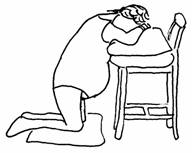
I enjoy Childbirth Connection’s free pdf booklet “Comfort in Labor” and use this as a class resource. Very recently, they added a new section to their website  with lots of helpful, line drawing illustrations for Comfort Measures During Labor.  The illustrations are the same as in the booklet, but presented on one page without a lot of accompanying text—great for visual learners!

As I’ve referenced before, the Transition to Parenthood website also has a helpful section of comfort measures illustrations available to birth educators.

Even if it might feel silly, I encourage people to print out the images and physically practice the techniques illustrated a couple of times—this helps develop a “body memory” so that when you are actually in labor different labor-beneficial positions feel comfortable and familiar. Also, it helps for the birth partner to have a body memory as well to help reinforce healthy positions or suggest fresh ideas.

kneeling with head on chair

New Edition of The Guide to a Healthy Birth!

One of my favorite resources to hand out in birth classes and to give to pregnant friends is Choices in Childbirth‘s booklet “The Guide to a Healthy Birth.” I’m so excited to learn that the second edition of the booklet is now available! (Thanks to Teri at Passion for Birth for the tipoff!) You can download the pdf version directly here. Or, for very minimal shipping, you can order print versions here.

I just ordered 50 copies, so if you’re a real life friend of mine or are taking a class from me, I’d be delighted to give you one of these phenomenal booklets!

Childbirth Education Mnemonic Devices

Thanks to the word “tulip,” used by my Western Civilization professor in 1996, I will never forget the 5 basic beliefs of Calvinism. This is an example of a mnemonic device that was (to me) apparently unforgettable. In March of this year, I took the ICEA childbirth educator certification exam. I studied compulsively for the exam and came up with a couple of mnemonic devices (word tricks that help you remember things) for several birth-related anatomy terms that I was otherwise having trouble remembering.

1. “What do you want for Isthmus [Christmas]?”  “A lower uterine segment!”

2. “Brady’s always been a little slow…” (said with a sort of sympathetic grimace. This helped me remember the difference between bradycardia [too slow FHT] and tachycardia [too fast]).

3. “I schitt on my tuberosities” (not pronounced quite as bad as it looks, draw out the “sch.” This helps me remember that the ischial tuberosities are the “sitting bones” at the bottom of the pelvis–I was getting them confused with the iliac bones and perhaps with the ischial spines).

4. And less interesting and more classic, that arteries carry blood *away* from something (both start with A) and veins carry blood to it.

5. I remember the three layers of the uterus by using the start of the word to remind me of its location. Endometrium is on the INside (end–>in). Perimetrium is on the perimeter (the outside. Words both start with “peri”). And, myometrium is in the middle–both start with “m.”

These are the ones that have come to mind right now. Does anyone else have any devices to add that they use for terms like this?

I’d like to find one for the 7 cardinal movements!

Trusting Your Doctor

Something that occasionally comes up during birth classes when talking about birth plans is, “well, I completely trust my doctor, so I feel like his judgment will be right for me…” (the reverse comes up more frequently, see my previous post!). I recently finished reading an older book called Education and Counseling for Childbirth and the author mentions this:

“‘Trust’ in doctor or midwife, valuable as it is, is not always a sure recipe for a happy labour. It may be enough for a woman to be healthy and hopeful and to know what is happening to her; it may be enough for her to be looking forward to her baby and to trust her attendants; enough for her to learn some breathing exercises and leave it at that. But it may not. Time and time again I meet women who need more time and care than is given by an overworked general practitioner or the enthusiastic but psychologically uninformed antenatal teacher—-women who need an opportunity to talk, express their fears and worries, and work through their problems in pregnancy in readiness for the responsibilities of motherhood.”

Trust is important—though I really emphasis trust in yourself, trust in your body, and trust in birth rather than exclusive trust in provider—but there is a lot more involved in preparing for a great birth than simply trusting your care provider.  Additionally, there is definitely a lot more to birth education and preparing for birth than knowing medical terminology, anatomy & physiology, and the phases of labor! I continue to strive for classes to will help build women’s inner knowing and sense of self-confidence. One primary benefit I see to teaching private classes, as I do, is that the couple is my sole focus of attention and so are able to have all their questions answered without feeling as if they are monopolizing class time (or embarassed to ask questions in front of other couples).

Skipping Birth Class?

Yesterday, I watched a short clip on why people don’t take birth classes. The comment that I found most interesting from the expert interviewed was: “The instructors in a lot of these classes –are a little bit doctrinaire about their point of view. They made an issue out of saying  ‘You’re not a real woman if you need drugs. She should go through labor and childbirth on her own with help from your spouse with breathing techniques. They made it a kind of a contest. A lot of mothers today don’t want it — they want to go in and have their baby with a pain free a time as possible.” I find this perspective about “a contest” sad and disheartening and inaccurate. It is also slightly amusing–seriously, I know NO ONE who would say to someone else “you’re not a real woman if you need drugs” least of all a professional person teaching a birth class! I think this might be an example of what someone says being different than what someone else hears: i.e. the instructor says, “all medications have an impact on the baby. Additionally, many women find a very satisfying sense of personal mastery from giving birth without medication.” The person hears, “you’re not a real woman if you need drugs.”

This reminds me of an excellent section I’m re-reading in the book Mother’s Intention: How Belief Shapes Birth about judgment and bias. The author also address how the word “balanced” is misused in childbirth education–as in, “I’m taking a class at the hospital because it will be more balanced.” Balance means “to make two parts equal”–what if the two parts aren’t equal though? What is the value of information that appears balanced, but is not factually accurate? Pointing out inequalities and giving evidence-based information does not make an educator “biased” or judgmental–it makes her honest! (though honesty can be “heard” as judgment when it does not reflect one’s own opinions or experiences). She says, “Every person has a lens. Every opinion is biased, including the ones you hold. The question is, what created the perception leading to a particular bias?…When it comes to childbirth and parenting, when someone dismissed information as ‘biased,’ what it actually means is the information does not fit their already held biases. It is our insecurities that bring up defensiveness in the face of judgment, or perceived judgment, as the case may be…You may never even have a thought in your head that the other person could have or should have done anything differently, but they are seeing your actions through their own lens and making assumptions.” (i.e. if a mother had a homebirth it may be assumed she hates doctors and hospitals). I think this is exactly what was happening in the video clip–because a birth educator shares the benefits of natural birth, the assumption is that she “hates epidurals” and thinks you’re “not a real woman” if you have one!

As far as the “contest” idea goes, I’ve mentioned this before–just because someone runs a marathon, for example, doesn’t make the person who opted out of the marathon bad or “less than” 🙂

The expert in the video clip referenced above also emphasized several times that the time investment in classes is just too much and parents just “don’t want to invest.” So, now perhaps this IS “doctrinaire” or unpleasant of me, but I also find it a little frustrating that people are apparently unwilling to invest the time in preparing for their children’s births–most people watch more than 8 hours of TV a WEEK, but 8 or 10 hours of birth classes total is too much to invest? I hope my classes are exciting and informative and useful to the parents that come to them. I also realize that week after week CAN feel like a lot, which is why I designed my single session classes. I get a lot of interest in the single session classes and I’m glad I came up with them, because I think it allows me to better meet more people’s unique needs! In fact, so far this year, I’ve done only mix-and-match classes (from 1-4 weeks), no full six-week-series’ (perhaps they are a thing of the past?). I find I get clients who are very well-informed and interested and that these classes “hightlight” the things they are most interested in learning about, though they often tell me at the end that they wish they had signed up for more classes!
The Daddy Brain

Two media items caught my eye today that relate to fathers. One was a short clip from “DadLabs: taking back paternity” called “Are birth classes worth it for dads?” The clip debates whether men belong in birth classes–as a birth educator who strives really hard to “reach” men in my birth classes, I was holding my breath on this one! They talk to several fathers, mothers, and one doula. I think the conclusion seemed to be that birthing classes are important and dads can benefit from them, but I’m not totally sure because the two hosts were kind of arguing about it!

The second piece was an article from Greater Good Magazine called The Daddy Brain. The article is about a stay-at-home dad and also addresses biology and child-rearing. A section I liked explains:

“In researching my new book, The Daddy Shift, I read every word I could find in peer-reviewed scholarly journals about caregiving fathers, breadwinning moms, and the science of sexual difference. I also interviewed dozens of parents….Here’s what I discovered: Where once it was thought that the minds and bodies of men were hardly affected by fatherhood, today scientists are discovering that fatherhood changes men down to the cellular level. [emphasis mine] For more than a century, it was assumed that mothers, not fathers, were solely responsible for the care, life chances, and happiness of children. In recent years, however, we have discovered that father involvement is essential to a child’s well being, and that dads provide unique kinds of care and play that mothers often do not.”

Can I really expect to have a great birth?

I received a comment via another blog asking “given my limited situation, can I really expect to have a great birth today?” (homebirth, midwife, and doula were all not options for the person asking the question). I think the answer is a qualified “yes.” The question really got me thinking about ways to help yourself have a great birth, when your overall choices are limited. I came up with a long list of ideas of things that may help contribute to a great birth:

  • Choose your doctor carefully—don’t wait for “the next birth” to find a compatible caregiver. Don’t dismiss uneasiness with your present care provider. As Pam England says, “ask questions before your chile is roasted.” A key point is to pick a provider whose words and actions match (i.e. You ask, “how often do you do episiotomies?” The response, “only when necessary”—if “necessary” actually means 90% of the time, it is time to find a different doctor!). Also, if you don’t want surgery, don’t go to a surgeon (that perhaps means finding a family physician who attends births, rather than an OB, or, an OB with a low cesarean rate).
  • If there are multiple hospitals in your area, choose the one with with the lowest cesarean rate (not the one with the nicest wallpaper or nicest postpartum meal). Hospitals—even those in the same town—vary widely on their policies and the things they “allow” (i.e. amount of separation of mother and baby following birth, guidelines on eating during labor, etc.)
  • When you get the hospital, ask to have a nurse who likes natural birth couples. My experience is that there are some nurses like this in every hospital—she’ll want you for a patient and you’ll want her, ask who she is! If possible, ask your doctor, hospital staff, or office staff who the nurses are who like natural birth—then you’ll have names to ask for in advance.
  • Put a sign at eye level on the outside of your door saying, “I would like a natural birth. Please do not offer pain medications.” (It is much easier to get on with your birth if you don’t have someone popping in to ask when you’re “ready for your epidural!” every 20 minutes.)
  • Work on clear and assertive communication with your doctor and reinforce your preferences often—don’t just mention something once and assume s/he will remember. If you create a birth plan, have the doctor sign it and put it in your chart (then it is more like “doctor’s orders” than “wishes”). Do be aware that needing to do this indicates a certain lack of trust that may mean you are birthing in the wrong setting for you! Birth is not a time in a woman’s life when she should have to fight for anything! You deserve quality care that is based on your unique needs, your unique birthing, and your unique baby! Do not let a birth plan be a substitute for good communication.
  • Cultivate a climate of confidence in your life.
  • Once in labor, stay home for a long time. Do not go to the hospital too early—the more labor you work through at home, the less interference you are likely to run into. When I say “a long time,” I mean that you’ve been having contractions for several hours, that they require your full attention, that you are no longer talking and laughing in between them, that you are using “coping measures” to work with them (like rocking, or swaying, or moaning, or humming), and that you feel like “it’s time” to go in.
  • Ask for the blanket consent forms in advance and modify/initial them as needed—this way you are truly giving “informed consent,” not hurriedly signing anything and everything that is put in front of you because you are focused on birthing instead of signing.
  • Have your partner read a book like The Birth Partner, or Fathers at Birth, and practice the things in the book together. I frequently remind couples in my classes that “coping skills work best when they are integrated into your daily lives, not ‘dusted off’ for use during labor.”
  • Practice prenatal yoga—I love the Lamaze “Yoga for Your Pregnancy” DVD—specifically the short, 5-minute, “birthing room yoga” segment. I teach it to all of my birth class participants.
  • Use the hospital bed as a tool, not as a place to lie down (see my How to Use a Hospital Bed without Lying Down handout)
  • If you feel like you “need a break” in the hospital, retreat to the bathroom. People tend to leave us alone in the bathroom and if you feel like you need some time to focus and regroup, you may find it there. Also, we know how to relax our muscles when sitting on the toilet, so spending some time there can actually help baby descend.
  • Use the “broken record” technique—if asked to lie down for monitoring, say “I prefer to remain sitting” and continue to reinforce that preference without elaborating or “arguing.”
  • During monitoring DO NOT lie down! Sit on the edge of the bed, sit on a birth ball near the bed, sit in a rocking chair or regular chair near the bed, kneel on the bed and rotate your hip during the monitoring—you can still be monitored while in an upright position (as long as you are located very close to the bed).
  • Bring a birth ball with you and use it—sit near the bed if you need to (can have an IV, be monitored, etc. while still sitting upright on the ball). Birth balls have many great uses for an active, comfortable birth!
  • Learn relaxation techniques that you can use no matter what. I have a preference for active birth and movement based coping strategies, but relaxation and breath-based strategies cannot be taken away from you no matters what happens. The book Birthing from Within has lots of great breath-awareness strategies. I also have several good relaxation handouts and practice exercises that I am happy to email to people who would like them.
  • Use affirmations to help cultivate a positive, joyful, welcoming attitude.
  • Read good books and cultivate confidence and trust in your body, your baby, your inherent birth wisdom.
  • Take a good independent birth class (not a hospital based class).
  • Before birth, research and ask questions when things are suggested to you (an example, having an NST [non-stress test] or gestational diabetes testing). A good place to review the evidence behind common forms of care during pregnancy, labor, and birth is at Childbirth Connection, where they have the full text of the book A Guide to Effective Care in Pregnancy and Childbirth available for free download (this contains a summary of all the research behind common forms of care during pregnancy, labor, and birth and whether the evidence supports or does not support those forms of care).
  • When any type of routine intervention is suggested (or assumed) during pregnancy or labor, remember to use your “BRAIN”—ask about the Benefits, the Risks, the Alternatives, check in with your Intuition, what would happen if you did Nothing/or Now Decide.
  • Along those same lines, if an intervention is aggressively promoted while in the birth room, but it is not an emergency (let’s say a “long labor” and augmentation with Pitocin is suggested, you and baby are fine and you feel okay with labor proceeding as it is, knowing that use of Pitocin raises your chances of having further interventions, more painful contractions, or a cesarean), you can ask “Can you guarantee that this will not harm my baby? Can I have in writing that this intervention will not hurt my baby? Please show me the evidence behind this recommendation.”
  • If all your friends have to share is horror stories about how terrible birth was, don’t do what they did.
  • Look at ways in which you might be sabotaging yourself—ask yourself hard and honest questions (i.e. if you greatest fear is having a cesarean, why are you going to a doctor with a 50% cesarean rate? “Can’t switch doctors, etc.” are often excuses or easy ways out if you start to dig below the surface of your own beliefs. A great book to help you explore these kinds of beliefs and questions is Mother’s Intention: How Belief Shapes Birth by Kim Wildner. You might not always want to hear the answers, but it is a good idea to ask yourself difficult questions!
  • Believe you can do it and believe that you and your baby both deserve a beautiful, empowering, positive birth!

I realize that some of these strategies may seem unnecessarily “defensive” and even possibly antagonistic—I wanted to offer a “buffet” of possibilities. Take what works for you and leave the rest!

Great births are definitely possible, in any setting, and there are lots of things you can do to help make a great birth a reality.

Births & Marathons

A parallel is often drawn between giving birth and running a marathon. There was a great article called “The Gift of Leaping” in the most recent issue of the International Journal of Childbirth Education (available to download as a pdf here) that was based on this theme.

In it, the author discusses how in both experiences your mind’s strength can be called upon to surpass your physical strength and she notes, “The pain of accomplishment is so much easier than pain endured.” I loved that!

She goes on to share: “I want that feeling of going beyond what you think is possible for laboring women. If you let go of control and allow the process to unfold, you are so proud of yourself. Then pride morphs into self-confidence and trust. What a perfect combination for parenting. When it comes down to it, you have to do this by yourself, be it labor or running. You might hear other laboring women around you or have the support of crowds in a race, but it’s still up to you. there’s a start and a finish and only you can see it through. Fortitude brings a new self-awareness and strength that feels overwhelming…I know one of my greatest challenges in the vocation of perinatal education is getting women to trust the process and her own capabilities before labor. My practice runs helped prepare me for the marathon, but there is no practice run for labor. Women must rely on their confidence and the legacy of the many women who have birthed before them…”

I share her feelings about her greatest challenge. The whole point of my birth classes is for the participants to develop confidence and trust in their ability to give birth naturally. It is difficult to share what birth is really like–it is a singular experience (each birth is different too, so even if you’ve done it before, there are still surprises ahead!) I also feel like it is irreplaceable to start off the parenting journey with a overwhelming sense of power, pride, and capability–a sense that often comes with the “I did it!” of giving birth!

Perceptions of Pain

Some time ago I wrote several posts about pain in labor, one of which addressed needing more words for pain. In the book Birthwork, there is an interesting list of possible perceptions of pain in labor:

‘Satisfying painenjoyable labour

–‘Positive pain’–it is birthing the baby

‘Constructive pain’–it is doing a good job

‘Functional pain’–acceptance of the process

‘Okay pain’–it hurts but everything is on track

‘Intense pain’–it is a lot!

–‘Abnormal pain’–something is not right

‘Overwhelming pain’–unable to manage alone (exacerbated by isolation, fear, exhaustion, and tension).

‘Off the wall pain’–utterly unbearable (usually associated with intense nerve or spinal pressure).

Even though these aren’t new words for pain, I think they add to our vocabulary for describing what is going on with our birthings. Additionally, keep in mind that you can transform the language and perception of the sensations of labor even further, by not using the word pain or contractions at all–you can refer to “sensations” or “tightenings” or “pressure” or “waves” or “surges” or “intensity” and so forth.

Just Relax?

Most approaches to birth preparation emphasize “relaxation” and being able to “relax” during contractions. Some people have noted that the word “relax” isn’t very descriptive to women in labor–or, it can irritate them (“Just relax?!”) while at the same time not really giving them anything specific  to work with. I recently finished a really incredible book called Birthwork (more about this will follow in several more posts!) and it addresses this topic as follows:

…it can be disconcerting for a mother to be told to ‘just let go and relax’ during labour without some practical guidance on how to  do this or without first acknowledging how tough it is, or how stuck or frustrated the mother may feel. Perhaps a more helpful response might be:

–‘Let’s find a way to open more.’

–‘How can I help you to let go?’

–‘Try softening here.’

–‘Sometimes this works really well. Would you like to try it?’

I particularly like the “soften here” idea. It reminds me of something else I read in The Pink Kit, which was about “directed breathing.” The idea with directed breathing is that you can direct your breath into any specific area of your body–when helping a woman in labor, you might put your hand on her lower back and ask her to “breathe into my hand.” When you practice this at home, it is fascinating to me how you actually have a sensation of “breathing” in your back, or thigh, or shoulder, or wherever–sort of a subtle feeling of expansion.