Archives

Tuesday Tidbits: Does Breastfeeding Really Matter?

August 2015 060Does breastfeeding really matter? Or, is it just one possible way to feed a baby?

Breastfeeding matters. It matters for women, babies, families, workplaces, society, and the whole world.

But, is breastfeeding hard?

It is true that in the early weeks many women experience difficulties with breastfeeding. Coupled with the lack of support many women also experience from partners, in-laws, extended family members, and employers, they may stop breastfeeding long before they originally hoped and planned. Is that breastfeeding’s fault though? Is it inherently difficult? No, but it turns out that our prevalent images of breastfeeding may contribute to difficulties with latch and milk flow. Laid-back breastfeeding (nursing the baby draped across your body tummy to tummy rather than sitting upright with the baby in the crook of your arm) may be the answer to many early breastfeeding challenges:

In the commonly used cradle, cross-cradle, and football/rugby holds, mothers and babies must fight the effects of gravity to get babies to breast level and keep their fronts touching. If gaps form between them (which can happen easily with gravity pulling baby’s body down and away), this disorients baby, which can lead to latching struggles. The pull of gravity makes it impossible for a newborn to use his inborn responses to get to his food source and feed. For baby, it is like trying to climb Mount Everest. Instead of mothers and babies working together as breastfeeding partners, mothers must do all of the work. Instead of being able to relax while baby helps, most mothers sit hunched over, tense, and struggling.To complicate things further, in these positions, gravity can transform the same inborn feeding responses that should be helping babies into barriers to breastfeeding. Head bobbing becomes head butting. Arm and leg movements meant to move babies to the breast become pushing and kicking. Mothers struggling to manage their babies’ arms and legs in these upright breastfeeding holds have often told me: “I don’t think I have enough hands to breastfeed.”

How Natural Breastfeeding Can Help

In Natural Breastfeeding positions, baby rests tummy down on mother’s body, ensuring the full frontal contact that activates his GPS. Baby’s weight pushes the pressure buttons on his front, which improves his coordination for easier feeding. Natural Breastfeeding makes it possible for babies to be the active breastfeeding partners that nature intended. But it’s not just good for babies. Mothers can relax completely and rest while baby feeds, often with both hands free. And gravity helps baby take the breast deeply, so there’s no need to micromanage baby’s latch.

via Many Moms May Have Been Taught to Breastfeed Incorrectly: Surprising New Research – Mothering.

I learned about laid-back breastfeeding before my third child was born. It made a huge difference in her ability to latch well and nurse comfortably (I then didn’t discover she had an upper lip tie until she had dental work at two!) It also made a dramatic difference for my last baby, who was my easiest, most comfortable, almost-painless-from-the-start, early breastfeeding experience (they all got easy with time and I nursed each for three years, but the early weeks were more challenging with the first three compared to the last!)

August 2015 034
Isn’t modern formula close to breastmilk though?

No! Breastmilk is a living substance, customized to your specific baby. It is amazing how many unique things breastmilk can do!

Vitamins and minerals that we all know are present only represent a very small proportion of what’s in our milk. There is a huge range of other components. Components, for instance, that dispose of harmful bacteria in different ways. By absorbing them, engulfing them, destroying them, lining the gut and preventing them from entering our baby’s blood stream, preventing them from using our baby’s iron stores to grow (pathogens need iron to thrive), etc…

And these are targeted responses to specific pathogens, because our baby’s saliva goes into our blood stream and informs us of anything harmful they have been exposed to in the last few hours. Our body immediately produces the exact antibodies for that specific infection, and feeds it back to our babies via our milk within the hour.

via The composition of Human milk | Breastfeeding Thoughts.

Notice I do not say that breastmilk is “perfect.” What it is, is normal. It is the species-specific, biological appropriate food for human babies.

I’ve heard that our bodies make different kinds of milk and you have to be careful to separate the foremilk from the hindmilk though? Doesn’t that mean I’ll need to pump to make sure my baby is getting enough of the cream?

If you have pumped and put your milk in the fridge, you have noticed the same phenomenon. As the milk cools, the fattier, more opaque milk rises to the top and the bottom portion of the milk appears thinner, more translucent. Perhaps you would call this milk more “watery.” But, it isn’t watery. It doesn’t lack nutrients. It is just lower in fat.

Breastfeeding moms read a lot about foremilk and hind milk and for lack of a better term, obsess about it. I talk about this with moms way more than I care to. Why?

Because, in my opinion, this is a completely nonsensical and irrelevant topic 99% of the time.

We don’t know the fat concentration of your milk when the baby first starts nursing, nor do we know the rate at which the milk gets fattier.

via Balanced Breastfeeding – “The Good Milk” Foremilk/Hindmilk.

What about postpartum depression? One of my friends said that her doctor told her to wean because of depression.

While this is a common recommendation, it is not evidence-based. In fact, breastfeeding helps protect mothers’ August 2015 001 mental health by mediating the effects of stress:
Research over the past decade has shown that breastfeeding and depression intersect in some interesting and surprising ways. All of this work has shown something that makes sense. Breastfeeding does not deplete mothers, nor does it cause depression.

Breastfeeding problems certainly can do both of these things—all the more reason why women need good support and accurate information. But it does not make sense for something so critical to the survival of our species to be harmful for mothers. And it is not.

Breastfeeding and stress

One of the initial areas of research was in examining the role of breastfeeding in turning off the stress response. Of particular importance was breastfeeding’s role in lessening mothers’ levels of inflammation (which is part of the stress response). The molecules that cause inflammation can lead to depression. When inflammation levels are high, people are more likely to get depressed. When inflammation levels are lower, the risk of depression goes down. The great thing is that breastfeeding is specifically anti-inflammatory. This is one way that breastfeeding protects women’s health throughout their lives. It lowers their risk of depression. It also lowers their risk of diseases such as heart disease and diabetes…

via Mothers’ Mental Health and Breastfeeding – Breastfeeding Today.

Side note: why is depression such a risk for mothers anyway?

…When you consider the isolation, lack of support, history of abuse or other trauma, and, particularly in the U.S., the need for mothers to return to work almost immediately following the birth, the increase in depression rates is hardly surprising…

via Mothers’ Mental Health and Breastfeeding – Breastfeeding Today.

What about the sleepless nights everyone talks about? I want my partner to be able to feed the baby at night so I can get more sleep.

Similar to mental health, research has actually found that nursing mothers get more sleep, not less.

And, on a related note, many people share the misconception that it is normal and desirable for a breastfed baby to “grow out” of needing to nurse during the night. This actually depends on multiple factors, primarily the storage capacity of a mother’s breast:

In other words, if you are a mother with an average or small breast storage capacity [which is unrelated to breast size], night feedings may need to continue for many months in order for your milk production to stay stable and for your baby to thrive. Also, because your baby has access to less milk at each feeding, night feedings may be crucial for him to get enough milk overall. Again, what’s important is not how much milk a baby receives at each individual feeding, but how much milk he consumes in a 24-hour day. If a mother with a small storage capacity uses sleep training strategies to force her baby to go for longer stretches between feedings, this may slow her milk production and compromise her baby’s weight gain.

via Do Older Babies Need Night Feedings? — Nancy Mohrbacher.

Am I creating a bad habit by allowing baby to breastfeed to sleep? April 2015 090

Your child’s desire to nurse to sleep is very normal and not a bad habit you’ve fostered. Don’t be afraid to nurse your baby to sleep or fear that you are perpetuating a bad habit. Baby often will seek the breast when sleepy or over-stimulated because it’s a comforting and familiar place to him. To associate the breast with wanting to relax enough to go to sleep makes perfect sense. As adults, we also do things to relax ourselves so we can go to sleep: we read, watch TV, get something warm to drink or a snack, deep breathe, get all snug under the covers, etc. Breastfeeding does the same thing for your baby.

via KellyMom.com : Breastfeeding to Sleep and Other Comfort Nursing.

You may find that nighttime nursing is surprisingly peaceful and undisturbed. I remember finding my first baby often puzzling during the day, but at night, it felt like we were in perfect harmony…

…So we feast together in the darkness.
Till we are both full-filled.
Me. You.
You. Me.
Youme.

via A Poem for World Breastfeeding Week 2015 #WBW – The Story Witch.

Breastfeeding matters. It is woven through our lives and through the interlocking systems of society. It has important impacts on physical, mental, and emotional health for both you and your baby. In fact, breastfeeding is a type of “shero’s journey,” one that impacts a mother and her child through the rest of their lives:

Breastfeeding is the day in and day fabric of connection. It is a huge physical and emotional investment, the continued devotion of one’s body to one’s baby. Breastfeeding support may not as exciting or thrilling as birthwork for me, but it is so very REAL and so very needed, and part of the nitty-gritty reality of individual mother’s complicated lives as they find their feet on the motherhood road. It really matters.

In what ways has breastfeeding been a hero’s journey for you?

via Breastfeeding as a (s)hero’s journey? | Talk Birth.

Breastfeeding Blessing Pocket Altar (mini birth altar, medicine bundle, doula, midwife, mother blessing, lactation, nursing)Sign up for the Brigid’s Grove Newsletter for resources, monthly freebies, + art and workshop announcements.

And, as is our tradition, in honor of World Breastfeeding Week and National Breastfeeding Month, you can get 10% off items in our shop throughout August: WBW10OFF.


Guest Post: Five Common Surrogacy Myths

April 2015 076

Special request still in progress for a friend whose family was birthed via a beautiful surrogacy experience.

North America’s leading surrogacy agency, Family Source Consultants, highlights five of the biggest misconceptions about surrogacy

Chicago – June 4th, 2015 – If you’re thinking about becoming or using a surrogate, you may feel inundated with information and unsure where to start. There can often initially be a lack of understanding about the process involved and a lot of misinformation out there, too.

Staci Swiderski, Co-Founder of Family Source Consultants, says: “If you’re in a position where you’re contemplating an alternative path to family creation, you might be overwhelmed and possibly apprehensive when looking at the many choices you have before you.  It is our mission to alleviate the pressures all parties are facing and to help make this experience positive and fulfilling for everyone involved.”

Here are five common misconceptions about the surrogacy process: 

  1. The child is genetically-related to the surrogate. Although this can be true if the arrangement is considered to be a traditional surrogacy, with a gestational surrogacy arrangement, the embryos are created with either the intended mother’s eggs or an egg donor – never those of the surrogate.
  2. Building a family via surrogacy is only for the wealthy. Based on Family Source Consultants’ experience, many intended parents have an average income. Additionally, there are financing options available from lenders who specialize in reproductive arrangements, as well as cash discounts and payment plans.
  3. The surrogate may not give up the child. Surrogates have to already have their own children and completely understand that they are helping another family to have this child. Of course, the surrogate will care for the child and have an emotional bond, however, she is fully aware that the child is not her’s to keep. Surrogacy agencies should always work with attorneys who specialize in reproductive law and, with the correct legal procedures in place, intended parents are the legal parents of the baby. In addition, a surrogate (and her partner if applicable) must undergo a psychological evaluation prior to entering into a legal agreement with the intended parents.
  4. The surrogate needs the compensation or is poor. Many surrogates who are enrolled in Family Source Consultants’ surrogacy programs have a full-time career, are financially stable and often have a partner who has a secure, well-paid job, too.  Family Source Consultants have actually worked with many surrogates who are considered to be the breadwinners of their marriage or partnership. A surrogate should never fully depend on the compensation that she receives in order to live a stable lifestyle. Financial problems or any indication that a surrogate candidate is motivated by money can be reason for disqualification.
  5. Intended parents who live in a less surrogate ‘friendly’ state cannot utilize surrogacy as a family building option. Family Source Consultants’ intended parent clients come from all 50 states and internationally. The important factor is that the surrogate must deliver in a state where her legal rights as a parent are protected. Some of the best states for surrogacy law include Illinois, Florida, California, Nevada, Arkansas and Connecticut and some of the less-friendly states include New York, Michigan, Washington and Nebraska.

About Family Source Consultants

Family Source Consultants is one of North America’s leading surrogacy agencies, with offices in Illinois (Hinsdale and River North in Chicago) and Florida (Cape Coral).

When matching and facilitating Gestational Surrogacy and Egg Donation arrangements, Family Source Consultants work with traditional, gay or lesbian couples and individuals of all races, religious and ethnic backgrounds. They provide personalized support throughout the entire process and work with the very best reproductive law attorneys and doctors.

What’s unique, is that 75% of its employees have been a surrogate/egg donor/intended parent, including Founders, Staci Swiderski who completed her family through surrogacy and has been an egg donor twice; and Zara Griswold, who built her family via surrogacy using the assistance of an Egg Donor.


Telling About It: Tree Pose Yoga Goddess Pendant

In tree pose, she finds her balance 11223536_1643434975868718_5733380625052658785_n
despite asymmetry.
Flexible, yielding,
strong, and steady.
One-legged and whole…

I created our Tree Pose pendant to remind me that “balance” does not need to be perfectly symmetrical or even. Balance is about finding your center (even if one “leg” of your life is taking more time/attention than others…)

I encounter many other women who express teetering on the edge of finding that elusive and possibly-not-actually necessary “balance” in their work tasks and mothering tasks. I have a friend who describes balance not as making things “equal,” but as being like tree pose in yoga—you want one leg to be firm underneath you so you can stay standing up, but your two sides do not have to actually be “equal” in order to be balanced. Sometimes my balance is weighted towards work-at-home tasks, sometimes toward parenting, sometimes toward teaching, but I know it will continue shifting and I’ll still be standing. Find your center. That is the mental reminder that instantly pulls my own literal tree pose into balance for me during my daily morning yoga practice. Find your center.

I’m in one of those off-balance positions right now while I finish up the summer school session, work with my Womanrunes class, and prepare for our Red Tent Program beginning in August. I got out my tree pose goddess and put her on as a reminder to me, both to find my center, but also that this sensation is not new or terrible, it is just is here again. I re-read this past post:

…As I’ve alluded to in the past, usually online teaching blends seamlessly into my day, often taking roughly the same amount of time and energy that checking in with Facebook would take. During the two weeks each session that papers are due (fifth and seventh weeks out of an 8 week session), the work suddenly feels unmanageable and incompatible with motherhood and I feel taut, tense, and drawn. The kids are need-factories and I’m distracted and impatient and consumed with the NEED to get these freaking things GRADED and OUT OF MY HEAD!

via The tensions and triumphs of work at home mothering | Talk Birth.

And, Tanner fell asleep clutching my pendant:

<exhale>

Eightmonthababy!

June 2015 037

At river!

I’m mired down in paper grading and classwork right now, but I don’t want to let too many more days pass without a quick update about my eightmonthababy! This little guy continues to speed his way through life.

As of 8 months, this is what we’ve got going on:

  • Climbs stuff. For real. If he sees a box or an unsteady lid, or a stack of toys or laundry, he climbs up to boost his reach.
  • Smiles a funny, quirky closed mouth smile more often than a huge gumbly grin. It is kind of wryly amused smirky smile. I don’t remember my other babies doing this.
  • No teef! Not sure where they are, but its okay.
  • Claps to music. Loves music.
  • Also still loves to go outside. And, loves, loves, loves, water and swimming and baths.
  • Waves and says bye and hi and mama and wa-wa. More than once, has pulled my shirt and said “Mama, wa-wa,” which I take to mean he wants “Mama Water” (i.e. nursing). Had total Helen Keller moment with washing his hands and while they were under the water he June 2015 065suddenly made the connection. Later, when recounting the story of this lightbulb moment to others, he, sitting and looking with his little smirk, announced “wa-wa, indicating he had heard story and was confirming account!
  • Has specific noise that means, “something fell on me.” Happens with relative frequency due to aforementioned tendency to find things to climb on.
  • Weighs 22lbs! Is a big chunk. Is heavy and long.
  • Stands up alone from ground periodically. Also, stands unsupported when you set him down on the floor. And, just yesterday, took two steps alone supported only by bacon. Yes, was eating bacon (locally raised and nitrateless! Crunchy points intact?!?!). Had it sticking out of his mouth and Mark reached out for it for some reason and had one end of the piece and Tanner walked towards him like he would if his hand was held.
  • Is extremely energetic, grabby, reachy. Always spinning around trying to reach things and leans forward while you’re carrying him to “steer” you in proper direction. Very hard to hold! My dad described him as being like trying to hold “liquid metal.” This is very true.
  • Speaking of my dad, Tanner loves him very much! He also loves my mom and he goes over to their house with June 2015 039the rest of the big kids almost every day!
  • Realized that the days of the “softly furred scalp” have passed. He has tons of blondie-blonderson hair instead. I miss the little ripe-peach head, but the fuzzy hair head is very nice too.
  • Crawls fast. Puts on a burst of speed to catch up. Goes to find me. Looks in rooms for me.
  • I don’t take enough video!!!! My other kids are always after me about this in a semi-accusatory manner. My iphone is perpetually out of storage space and that’s why. I need to get with the program because he isn’t going to be an adorable, burst-of-speed crawler for much longer!
  • I still sit next to him at naps. Takes a long mid-day nap (with much flopping around and back-patting to stay asleep, hence the sitting next to him) and a short late-afternoon nap (usually on my chest). I finally feel like he nurses enough during the day and my milk supply is in sync now with how often I often to nurse him and how much he actually wants to nurse. This has led to much better night sleep for me, which for a while was a challenge—he was nursing probably eight times a night or more for a while (to make up for only little snacks during the day, due to being so on the go) and now it is more like three times. Clearly, at 22 pounds, all is well.

June 2015 013I think that the most unconditional love I’ve experienced is from my babies TO me. I’ve never been loved so intensely and wholeheartedly as my babies love me. I know that might sound weird and that we think of parents as the ones having unconditional love for their babies, not vice versa, but the depth of the mother-baby attachment is extremely profound and incomparable. It is also feels so simple and uncomplicated. I had the same depth of attachment with all my children, but with each one I feel more aware of how short-lasting this period of intensity is and I just love how much my baby loves me. While we’ll always love each other deeply, right now we are a motherbaby—a single psychobiological organism and there just isn’t anything else like it.

June 2015 067

At summer party/family ritual. I am nursing, babywearing, eating homemade cotton candy, and scattering rose petals in our summer mandala + holding scissors for trimming flowers…all at the same time.

Tuesday Tidbits: Self-Care

I spent the past weekend out-of-town at a faculty conference. The whole family went and they brought Tanner to me to nurse on Friday, which was a whole day event (7:45-7:30). He fell asleep in the Ergo after walking around campus and so I took him back into the conference room with me and he snoozed there for about two hours while we talked about assessment measures and course content. It is hard for me to feel grounded and rooted while traveling, particularly in a city. It feels hard on my nerves and even my own sense of self.

After the conference, we spent an extra night at the hotel and then met up with my parents, my sister, and my brother, SIL, and nephew for some Cousin Power and family fun. Each of us only had a roughly two-hour trip to meet in Columbia, instead of traveling all the way to someone’s house. We rented a basement apartment from Airbnb and had a delightful time. It was so much better to visit that way than in a hotel! Very nice! Before our visit we also went to Red Lobster for lunch, Target for dolls, Barnes and Noble, Toys R Us (coincidentally arriving right before they started a free Jurassic World Lego build kit), Shelter Gardens (like a mini botanical garden place), and Hy-Vee (for lunch after the conference ended Saturday morning).

I’ve been working really hard for the last month preparing my Womanrunes Immersion course and I feel a little unbalanced and skewed off-center. I keep telling myself that it is okay to keep working hard, because I’m “almost done,” and sometimes pushing is exactly what is needed. But, I’ve realized as I participate in my own course, that since there is always something else immediately around the corner, that “break” I keep holding out for never comes. I have to create it for myself. The course is going so well and has been really inspiring and magical so far, while also needing a lot of energy from me. I’ve committed to working through the course myself, not just guiding others through it, and I’ve already had to take a deep look at several issues…feeling on the verge of some kind of breakthrough now. From yesterday’s lesson this reminder:

When we lack proper time for the simple pleasures of life, for the enjoyment of eating, drinking, playing, creating, visiting friends, and watching children at play, then we have missed the purpose of life. Not on bread alone do we live, but on all these human and heart-hungry luxuries.
–Ed Hayes (Simple Pleasures)

And, then from another article:

“The more fully we experience life’s beauty, the less regret we have that we didn’t live and love in the ways we most longed to.”

Barefeet, watermelons, and sunburns – it’s summer!

Part of what I’m noticing is that I spend so much time keeping up with tasks online, whether teaching, or maintaining social media, or working on etsy listings, that I feel like I do not have enough time for physical, grounded, embodied, real-life practices that nurture me. I also recognize that part of this is having a baby and that by necessity, some things get pared away. However, I worry I’m letting things of real value get pared away though, while striving to “keep up” with all the rest.

This article makes the point that no matter how much the wellness industry burgeons, it cannot overcome overwork:

No amount of multivitamins, yoga, meditation, sweaty exercise, superfoods or extreme time management, as brilliant as all these things can be, is going to save us from the effects of too much work. This is not something we can adapt to. Not something we need to adjust the rest of our lives around. It is not possible and it’s unethical to pretend otherwise…

via No, it’s not you: why ‘wellness’ isn’t the answer to overwork.

What I’m working on, primarily, is self-created and self-directed, which feels very rewarding in a different way than working for someone else, it is still definitely possible to self-direct into overwork:

“These 24/7 work cultures lock gender inequality in place, because the work-family balance problem is recognized as primarily a woman’s problem,” said Robin Ely, a professor at Harvard Business School who was a co-author of a recent study on the topic. “The very well-intentioned answer is to give women benefits, but it actually derails women’s careers. The culture of overwork affects everybody…”

…Underlying this disparity are deep-seated cultural expectations about how men and women should act. Men are expected to be devoted to their work, and women to their family, as Mary Blair-Loy, a sociologist at University of California, San Diego, has described in her research.

“It’s not really about business; it’s about fundamental identity and masculinity,” Ms. Blair-Loy said. “Men are required by the culture to be these superheroes, to fulfill this devotion and single-minded commitment to work.”

“Women have an out,” she said, “because they have an external definition of morality or leading the good life, which is being devoted to their children.”

via The 24/7 Work Culture’s Toll on Families and Gender

While I initially committed this year to focusing intensely on baby-mama’ing and letting our business grow with its existing products and services, I’ve found myself feeling creatively consumed by new and exciting and yes, fun, projects, that have actually created a lot of new work for myself! (My motto for the year is to follow the inspiration and the inspiration can be so all-encompassing!) While parenting often feels like it directly conflicts with all the creation that is bursting to emerge, I also know that my children unlocked this in me. I would not be the way I am today and offering what I’m offering today, without having been cracked open by my babies!

“Art is mirroring and life became more complicated and richer in my opinion after Scout was born,” explained Harvey. “But the world was also much more terrifying to me.”

Riots and wars in the news— hundreds or thousands of miles away— feel more acute. In the fleeting moments of daily life— a baby’s first tooth or day of school— parents often become hyper-aware of the Sanskrit term kalpa, or the cosmic passage of time. Sarah Sze, mother of two daughters and celebrated sculptor whose work Triple Point was featured at the 2013 Venice Biennale, echoed the sentiment in an interview with The Guardian. Now that she had children, she explained, time was “more significant” and had “more weight.” And ultimately, Harvey believes, this intensity that motherhood brings isn’t a hindrance — it’s “an extraordinary gift for art.”

via Why can’t great artists be mothers? – Women in the World in Association with The New York Times – WITW.

Returning to the feeling of spending too much time online though, I enjoyed both of these articles, with their different messages. The first, on why it is okay to be on an iphone and at the park at the same time:

But you know what else? If you go around insinuating that women are somehow “bad mothers” for devoting some of their precious attention to their phones instead of their precious children, then frankly, I don’t have time for your big bag o’ guilt candy.

via On Parents and Phones at the Playground – Every Other Moment.

And, the second about the dangers of so much distraction:

Social media has created a cornucopia of opportunity for us to curate our experiences and serve them up in an endless buffet of images, phrases, ideas, pithy quotes, filters, and rants…

Without down time to unwind, restore and fill our senses, our bodies and brains sense something alarming and signal the amygdala, the brain’s 911 center, to contact other areas in the brain like the hypothalamus and pituitary gland to release stress hormones like cortisol and adrenaline. The chemistry of stress tells the heart to pump faster, push more blood and oxygen into muscles so we can get ready to run if we have to, and raises blood pressure and inflammation. After all, that’s what the body does when we have a wound of any kind. Stress is the wound we can’t see.

Another reason we’re distracted is that we practice monkey mind. Our thoughts are racing and mocking for position. We can’t “think straight”…

via Redirect your focus before it’s too late.

When I was on the Board at Citizens for Midwifery, I was discouraged by the amount of time we spent on the Outrage Du Jour—what I called “putting out fires” work—rather than on the truer, deeper work and mission. It seems like every day on Facebook there is something new to get worked up over and to write outraged blog posts over and then that “crisis” passes and “everyone” is talking about something else. I try to avoid participating–whether it is birth-related, personal, or celebrity-related–because it just doesn’t have lasting value. So, I appreciated this post on Outrage and Letting Go:

“…Perhaps what we need is a reduced dose of Outrage and a higher dosage of Letting Go. You see, letting go of Outrage is not the same as embracing Apathy—Outrage and Apathy are obverse sides of the same coin. By refusing to be offended by life’s minutia, we refuse to step into Outrage’s blast radius, and thus we refuse to cast judgment arbitrarily. Ultimately, avoiding the Outrage is how we can approach controversial and interesting topics with honest, worthwhile discussions…”

Fake Outrage: Dealing with Criticism – The Minimalists.

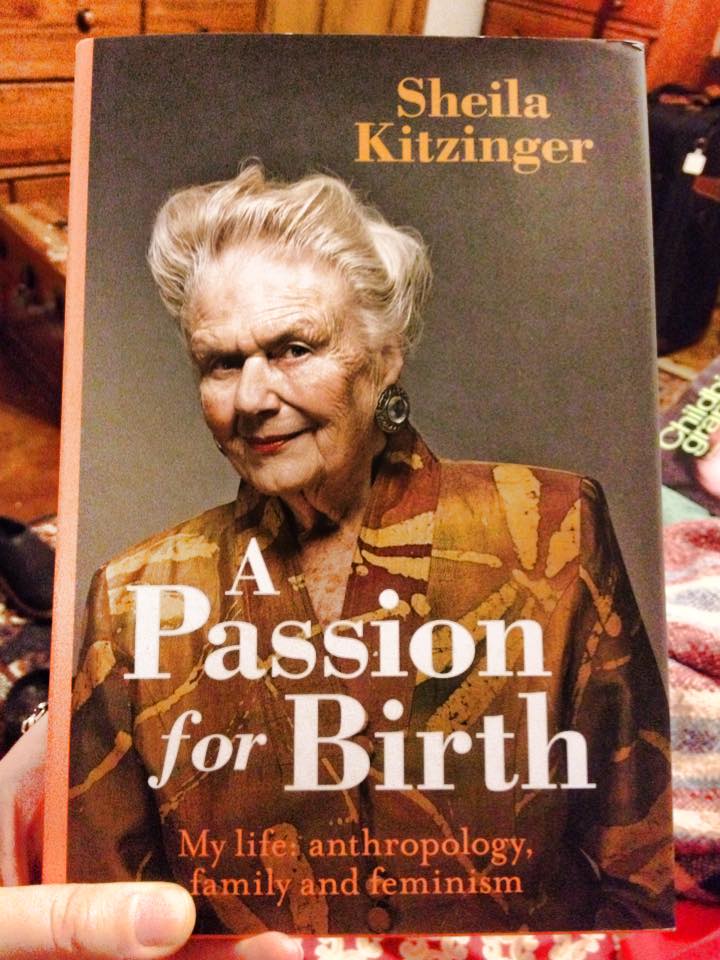
Yesterday, a new book arrived for me to review and I’m really looking forward to it! (It does join a large stack on my desk.)

1978706_10155723230680442_8659481311478884417_nThis morning, I read a memorial article about Sheila Kitzinger too:

In writing her own fantasy obituary for a newspaper many years earlier, she imagined dying at the height of her powers: “She died as she would have wished, flat on her back on a table with her legs in the air, in front of a large audience, demonstrating with vigour the dangers of making women lie down, hold their breath till their eyes bulge and strain as if forcing through a coconut to push a baby out. She claimed that treating the second stage of labour as a race to the finishing post … could result in cardiac arrhythmia and even a stroke. She made her point.”

Rather than the melodramatic early death she conjured up here, Sheila died quietly at home surrounded by her family, at the age of 86…

via How to plan for a good death | Life and style | The Guardian.

Yesterday in response to my own Womanrunes prompts, I literally went outside to smell the roses.

11227964_10207110812918713_5387391899479469362_nIt was just what I needed and I need to move these experiences up in priority in my day, instead of being the last things I attend to. I’m also participating in this free offering:

Enchant Your Everyday: 108 Day Pilgrimage to Your Beautiful Life – Vanessa Sage.

This is a beautiful world. Don’t miss it!

Sevenmonthababy!

Molly 033I saved my seven month update post until we got our pictures back from our spring family photo shoot. I decided I really wanted new family pictures for Mother’s Day this year. It took a lot of date-wrangling, but we finally got them to work out at the end of May with our favorite family photographer (Karen has been chronicling important moments for us for more than five years!). We got some family pictures:

Molly 105Some grandparent pictures:

Some kid pictures:

Some couple pictures:

cropMolly 143

Lots of just baby pictures:

Some mama-baby pictures:

cropMolly 115 and some new profile pictures for me:

Molly 180Okay, seven month Tanner tidbits! He dances! That’s one of the cutest things I’ve ever seen since the last time I had a dancing baby. He loves the guitar. Mark plays daily and it is a sure way to attract baby-attention. He also still loves to go outside—writhes and twists to try to direct adult-transport-unit out of doorway. He claps hands and sort of waves. Also still seems to say with accuracy, “hi,” “love you,” and now “ma” (while crawling after me or looking for where I’ve gone). Since he is on the move so much, I’ve found we’ve fallen off the EC bandwagon almost completely, except for mornings and after naps. I remember going through a similar stag with other kids. His army crawl is ancient history and I’m afraid the only video I have is one the kids took of him! He speeds around the house in a normal crawl now and pulls up, including on flat surfaces with no handholds (like the front of the dishwasher). He cruises with impunity and even occasionally lets go for a second or just holds on with an elbow or part of one arm. He continues to push a little beyond what he is actually physically ready for and as such misjudges and bonks head more often than I’d like!

He is a little leaner and smaller than my past babies and he has become a pretty terrible sleeper. AND, he suddenly seems to think he only needs one nap during the day! I’m feeling pretty exhausted and worn down, similar to keeping up with the mobility and destructiveness of someone closer to one. He is like a rabid squirrel monkey on steroids. Wears me out! I can’t describe how constantly on the go he is with roving/waving/scanning-to-grab hands while riding along and twisting/leaning to jump out of arms and speed away (but, often when put down then frustratingly pulling immediately back up on my legs and crying and looking desperate even though he was clearly leaping down!). It feels like Alaina is constantly yelling “choking hazard.” He has an obsession with obtaining my chapstick, my laptop and mouse, and my iphone/ipad and pursues each with dogged determination. Luckily, he gives precious hugs and kisses to make up for wild-baby-on-wheels-style.

Molly 121 The age range span of all my kids feels really hard to manage lately. Just any one of them on their own (or the two older ones together) seems easy. All together, it feels like someone always getting overlooked, having to wait, or not getting needs met and that’s hard. We’ve definitely reached maximum household capacity!

Even though I’m worn out and feel “old” to be doing this (in the context of the age range of my kids and the fact that I’ve been toting a small person around nonstop for almost 12 years. If I was the same age and only had him, I might feel differently!), there isn’t a day that goes by that I don’t marvel at what a treasure he is and how lucky we are to have him. He’s really amazing! And, I’m surprised by how surprising and exciting all of his developments are—you’d think I’d feel like, “been there, done that,” but instead he seems quite a bit different than other babies I have known. He’s so baby. We say it all the time, check out the babyness of this totally baby baby…

Molly 037cropMolly 043

Talk Books: Moon Time

moontime2My first reading of the book Moon Time in 2012 had a profound impact on my personal understanding of the natural ebb and flow of my energy in connection to my body’s cyclical nature. The author, Lucy Pearce, explains it so well…

Each month our bodies go through a series of changes, many of
which we may be unconscious of. These include: shifts in levels of
hormones, vitamins and minerals, vaginal temperature and secretions,
the structure of the womb lining and cervix, body weight, water
retention, heart rate, breast size and texture, attention span, pain
threshold . . .

The changes are biological. Measurable. They are most definitely
not ‘all in your head’ as many would have us believe. This is why it is
so crucial to honour these changes by adapting our lives to them as
much as possible.

We cannot just will these changes not to happen as they are an
integral part of our fertility.

Moon Time is written in a friendly, conversational tone and is a quick read with a lot of insight into the texture and tone of our relationships with menstruation.

The book contains information about charting cycles and about our relationship to our bodies and our fertility. I especially enjoyed the excellent section on minimizing PMS through self-care measures and how to plan time to nurture and nourish yourself during your monthly moon time. I also appreciate the section on motherhood and menstruation:

“What strikes me reading through a lot of the material on menstruation is that is seems oddly detached from the fruits of the menstrual cycle: children.”

Moon Time also includes planning information for Red Tents and Moon Lodges and for menarche rituals  as well as for personal ceremonies and self-care rituals at home. It ends with an absolutely phenomenal list of resources—suggested reading and websites.

Towards the beginning of the book Lucy observes, “We live in a culture which demands that we are ‘turned on’ all the time. Always bright and happy. Always available for intercourse–both sexual and otherwise with people. Psychologist Peter Suedfeld observes that  we are all ‘chronically stimulated, socially and physically and we are probably operating at a stimulation level higher than that for which our species evolved.’ It is up to us to value rest and fallow time. We must demand it for ourselves to ensure our health.” She also comments on something I’ve observed in my own life and have previously discussed with my friends, in that the frustration and anger and discontent we may feel pre-menstrually or during menstruation is actually our body’s way of expressing things we have been feeling for a long time, but trying to stifle (rather than hormonal “irrationality): “There is no shame in tears. There is a need for anger. Blood will flow. Speak your truth. Follow your intuition. Nurture your body. But above all … Let yourself rest.”

One of the things that Moon Time helped clarify for me is that my moontime is worthy of careful attention to my physical and emotional well-being, just as careful attention is important during pregnancy, birth, and postpartum. I’ve been a devoted proponent for years of good care of yourself during these phases of life, but had not applied the same rationale or expectation for myself during moontime. This monthly experience of being female is an experience worth respecting and is a sacred opportunity to treat my body and my emotions with loving care and self-renewal. I changed the way I treat myself after reading this book! Sound like too much to expect from your life, schedule, and family? Moon Time includes a great reminder with regard to creating retreat space, taking time out for self-care, and creating ritual each month: “Do what you can with what you have, where you are.” You don’t have create something extensive or elaborate or wait for the “perfect time,” but you can still do something with what you have and where you are. (This is a good reminder for many things in life, actually.)

I highly recommend Moon Time as an empowering resource for cycling women! It would also be a great resource for girls who are approaching menarche or for mothers seeking ways to honor their daughters’ entrance into the cycles of a woman’s life. I always have a copy on the resource table at our local Red Tent Circle (related note: I’ve got an online Red Tent Initiation Program beginning next month!)

Disclosure: I received a complimentary e-copy of this book.

Sign up for Lucy’s mailing list

Purchase options:

Amazon.com  moontime2
Amazon.co.uk
Signed copies
Book Review:  Moon Time: Harness the ever-changing energy of your menstrual cycle by Lucy H. Pearce

  • Paperback: 192 pages
  • Publisher: Womancraft Publishing; 2 edition (April 22, 2015)
  • ISBN-13: 978-1910559062

http://thehappywomb.com/

Reviewed by Molly Remer, Talk Birth

Talk Books: Maternity Leave

“Making babies is magical, mysterious, terrifying, gratifying, and all-encompassing.”

–Annie Schwartz-Jensen in Maternity Leave

I was in the mood for a good novel and as the mother of a six month old, Maternity Leave, by Julie Halpren maternityleaveshowed up in my mailbox at exactly the right time! This novel made me laugh out loud many times (covering my face with a blanket to avoid waking my own slumbering baby and husband). It is irreverent, clever, snarky, relatable, fast-paced, and extremely funny. Note: if you object to liberal profanity or require rosy depictions of motherhood only, Maternity Leave will not be the book for you!

“Sometimes I swear I can hear the grinding breaths of the pump even when I’m not pumping. I better get used to it. Me and Old Pumper are going to be spending a lot of time together in the coming months in a storage closet. I wish that were as sexy as it sounds.”

Maternity Leave is written in journal-style and follows new mother Annie through the six months of her maternity leave, from her CNM-attended natural birth (complete with wishing she was “shouting womanly affirmations” rather than “random strings of profanities”) to her search for good child care. In more understated tones, the novel also chronicles the growth of her attachment to her baby, Sam, from her initial fumbling, self-consciousness, anxiety, boredom, and fear that he doesn’t like her to a more easy comfort, smelling his fuzzy head as they walk the neighborhood together with him riding in a Moby Wrap.

“I think I must inhale Sam’s head at least sixty times per day. Why does it smell so good? Is it an evolutionary tactic so that a mom, no matter how harried and confused and depressed she is, finds some inking of comfort from snorting her baby’s skull?

Is it possible to form an addiction? Do they have support groups for baby head huffing?”

While I didn’t identify with her occasional bursts of anger at the baby, particularly because I’m presently desperately savoring the all-too-fleeting-babyhood of my fourth baby, her story brought back with vivid clarity the difficult adjustment I had as a first-time mother with a high-need baby boy. The mind games she plays with herself, the self-doubt, the self-criticism, and the misplaced maternal guilt felt extremely familiar. I would have taken a lot of comfort in reading this novel 11 years ago! I also got a kick out of her wryly realistic Facebook experiences, something that was not part of the maternal landscape when I was a first time mother, but is very familiar today.

We’re prepping the obligatory Facebook birth announcement, and I’d like a picture that doesn’t say, ‘I just shat on a table, and all I got was this slime-covered baby.’

I veto several shots before Zach suggests, ‘This one is nice.’

‘I have a gimpy eye and twelve chins,’ I note.

‘But Sam looks cute.’

‘This is not about Sam, Zach. Sam is going to look cute no matter what because he is a baby. And even if he doesn’t look cute, people will ‘like’ the picture anyway while reassuring themselves that their babies were way cuter. It doesn’t matter. What does matter is that dozens of ex-classmates and three or more ex-boyfriends will be seeing this, and I don’t want to look like a hideous, gelatinous troll.’

Maternity Leave can be pre-ordered on Amazon for its September release.

May 2015 146Also see my past post: Non-Advice Books for Mothers for other non-prescriptive reads for new moms.

Disclosure: I received a complementary copy of this book for review purposes.

New Squatter’s Rights Sculpture

“Birth is not an event; it’s a series of sophisticated biological processes… Really, we’re talking about processes that should make us fall on our knees in awe.”

–Suzanne Arms

Squatter's Rights laboring mama birth goddess sculpture (birth art, unassisted birth), Birth Warrior.In our May newsletter from Brigid’s Grove, we introduced our new “Squatter’s Rights” sculpture of a mama catching her own baby. This sculpture has a lot of personal significance to me and I have found her image tremendously empowering for a long time. I have made a variety of different versions all expressing the same message: reach down and catch what’s yours.

…Would the new child coming from me be slippery like soap? I rubbed my fat belly. I loved each pound I gained, each craving I had, and every trip to the bathroom. Okay, maybe not every trip to the bathroom. But, I loved this growing baby. Tucked away like a pearl in the sea just waiting to be discovered. I was in a constant state of marvel.

Would I be able to physically do this? No, I don’t mean the labor, nor do I mean the birth. I knew I could do that. I got lost in thought as I planned in my head every moment that would come after my body did the work of labor. The moment would come once my body was ready and the crown of a child’s head pushed itself from me, the moment the child would emerge. That’s what I was planning for; I planned to catch my own baby…

via Guest Post: Squatter’s Rights | Talk Birth.

It is hard to express how much I love knowing about how these figures “speak” to the women who receive them. I started making them to express something within me and to speak to myself or remind me of my own power. I absolutely love knowing that they carry these messages to other women as well, not just me! An early customer of the Squatter’s Rights sculpture gave me permission to share her feedback on it:

I LOVE THIS!!!   I JUST got my lovely statue, she’s gorgeous, I am in awe of your work, and I caught myself choking up a bit at how I look at her and it pulls me back to that most empowering of moments, Me-birthing my little rainbow.. Completely uninhibited.. THANK YOU!…They will be in a sacred space, helping watch over me as I go through Midwifery school… Thank you, thank you!!

What a tremendous honor to be a small part of another woman’s journey in this way. It feels like a sacred trust.

Sixmonthababy!

IMG_4367So…THIS BABY! Somehow, he is six months old already. Somehow, he acts more like a ten month old! One of the things that is different about being a fourth baby than a first baby, is that you accept being zoomed around on a tiny car as a normal part of your morning…

Speaking of mornings, I’d like to comment that whomever said, “the days are long, but the years are short,” was totally wrong. Both the days AND the years are short. So, so short. I mentioned before that I am definitely feeling maxed out in my caregiving powers in an average day (and, one can only reduce household tasks so far without becoming disgusting). It is unbelievable to me how many things I DON’T get to do in a day and that I have to release or let go of. At the same time it is amazing how many things I actually do, but the number of important things that slip through my fingers is feeling rough to accept lately. It feels like much of my relationship work is being sacrificed. Activism, local events, friendships, relationships in general, doing things with my other kids, going places, self-care basics—these are all getting pared away, reduced, or feel like they are suffering, untended, or neglected. As one small example, I didn’t read most of or reply to hardly any of the birthday greetings I had on Facebook last week, I can’t respond to simple midwifery activism action alerts, and so forth. What I have been having time for is time to work next to my sleeping baby, since I have to sit in a quiet room with him and actively keep him asleep for naps. This is handy for blog posts, newsletters, etsy work, class preparation, and writing projects!

Okay, enough whining, and back to this baby. He is mobile! Very mobile. He crawls—mostly army style, but also on knees and then launch forward and then knees again and launch forward (sort of inch-worm style). He pulls to standing on everything. He gets himself back to a seated position after being flat on his belly. He lets go while standing and holds on with only one hand. He does some transferring between surfaces, but not cruising yet…that is coming any day now I think. He practices getting down from bed and chair by sliding off the edge (with help) over and over again—slide down, reach to be lifted back up, slide down again. You can see the practiced concentration. He does things like get canned goods out of the cabinet while standing there holding on with one hand (that’s what I mean about feeling like I have a ten month old). He’s only six months old! By the same token I feel like he bonks his head or hurts himself more often than he should as only a six month old baby—he tries things that are just a little out of his actual capacity. (Such as holding on to the laundry basket with one hand and leaning over and swiping other hand toward the couch trying to transfer surfaces even though he isn’t quite close enough to reach.)

Along with this mobility comes some struggling with our nursing relationship. He clearly feels “bored” or held down by needing to stop for “nonnies.” Some day, despite lots of offering and two minute long nursing sessions, it feels like he is only really, truly nursing at naptimes and then all night long (to make up for the busyness during the day). I pretty much have to shut myself up in the bedroom with him to nurse him very well at all. Along with this, he is eating a ton of solid food. Way more than any of my kids have ever done at the same age and he started doing so with no real fanfare or lead-in or episodes of gagging over textures and spitting things out. He grabs, he chomps, he gobbles, he has a specific “desperate” (horrible!) sound he makes when he wants a snack or something from our meals. Despite having a pile of other kids, until this month with Tanner, I have been pretty judgey towards other parents about their solid food choices with their babies. Since my other three were only passingly interested at this age and would gag and spit out almost everything, I assumed other parents who said their six month old loved to eat, were exaggerating or almost “forcing” the babies to have solids when they weren’t really ready. Apparently, no matter how many years you parent, there is always room to be humbled yet again!

He still weighs about 18 pounds (maybe 19. We get varying results.) The other thing he does that is different than my other kids is suddenly degenerate into extreme crying fits when it is time to go to sleep, usually when we’re changing his clothes/diaper and I’m brushing my teeth to get in bed. It is an abrupt shift into crying hard and he shrieks in a desperate, agitated, really over-the-top manner. He also continues with the car crying horror to the extent that we only actually leave the house once or twice a week! Oh, that said though, he as started to make some visits over to my parents’ house when the other kids go to visit during the day. The first time he left with them, I cried three times! Now, I’m seeing the advantage. Mark and I really benefit from focused time to work together instead of shouting to each other over the tops of people’s heads (not ideal for running a collaborative business). I’ve also left Tanner with Mark twice while I teach, instead of dragging them with me to sit in the hall. I’m almost to another session break and I also got it arranged to do my next two classes partially online, meaning I won’t be gone for the entire time and can get home to my baby in a timely fashion, instead of having to bring him + Mark along with me. While I do enjoy “grinding my corn” with my baby and having him close by while I teach, I do have to admit that I do a better job and feel much more satisfied when I am on my own at class and not worrying about them out in the hallway waiting for me!

He also got to visit with his great grandma last month!

April 2015 015Something Tanner does do that all of our co-sleeping babies have done is touch our faces in the night to ID who he’s got—since Mark has a beard, when he reaches up and feels Mark’s scratchy face, he knows to roll away and back towards me! In the night, I’ll feel a little hand patting at my cheek…checking in…right person? And, then snuggling up to nurse. He still sleeps on my arm all night long, but he rolls to face different directions while still being on my arm.

Despite the maxing and the chaos and the juggling and the paring away, I literally cannot believe I ever worried about not loving him. He is the baby I didn’t know I needed. The member of the family that was missing. He totally belongs and is so much a part of me and our lives that I can barely remember him not being here and can certainly not imagine that we might never have had him!

April 2015 153