In my classes, I teach a short little series of prenatal yoga poses called “Birthing Room Yoga.” I learned the series from the excellent video, Yoga for Your Pregnancy by Yoga Journal and Lamaze. My rationale for including the poses in all my classes is that while academic/intellectual information is useful (and is my personal learning style), birth happens in your body and not your head—-lots of us are uncomfortable with our bodies, so I try to get people to use their bodies a lot during classes. This helps women become comfortable with using their bodies, plus gets them out of their heads-space and into body-space, plus each exercise chosen has pregnancy or birth related benefits. Physical work is important for partners too—-birth is a physical event (both for the person helping andfor the partner watching the pregnant woman work during labor).
I didn’t learn this series of poses until after my first two children were born. I was interested to see that I used all of the poses (or variations thereof—I also show a variety of variations during class) during my labor with my first son—even though I didn’t call it “yoga” or consciously “practice” during labor. I think that is a powerful reminder of the wisdom we carry in our bodies—as long as there is space and freedom in which to do so, this “birth yoga” arises spontaneously out of our own inherent wisdom, no training required!
Here is the Birthing Room Yoga handout I give with the pose reminders! The pelvic circles are particularly good and can be done seated on the edge of a hospital bed while having fetal monitoring.
To my ongoing collection (previously posted to my Facebook fan page, but sharing here as well. There are some grief/miscarriage quotes mixed in as well):
“Birth is valuable. It gives rise to our entire future. There is power in our ability to give birth to the future of our planet. We need to reclaim that power.” –Ginger Garner
“Birth is the epicenter of women’s power.” – Ani DiFranco
“To parent well, you have to have the gentleness and courage of a warrior.” –Carol (in the book Joyful Birth)
“There is no foot so small that it cannot leave an imprint on this world”
“You’re braver than you believe. Stronger than you seem. And smarter than you think.”– Christopher Robin
“Rivers know this: there is no hurry. We shall get there some day.” Pooh’s Little Instruction Book (added by a Facebook fan in response to the above)
“Nature, time, and patience are the three great physicians.” –Greek Proverb
“Life isn’t about waiting for the storm to pass. It’s about learning to dance in the rain.” –author unknown
Addition to the above from Teri Shilling’s blog. Her adaptation is: “Birth is not about waiting for it to be over. It’s about learning to dance through it.” — Teri Shilling
“We receive fragments of holiness, glimpses of eternity, brief moments of insight…Let us gather them up for the precious gifts that they are and, renewed by their grace, move boldy into the unknown.” –Sara York
“A Survival Meditation” by Nathan Walker. It begins: “breathing in…i am aware of my pain….breathing out…i am aware that i am not my pain…breathing in…i am aware of my past….breathing out…i am aware that i am not my past.”
“Birth goes best if not intruded upon by strange people and strange events. It goes best when a woman feels safe enough and free enough to abandon herself to the process.” –Penny Armstrong & Sheryl Feldman
“Your body is the life force power of some fifty trillion molecular geniuses…Own your power and show up for your life [birth]. Beam bright!” –Jill Bolte Taylor
“What makes a good birth experience [depends on] how we discover that energy and enthusiasm that carry us through any challenging situation in life.” –Suzanne Arms
“I will welcome happiness for it enlarges my heart; yet I will endure sadness for it opens my soul.” –Og Mandino
“Whereas loss changes us, grieving loss transforms us. Through the process of mourning, we are rehsaped into more highly evolved souls than we previously were.” –Marie Allen & Shelly Marks
“Growth is measured by…the openness with which we continue and take the next unknown step, beyond our edge…into the remarkable mystery of being.” –Stephen Levine
“Motherhood isn’t just a series of contractions, it’s a state of mind. From the moment we know life is inside us, we feel a responsibility to protect and defend that human being.” –Erma Bombeck
“Over the passage of time, we do more than survive the journey. We go through a labor of self-discovery and give birth to the being deep within…we emerge more enriched, empowered, and evolved women, connect with the instinctual wisdom that lies deep within us, and experience the more whole life we deserve…grieving …opens a door into our souls that might otherwise not have been opened.” –Marie Allen & Shelly Marks
“You are strong! Your body was made to give birth!! You aren’t broken, you aren’t incapable, and you aren’t special!! Your grandmother did it, your great, great, great grandmother did it, and you can toooo!!!” –Hathor the Cowgoddess
“As a mother to be, your critical task is to prepare for a birth that has no script. This requires great courage, flexibility, and a capacity for inner awareness.” –Pam England
“All natural birth has a purpose and a plan; who would think of tearing open the chrysalis as the butterfly is emerging? Who would break the shell to pull the chick out?” –Marie Mongan
“You are pregnant and you are powerful. You are bold and you are beautiful. Go forward in your boldness, in your beauty and in your connectedness. Trust your body to birth and know that the collective power of women worldwide will be with you.” –Your Birth Right
“Nursing does not diminish the beauty of a woman’s breasts; it enhances their charm by making them look lived in and happy.” ~ Robert Heinlein
“[When a woman] has had an ecstatic birth, you can’t talk her into taking drugs that aren’t good for her body. You can’t talk her into a hysterectomy…You can’t talk her into a crummy diet…She knows what this body is capable of. She loves this body. This body loves her…there’s nothing like the transformation avail…able at birth…she becomes illuminated…she’s a channel for life…she’s a channel for life in all its forms.” –Christiane Northrup, MD
“Miscarriages are labor, miscarriages are birth. To consider them less dishonors the woman whose womb has held life, however briefly.” –Kathryn Miller Ridiman
“Character cannot be developed in ease and quiet. Only through experiences of trial and suffering can the soul be strengthened, vision cleared, ambition inspired and success achieved.” ~ Helen Keller
“Motherhood instantly ups your ante in the human sweepstakes. It gives you a very personal stake in the future, and makes you vulnerable…It can also empower. Women who hesitated to speak for themselves may find their voice and advocate energetically for themselves as mothers and for the welfare of their children. Motherhood…the single most common transformational experience in the world.” –Valerie Young
“I think one of the best things we could do would be to help women/parents/families discover their own birth power, from within themselves. And to let them know it’s always been there, they just needed to tap into it.” –John H. Kennell, MD
“[sex], birth, and breastfeeding are survival behaviors of our species, and they’re not supposed to hurt…The way we structure those behaviors often contributes to the pain that is experienced…”–Kathleen Auerbach
“Women birth everywhere–in woods, in shacks, in quaint homes and suburbs and palaces, under trees, in taxis, and lately, in clinics and hospitals. It’s hard to birth in power without privacy, love and a place called home…” –Sister MorningStar
“The especial genius of women I believe to be electrical in movement, intuitive in function, spiritual in tendency.” ~Margaret Fuller
“Birth today is a doctor dictatorship in many practices and in many hospitals. Mothers and babies are missing the healthiest possible beginning, both physically and emotionally. Their human rights are being violated.” –Jan Tritten
“If society hinders the optimal breastfeeding by mothers who work outside the home, society needs to change, not women.” –Elisabet Helsing, World Health Organization
and from UNICEF: “The promotion of breastfeeding must not be seen as an excuse to exclude women from the labor force. The burden should no longer fall on women to choose between breastfeeding and work. The burden is on society to facilitate breastfeeding and indeed child care.”
“One does not give birth in a void, but rather in a cultural and political context. Laws, professional codes, religious sanctions, and ethnic traditions all affect women’s choices concerning childbirth.” –Adrienne Rich
Discussion following on the Facebook page: Me: Do couples truly have a free choice of where to give birth? Ultimately speaking, I guess yes, but according to my clients insurance companies dictate their birth location…
Another poster:
The choice is taken from people far too often! Money talks, doctors can scare, insurance companies manipulate, etc., etc.
Sometimes the choice is pretty much taken away. 😦
AND the cultural, political, etc. The quote is so true… our choices don’t occur in a void, all those things affect choices in childbirth. Its just that sometimes, many of those choices are dictated by the above, and so, can severely limit what we do get to choose.
Me again: When we do the “pain pie” exercise in my classes, I always talk about how sometimes choices are actively stripped away from women and we need to keep that in mind when we hear “bad” birth stories–not, “she ‘failed’ or made the ‘wrong’ choices” but that her pieces of the pie were taken away from her (sometimes forcibly!).
Prompted by the above:
“The most common way people give up their power is by thinking they don’t have any.” –Alice Walker
“Life becomes precious and more special to us when we look for the little everyday miracles and get excited about the privileges of simply being human.” -Tim Hansel
“The beauty of my body is not measured by the size of the clothes it can fit into, but by the stories that it tells. I have a belly and hips that say, ‘We grew a child in here,’ and breasts that say, ‘We nourished life.’ My hands, with bitten nails and a writer’s callus, say, ‘We create amazing things.'” -Sarah (I Am Beautiful)
Only about a week following my miscarriage, I received a review copy of a new book by Heather Cushman-Dowdee (also known as Hathor the Cowgoddess). I have a pile of birth-related books waiting for me to review. However, I found that this soon post-miscarriage when I go to read them, my heart just isn’t in it, and I set them down again. However, Heather’s book was a different experience. Titled Simply Give Birth, the book is a beautiful collection of powerful birth stories (mostly unassisted births). When I got the book, I thought, “well, I’ll just flip through this a bit, even though my heart isn’t in it.” Well, I was instantly entranced in spite of myself. I didn’t finish reading it that week, but I picked it back up the following week and read it all the way through. What a treasure. It was very, very good and I really recommend it.
As I have briefly referenced here, I was struck by how the experience of “unassisted natural home miscarriage” parallels that of unassisted birth. Immediately after my body released my little baby, I felt strong and brave and powerful and like, “wow! I did it!” even though the outcome was not what I ever planned for or wanted. I rarely see feelings like that expressed in the many hospital/D & C miscarriage stories I’ve been reading lately and I feel happy that I was able to give myself and my baby the gift of “letting go” in our own dear home.
Reading Heather’s introduction about telling a new story about birth made me think there are new stories to be told about miscarriage as well. She says about the stories she selected for her book: “…all birth stories…prove what can be done. We can birth our babies and relish it too. We’re not stoic or fanatical, we’re mothers doing what mothers have always done, giving birth; with grace and spirit, and chutzpah, and moxie…they shared their grief, their passions, their exhaultation, and their fears. It takes massive courage to write about this most personal of moments with such candor and intensity and then be willing to share…”
Simply Give Birth is simply amazing. If hope you are lucky and find it in your Christmas stocking this year. If you don’t, or if you just can’t wait to read it, pop on over to the website and buy it ASAP!
The second Healthy Birth Blog carnival is up on Lamaze’s Science & Sensibility blog. It is a great collection of links to posts about the importance of Healthy Birth Practice #2: Walk, Move Around, and Change Positions During Labor. For the blog carnival I contributed a post/handout I made last year called How to Use a Hospital Bed Without Lying Down. We spend quite some time on the subject in my classes and I encourage my clients to treat the bed like a “tool,” rather than a place to lie down. I also encourage strategizing about ways to both meet the needs of the hospital staff for “confinement” as well as the needs of the birthing woman for mobility (so, sitting on birth ball right NEXT to the bed and monitor, instead of lying back in the bed—both sets of needs can be met this way).
When reading through some of the other links in the blog carnival, I particularly enjoyed the one at The Unnecesarean about Women Describe Walking, Moving and Changing Positions in Labor. In the post, Jill points out “For first time mothers who have had no exposure to a birth, the time between, ‘I felt a contraction!’ and ‘I have to push!’ is often a total mystery.” How true is this! How many birth documentaries and shows (even very good ones), essentially only show a few minutes in early labor and then the baby being pushed out? What happened during the other 12 hours?? Obviously, we can have an episode or documentary that lasts 12 hours and shows every single detail, but I do think this gap means it is hard for first time mothers to really get a “vision” of what labor and birth is really like—the “long haul” picture.
Of course, that post made me think about my own births and how movement played an important role in both of them. I think it was equally significant/important for both, but since I was in labor longer with my first baby I used movement much more. In early labor, I sat on the floor cross legged with my back straight (working to keep the baby in “optimal” fetal alignment :), while I ate dinner and watched a movie. Then, I walked in the hallway to see if walking would stimulate any increased contractions. I also sat on the birth ball. As labor moved on, I ONCE tried lying down on my side in bed to “go to sleep” (at the suggestion of my doctor and doula) and that was IT. I had one contraction lying down and it was the worst contraction I’ve ever experienced (both babies). I never laid down again during either birthing! No possible way! When I got tired, I did kneel on the bed with a pile of pillows in front of me and rested my head/arms on the pillows. I also spent a lot of time kneeling by the side of the bed with my head resting on my arms on it. (This was my own bed at home.) I sat and rocked in the rocking chair with my eyes closed. I sat on the floor (briefly) with the rice sock under my belly and husband sitting behind me.When I went to the birth center, I sat in the rocking chair (oh wait, I did lie down one more time, for my sole cervical check of either pregnancy/birth). I also went back to kneeling on the floor with my head on the bed. Then I gave birth to my first son in a semi-sitting position on the birth center bed with my husband behind me/to the side. (Not the position I would have instinctively chosen, I think I would have actually birthed him kneeling by the side of the bed, but I was encouraged to get up into the bed. See his birth story.)
With my second baby, I walked around (again, “testing” out whether labor was “real” and going to intensify) in our kitchen. I squatted down several times (again, “testing” and trying to “make it bigger“). Then, I sat on my birth ball in the living room. I only stayed there for a few contractions and then stood up and wanted something to lean on—I leaned on the back of the (too rocky) recliner. Then, I ended up kind of hanging on my husband for a while—my arms around his neck and my legs dropping kind of outward. I then felt “driven to my knees” and got on my hands and knees on the floor with my arms and head on my birth ball. I quickly decided I didn’t want the ball and got just on my hands and knees with my husband in front of me with his arms around me. My son was born while I was on my hands and knees in this way.
I think when women think about “active birth” or “freedom of movement throughout labor,” sometimes they think this means walking the whole time or squatting up and down and up and down, or literally being *standing up* and moving around “aggressively” throughout labor. My own experiences were “active birth,” but the freedom of movement includes being able to sit in a rocking chair and “meditate” through contractions, or resting on your knees with your head on the bed. The “activity” we’re really talking about is really not lying down-–having the body upright/torso above the pelvis.
One of my blog posts that gets the most hits and is a consistently searched for topic is one that I wrote called “how do I know I’m really in labor?” I revised it recently for participation in a blog carnival at Science and Sensibility about letting labor begin on its own. Let Labor Begin on Its Own is the first of Lamaze’s Six Healthy Birth Practices. Why is letting labor begin on its own so important? Well, the onset of labor is a complex biological system that has its own wisdom–when a woman’s body is pushed into labor on someone else’s timetable rather than her own, the whole biochemical “dance” of labor and birth is impacted. What may seem like a harmless “jump start,” actually has a cascading effect on the rest of the birth (and has an impact on the baby as well). A significant impact is that induced labors are often much more painful than spontaneous labors. If a woman is planning an unmedicated birth, the increased intensity of artificial induced contractions coupled with the lack of the biologically trigged endorphin release that helps birthing women naturally cope with pain, often leads directly into a request for medications. The woman is then sometimes left feeling like she “failed” in her “natural birth” plans and that she “wimped out” and “just couldn’t handle it.” However, she was dealing with something much different than a “natural” labor and so it makes sense that a “natural” birth then didn’t happen. Of course, the cascade of other interventions that accompany an induction, such as an IV and continuous monitoring also severely restrict a woman’s mobility (which also has a dramatic impact on her ability to cope).
I am saddened when I hear women blaming themselves for “not being able to handle it” (or, conversely being angry at “natural birth zealots” for misleading them…), when they were actually just missing significant pieces of their “pain coping pie” as well as dealing with a (probably) more difficult labor. We need to remember to look at the overall healthy birth climate of the birth setting and the use of the six healthy birth practices, rather than at personal “failure.”
There are a lot of excellent links on letting labor begin on its own in the rest of the blog carnival!
When I was in early labor with my first son, I spent quite some time upstairs in our computer room googling, “how to know you’re really in labor” or, “signs of true labor,” or “the difference between false labor and real labor,” or, “how do I know I’m in labor,” or, “how to know I’m in labor.” I would do this between contractions and then when I had a contraction I would think, “Wow! This is definitely it!” Then, it would ease, and I’d start googling again, certain I must just really be experiencing “false labor.” One of my biggest fears was arriving at the birth center and only being two centimeters dilated (or possibly not in labor at all!). So, in honor of my former self, I offer a list of some ways to to gauge whether you are experiencing true labor.
It is true labor if/when:
Your contractions fall into a regular pattern. And, that pattern involves contractions that are lasting longer, feeling stronger, and occurring closer together.
If when you walk around or otherwise increase your activity, the contractions also increase.
And if changing positions and drinking plenty of fluids also do not cause the contractions to ease…
The sensation begins in your lower back and spreads like a band around your belly causing a peak of tightness and discomfort in the front and then fades away again.
You have been feeling some gastrointestinal upset and may be experiencing diarrhea also.
You have pinkish or blood streaked, mucousy discharge.
Your membranes have ruptured (keep in mind that labor only begins in this way for roughly 10% of women. So, if your waters have not released, do not be discouraged thinking that you must not be in “real labor.” Many women do not experience their waters breaking until they are pushing or are starting to feel like pushing).
Truly, I think that the best sign that you are in labor is if you really feel like you are in labor. This is one of those things that doesn’t feel that helpful to a first-time mom—“yes, but how will I know?! What if I’m in labor and don’t know it until the baby is coming out?!” I promise that for the wide majority of you, at a certain point, you will just know that you are in labor and there will be no more questions about whether this is “really it”—that is the best sign, when you stop wondering “is this really it?” My observation is that this point comes along when you enter active labor and enter your “birth brain” instead of your analytical, logical brain.
Is this really it?
If you are still wondering, “is this really it?” my best piece of advice is to ignore it! Pretend like nothing is happening. Go about your normal day and your normal routine. If you would normally be sleeping, sleep. If you would normally be eating, eat. Go for a walk, water the plants, feed the dog, bake something, go to the store, etc. When your contractions need your full attention, they will ask for it 🙂
Symptoms of pre-labor (“false labor”)
Some “symptoms” that what you are experiencing is instead practice labor, pre-labor, or “false labor” (I do not usually use the phrase “false labor” because I think it is dismissive of women’s experiences. All contractions are doing something and so I refer to them as “practice” rather than “false.” Another good phrase to use is “pre-labor” contractions. My midwife with my second baby referred to them as “toning contractions”):
The contractions are irregular (no pattern) and are not increasing in frequency or intensity.
If you change positions or drink two large glasses of juice, water, or tea, the contractions subside.
The contractions center in your lower abdomen and do not involve your back.
The contractions go away if you take a walk, take a shower, or lie down.
This is also a popular question in birth classes. Because labor is a new event for you, it can be hard to know what to expect until it actually happens! There is pdf handout here with some additional signs and information. There is also a helpful handout with a sort of flowchart of signs/symptoms here.
Oh, and by the way, when I did finally go to the birth center, I was 10 centimeters dilated and started pushing about 30 minutes later!
—-
What about induction?!
On a closely related topic, why bother with all this guessing about whether or not you’re in labor? Why not be induced instead? Good questions! There are numerous reasons why you should let labor begin on it’s own—labor that begins on its own is usually safer and healthier for both mother and baby. Also, it is less painful than a labor that is induced with medications such as Pitocin. For more information about letting labor begin on its own, check out Lamaze’s Healthy Birth Practice #1, or this video clip from Mother’s Advocate:
I’ve been debating about whether to share this post or not. I’m concerned that it may come across as unnecessarily negative, pessimistic, or even “combative” or “anti-hospital.” However, I do think it is honest and I’ve decided to share it. There is a fairly “normal” course of events for women having a natural birth in a hospital setting. In order to be truly prepared to give birth in the hospital, it is important to be prepared for “what to expect” there and to know how to deal with hospital procedures. All hospital procedures/routines can be refused, but this requires being informed, being strong, and really paying attention to what is happening. I hope this list of “what to expect” with help you talk with your medical care provider in advance about hospital routines and your own personal choices, as well as help prevent unpleasant surprises upon actually showing up in the birthing room. This list is modified from material found in the book Woman-Centered Pregnancy and Birth. I am not saying that is how your specific hospital operates, but that many American hospitals function in this manner.
Expect to have at least some separation from the person who brought you to the hospital, whether this separation is due to filling out admission paperwork, parking the car, giving a urine sample, being examined in triage, etc.
Expect to remove all your clothing and put on a hospital gown that ties in the back.
Expect to have staff talk over you, not to you, and to have many different people walk into your room whenever they want without your permission and without introducing themselves.
Expect to have your cervix examined by a nurse upon admission and approximately every hour thereafter. Sometimes you may have multiple vaginal exams per hour by more than one person.
Expect to have an IV inserted into your arm, or at minimum a saline lock (sometimes called a Hep lock).
Expect to be denied food and drink (at best, expect clear liquids or ice).
Expect to give a urine sample and perhaps a blood sample.
Expect to have an ID bracelet attached to your arm.
Expect to have to sign a consent form for birth and for application of a fetal monitor that states that your doctor will be responsible for making the decisions about your care (not you).
Expect to have a fetal heart rate monitor attached around your belly—two round discs on straps that will often stay with you continuously until you give birth (or, at best, for 15 minutes out of each hour of your labor).
Expect to have your water manually broken at about 4 centimeters (or at least, strongly suggested that you allow it to be broken). After this point, expect to be encourage to have an electrode screwed into the baby’s scalp to measure the heartbeat and a tube places in your uterus to measure your contractions.
Expect to be offered pain medications repeatedly.
Expect to receive Pitocin at some point during your labor–“to speed things up.”
Expect to be encouraged (or even ordered) to remain in your bed through much of labor, especially pushing.
Expect to either have your legs put in stirrups or held at a 90 degree angle at the hips.
Expect to be told you are not pushing correctly.
Expect to hold your baby on your chest for a few minutes, before it is taken away to be dried, warmed, and checked over.
Expect the baby to have antibiotic eye ointment put into its eyes (without telling you first).
Expect to have your baby suctioned repeatedly.
Expect to be given a shot of Pitocin to make your uterus contract and deliver the placenta.
Expect not to be shown the placenta.
Expect your baby to be given a vitamin K injection.
I think it is important to note that what you can expect is often different than what you deserve and that what you can expect often reduces or eliminates your chances of getting what you deserve. In my classes, I’ve made a conscious decision to present what women deserve in birth and though I also talk about what they can expect and how to work with that, I think sometimes they are left surprised that what they actually experience in the hospital. At minimum, what you deserve are Six Healthy Birth Practices (as articulated by Lamaze):
As an example of what I mean about what you can expect clashing with what you deserve, consider the second healthy birth practice “Walk, Move Around, and Change Positions”—monitoring and IVs directly conflict with the smooth implementation of a practice based on freedom of movement throughout labor.
So, how do you work with or around these routine expectations and your desire for a natural birth?
Discuss in advance the type of nursing care you would like and request that your doctor put any modifications to the normal routines in your chart as “Doctor’s Orders” (if your doctor is unwilling to do so, seek a new medical care provider!)
Labor at home until labor is very well-established.
Go through the above list of “what to expect” and make a decision about how to handle each one on a case by case—you may choose to actively refuse something, you may be okay with accepting certain procedures or routines, and you can develop a coping plan for how specifically to work with any particular issue.
Take independent childbirth classes and learn a variety of techniques and pain coping practices so that your “toolbox” for working with labor is well stocked.
Hire a doula, or bring a knowledgeable, helpful, experienced friend with you. It can help to have a strong advocate with you (this may or may not be a role your husband or partner is willing to take on).
Another tactic is to “never ask permission to do what you want, but to go ahead and do it unless the hospital staff actively stops you.” (An example of this is of getting up and walking around during labor)
“Many people, if they can find no other way to get around a dangerous or unpleasant hospital policy, unobtrusively ignore it”—a good example of this is with regard to eating and drinking during labor. Restricting birthing women to ice chips or clear liquids is not evidence-based care. Bring light foods and drinks and quietly partake as you please.
Leave the hospital early, rather than remaining the full length of stay post-birth. This can minimize separation from baby and other routines you may wish to avoid.
Finally, and most importantly, “birth is not a time in a woman’s life when she should have to FIGHT for anything,” so if you find that you feel you are preparing yourself for “hospital self-defense” I encourage you to explore your options in birth places and care providers, rather than preparing for a “battle” and hoping for the best. If you feel like you are going to have to fight for your rights in birth, STRONGLY consider the implications of birthing in that setting. Also, as The Pink Kit says, “hope is not a plan”—so if you find yourself saying “I hope I can get what I want” it is time to take another, serious look at your plans and choices for your baby’s birth.
We spend a lot of time in my classes talking about different comfort measures for birth. In fact, one of my most popular classes is my “Labor Support and Comfort Measures” single session class in which we practice all kinds of different skills that may be of use for birthing.
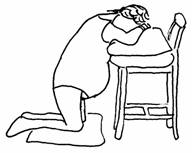
I enjoy Childbirth Connection’s free pdf booklet “Comfort in Labor” and use this as a class resource. Very recently, they added a new section to their website with lots of helpful, line drawing illustrations for Comfort Measures During Labor. The illustrations are the same as in the booklet, but presented on one page without a lot of accompanying text—great for visual learners!
Even if it might feel silly, I encourage people to print out the images and physically practice the techniques illustrated a couple of times—this helps develop a “body memory” so that when you are actually in labor different labor-beneficial positions feel comfortable and familiar. Also, it helps for the birth partner to have a body memory as well to help reinforce healthy positions or suggest fresh ideas.
Lamaze and Injoy videos have teamed up on a nice new website called Mother’s Advocate. The site has a variety of handouts and a booklet to download based on “6 Healthy Birth Practices” (which, in and of themselves form a nice little birth plan for a normal, healthy birth!). I especially enjoyed their video on active birth: “get upright and follow urges to push.” The video urges upright birthing positions and avoidance of directed/forceful pushing (the kind with counting that you see so often on tv!).
The Passion for Birth blog had a contest recently on this topic. You can see my response on the PfB website here. My essay is the fourth one down called “Women and social justice and that feeling.” I won a copy of The Idea Box, which I’ve always wanted. Yay!


 Talk Birth