Archives

Woman-Centered Collaboration

I’ve posted a couple of times about a collaboration with the Women’s Health in Women’s Hands launch of the feminist women’s health classic Woman-Centered Pregnancy and Childbirth as a pdf version for free online. When I wrote my What to Expect post based on Woman-Centered Childbirth in 2009, I had no idea that one of the authors of the book would later find me on the internet, let alone distribute postcards at the National Rally for Change in Los Angeles containing a quote from me and link to my site. As I’ve said several times lately, I just love the internet. It is amazing to me that these types of connections and collaborations can occur over long distances and without face-to-face contact. Very cool!

Anyway, this week I received a promo launch packet for the online release of the book. It includes two printouts from my own website and the re-formatted flier based on my blog post, as well as a folder and postcards.
20121008-164805.jpg

And, then I took picture of the packet and included my own vintage copy of the original Woman-Centered Childbirth book 🙂
20121008-164812.jpgThis has been a fun link between past and present activism and between a foremother in birth activism and my current self!

Bits of the (Birth) Net

The following is a collection of the bits and pieces that caught my attention and then were shared via my Talk Birth Facebook page during the last two weeks.

Listening

From a good article by the National Association of Mothers’ Centers in Mother Support: When Words Get in the Way

Words, whether written or voiced, are so very fragile. They can be bent or twisted, even become unrecognizable from their initial intentions. They can have different cultural meanings, regional understandings, and generational perceptions.

There will always be the opportunity for miscommunication…

Such a good reminder. What you say and what people hear are often two different things. What you say and what you mean can be different. How your words are received and interpreted can be very important and intent in many ways doesn’t matter! Communication is transactional process. A two-way process. And, it is symbolic. Meaning can never be fully interpreted and understood completely.

This article also reminded me of one of my own older articles, Listening Well Enough, which came to mind because I’m finishing up with the training of two women. The essay describes my own experience when I was training as a breastfeeding counselor in 2005.

Privacy

The topic of what to risk sharing online came up with friends recently and I enjoyed this article about answering the question of How Much Of Your Private Life Should You Keep Private On Your Blog?

Childbirth Education

Childbirth education is beginning too late in pregnancy; it needs to begin in the first trimester or even before women become pregnant…

The above is one of the concluding points from an interesting article from Birth Works International about supporting women without epidurals.

Good article from Lamaze about your breath and how it can help during pregnancy and birthing!

Virtual labor simulator!

Pushing Positions

Very interesting article on What is the Evidence for Pushing Positions?  Apparently there is more blood loss and second degree tears with upright pushing positions. Personally, I CANNOT imagine giving birth in a supine position. But, I’m also really, really, tired of tearing (tired enough that it is one of the factors in our decision not to have “just one more!” baby). For more thoughts about pushing, see previous post on Following Your Body’s Urges to Push…

And speaking of upright birth, Barbie homebirth photos! 🙂

Informed Consent

Valuable article addressing 10 Responses to Pressure to Consent (remember, it isn’t “informed consent” if you do not have the option of saying NO!)

Posts I’ve written about informed consent:

Prenatal Yoga

Online video prenatal yoga class: Prenatal Yoga – when you feel good, your baby feels good.

And my own prior posts on the subject:

Birthing Room Yoga Handout

Birth, this elegant, simple, yet intricate process has had unnecessary, complex, expensive technology superimposed onto it, creating a dangerous environment for birthing women.” -Alice Bailes

Loved this article on what really matters for midwives!

Epigenetics

NEW STUDY: Epigenetics: Mother’s Nutrition — Before Pregnancy — May Alter Function of Her Children’s Genes. “As parents, we have to understand better that our responsibilities to our children are not only of a social, economical, or educational nature, but that our own biological status can contribute to the fate of our children, and this effect can be long-lasting,” said Mihai Niculescu, M.D., Ph.D., study author from Nutrition Research Institute at the University of North Carolina at Chapel Hill, in Chapel Hill, N.C.–Epigenetics: Mother’s Nutrition — Before Pregnancy — May Alter Function of Her Children’s Genes

After CAPPA this year, I wrote about epigenetics here: Epigentics, Breastfeeding + Diet, and Prenatal Stress

Call the Midwife

Fun! Ms. Magazine linked to one of my blog posts about midwifery in their post about the PBS show Call the Midwife!  And, after posting to the CfM Facebook page about how I didn’t get to watch the show myself because I have no TV channels, CfM fan Jackie clued me in that Call the Midwife is available online (no TV channels required!) Yay! 🙂

Older Posts of My Own

Birth Culture: “Birth is cultural, the way eating is cultural. We don’t just eat what our bodies need to sustain us. If we only did that, there would be no reason for birthday cake. Birthday cake is part of our food culture. The place you are giving birth in has a local culture as well. It also partakes of our national birth culture. Not everything doctors do regarding birth makes the birth faster or physically easier for you or the baby. Some things are just cultural.” -–Jan Mallack & Teresa Bailey

Creating Needle Felted Birth Art Sculptures: My first foray into birth art, before I fell in love with using polymer clay!

Centering for Birth: “Centering is a breath awareness strategy that I’ve adapted for use in birth classes based on the ten second centering process described in the short book Ten Zen Seconds…” Free handout available about centering for birth! (I was reminded of this post by Enjoy Birth!

Breastfeeding as an Ecofeminist Issue:“What happens when society and culture pollute the maternal nest? Is that mother and baby’s problem or is it a political and cultural issue that should be of top priority? Unfortunately, many politicians continue to focus on reproductive control of women, rather than on human and planetary health…”

During a week when I didn’t have time to craft delightful new blog posts, it was fun to have a post from a couple of months ago suddenly getting all kinds of hits and Facebook shares. Thanks, internet! ;-D (Around 150 shares on Facebook apparently. I ♥ Facebook!)

On Parenting Books

Mama Birth: Sadly, Parenting Books CAN’T Actually Raise Your Child: Enjoyed this post! (But I recommend NOT reading the comments on the original article she links to about “detachment parenting.” I lost about 30 minutes of my life, felt my blood pressure rising, and only made it to page three!)

The revolution must have dancing; women know this.
The music will light our hearts with fire,
the stories will bathe our dreams in honey
and fill our bellies
with stars.
-Nina Simons via Rebecca A Wright, Doula

DVD Review: Laboring Under an Illusion


DVD Review: Laboring Under an Illusion: Mass Media Childbirth vs. The Real Thing
Filmmaker: Vicki Elson
50 minutes, $39.99 (personal use­)
www.birth-media.com

Reviewed by Molly Remer, Talk Birth

Laboring under an Illusion is a treasure trove of discussion-provoking material. Filmmaker Vicki Elson is an anthropologist and childbirth educator who has created a striking documentary exploring media-generated myths about childbirth. As a childbirth educator, I often reference in my classes how our attitudes and expectations about birth are shaped by media messages—birth is an emergency, etc. This film eloquently and entertainingly provides 50 minutes of backup material for the idea!

The film blends media messages from comedy shows like Murphy Brown, Mad About You,and I Love Lucy, movie clips such as Juno, Coneheads, and Nine Months, along with “reality” based shows on Discovery Health with the inherently contrasting messages in clips of beautiful births from films like Birth as We Know It, The Business of Being Born, and Orgasmic Birth. It also contains brief voiceover narrations from “regular” women about birth. Occasionally, there is a scene with the filmmaker speaking directly to the viewer about concepts raised in the film. These scenes are less entertaining than the popular media clips and the friends with whom I watched the film wanted to fast-forward these segments—the media clips chosen so clearly speak for themselves that they don’t really need explanation, at least to the already birth-savvy viewer. Because of some strong language in the media clips, I caution parents to preview the film before sharing it with children.

Laboring Under an Illusion is an entertaining and illuminating film for consumers as well as for birth educators, doulas, and midwives. I highly recommend it!

Disclosure: I received a complimentary copy of the DVD for review purposes

Amazon affiliate link included in image.

Domestic Violence During Pregnancy

By Molly Remer, MSW, ICCE, CCCE

Violence during pregnancy is an unfortunately common experience. Between four and eight percent of women experience domestic (intimate partner) violence during their pregnancies. The incidence of violence increases for women with unplanned or unwanted pregnancies with 26% of pregnant teens experiencing intimate partner violence and 15% of all women whose pregnancies are unwanted being in an abusive relationship. Indeed, murder is the second only to car accidents as the most common cause of injury related death for pregnant women.[1] Sadly, these statistics are likely higher in reality due to underreporting or misclassification.

Despite prevalence and severity, domestic violence is not often addressed in the birth community. Books directed at pregnant women rarely even mention violence in pregnancy (and most do not even include it at all), even though the incidence is similar to the rate of premature births and much higher than the incidence of various pregnancy related complications that generally warrant at least a paragraph in birth literature (such as placenta previa). Likewise, books and training programs for doulas, birth educators, and other birth professionals, generally neglect to address intimate partner violence.

An introduction to the issue of domestic violence during pregnancy requires an understanding of the following dynamics:

  • Cycle of Violence—the concept that violent behavior in a relationship tends to occur in three distinct phases. In the tension building phase, the battered partner feels as if she is “walking on eggshells.” The abuser’s temperament and mood becomes increasingly unpredictable and volatile and culminates in the explosion/eruption phase in which an acutely violent incident occurs. Early in a relationship, this phase is often followed by the honeymoon phase during which the batterer is contrite, asks for forgiveness, offers gifts, and assures the woman that, “it will never happen again.” The length of each phase varies by couple and with their relationship. Over time, the tension building or explosion phases may be very prolonged, with little or no time spent in the honeymoon phase.

The cycle of violence continues to repeat and tends to escalate in severity, despite the assurances that the batterer makes during the honeymoon phase.

  • Domestic violence is about power and control. It is NOT about anger management, substance abuse (though substances can increases violent incidents), or “nagging” from a girlfriend or wife.
  • The abusive partner tends to tell the woman that the violence is her fault and that she provokes or deserves the abusive incidents. He often isolates her from people and situations that will help her know otherwise.
  • Abusive relationships may involve physical, emotional, or verbal battering and frequently some combination of the three. Physical abuse includes pushing, choking, kicking, sexual abuse and other means of physical control/harm as well as punching or slapping. Verbal and emotional or psychological abuse involves name calling, insults, berating, shouting/screaming, humiliation, threats, intimidation, destruction of property, isolation, activity restriction, abuse of pets, and withholding of economic, physical, or emotional resources. Women often forget to acknowledge some physical forms of violence like choking or pushing as “real” abuse and will often not consider themselves abused unless they have been punched or slapped by their husband or partner.
  • Women stay in abusive relationships for numerous reasons. Battered women often leave their relationships several times before they end it for good. Reasons are dynamic, complex, and individual. Some very basic reasons include hope, love, and fear. The most dangerous time in the relationship is when she leaves—it is then that she is most likely to be severely injured or killed. As a society, we should NOT be asking why women stay, we should be asking how we can stop domestic violence from happening.

 So, what can you do? If you are a pregnant woman who is being abused, please contact your local domestic violence shelter or hotline. Or, call the National Domestic Violence Hotline at 1-800-799-SAFE. Even if you do not feel ready to leave your relationship, many shelters offer “outpatient” support groups and counseling. If you are a prenatal health care provider (midwife, doctor, nurse, physician assistant), please include domestic violence screening questions during your prenatal visits and be alert and responsive to signs of violence. If you are a doula, birth educator, or other birth professional, include a discussion of domestic violence during your classes or prenatal visits and encourage exploration and acknowledgment of these issues during your networking with other birth workers. You may also wish to download and read the Center for Disease Control’s guide, Intimate Partner Violence during Pregnancy: A Guide for Clinicians. If you are a friend or relative of a pregnant woman experiencing abuse, help her develop a safety plan and encourage her to seek the services of a domestic violence shelter.

Though it can be very awkward to address domestic violence issues with women directly and can feel like an intrusion into private lives, if you choose silence, you contribute to a continued culture of fear, shame, denial, and invisibility for the many women experiencing violence during this time in their lives. Acknowledging the reality and prevalence of violence against women in our culture and encouraging open, respectful, and assertive dialog about it is a powerful tool in reducing the occurrence. Strive to help bring violence against pregnant women into public view instead of considering family violence to be private, family business. Women and babies are too important for us to remain quiet.

Portions of this article are excerpted from the booklet Talking to a Battered Woman: A Guide for the Short Term Helper by Molly Remer, MSW, ICCE. This booklet is available as free pdf file on Molly’s website (http://talkbirth.me). Molly is a certified childbirth educator, the editor of the Friends of Missouri Midwives newsletter, a breastfeeding counselor, and a college professor.


[1] National Coalition Against Domestic Violence Fact Sheet “Reproductive Health & Pregnancy,” http://www.ncadv.org/files/reproductivehealthandpregnancy.pdf

This article was originally published in Citizens for Midwifery News and was later reprinted in International Doula along with a companion sidebar by Susan Hodges.

Related post: Birth Violence

Guest Post: Abuse of pregnant women in the medical setting

This post is a companion piece to my article, Domestic Violence During Pregnancy, and was previously published as a sidebar in Citizens for Midwifery News and later in International Doula.

Abuse of pregnant women in the medical setting

 By Susan Hodges, founder and past President of Citizens for Midwifery

Have you or someone you know experienced rude, abusive or violent treatment at the hands of obstetricians or other hospital staff? Abusive behavior, in or out of the hospital, can include threats, coercion, yelling, belittling, lying, omission of information, lack of informed consent, misrepresentation (of medical situation, of interventions, of reasons they “need” you to do something or not do something), and so on. For example, nurses yelling at a woman to push is abusive, even if the nurses don’t intend to be abusive. An OB lying to a woman that her baby is “too big” (something that neither he/she nor anyone else can predict), telling her she “needs” intervention, and then not providing complete information about the risks and benefits of the intervention, is abusive behavior. Unwanted and unnecessary surgery (such as episiotomy or an avoidable cesarean section) is no less violence against a woman than hitting or strangling – most of us have just not thought about it in that way. The fact that most women are persuaded that they “needed” the intervention, that it was because their body was somehow defective, is another aspect of the abuse (blaming the victim).

While the situation is different from domestic violence in some ways, it is also similar. Abuse in the medical setting is also about power and control, the pregnant or laboring woman is often blamed for her situation, and verbal and emotional abuse can be similar. Because we are taught to “trust your doctor”, and in fact there is an explicit assumption of trust in the “fiduciary relationship” between the woman and her doctor who is an “expert”, most of us do not think about the possibility of abuse, and many of us stay with the OB or feel we have no choice about our health care providers or settings, especially when we are in labor. Also, the doctors and staff generally are not even aware that their behavior or actions are abusive.

Forty years ago, domestic violence happened, but was hidden and accepted. A lot of women had to do a great deal of work to come up with the language and the legal strategies, and to educate women, law enforcement, judges, mental health workers, and many others to get us to the point where we are today, where at least the problem has a name and at least some of the time women can fight back with the law on their side.

It is extremely difficult to deal with an abusive OB (and it might be hidden abuse, manipulation, etc.) in the middle of labor, just as is very difficult to effectively deal with an abusive spouse in the middle of the abuse. The childbirth community is only just now beginning to recognize that women are being abused in many ways in the present system of maternity care.  We don’t really have special words for it yet. We do have some legal underpinnings to fight at least some of it, but we are in the very early stages. It will take recognition of the problem on a larger scale and by women who are not being abused by OBs to bring this issue to public attention, create language for it, and use legal tools to end it. We have a lot of work to do.

Have you experienced abuse? At the least you can file a complaint. See “Unhappy With Your Maternity Care? File a Complaint!” at http://cfmidwifery.org/Resources/item.aspx?ID=1

Related post: Birth Violence

New Birth Skills Workshop!

Active Birth and Labor Support

Saturday November 17, 6-9:00

Location: Tara Day Spa in Rolla, Missouri

Cost: $35 for the pregnant woman + one support person (husband, partner, relative, friend…)

Workshop description: First, practice active birth techniques and learn about working with pelvic mobility. Next, spend some time learning labor tips and tricks and practicing comfort measures with doulas! Then, enjoy a friendly Q & A session all about what you most want to know. You will have access to three birth professionals for the price of one! We will close with some relaxation skills practice and a guided visualization.

Interested? Please email me and I’ll send you the registration form!

Blessingways and the role of ritual

In this circle No Fear
In this circle Deep Peace
In this circle Great Happiness
In this circle Rich Connection

I saw this gorgeous blessingway image pinned on Pinterest a while ago. Love it!

I’ve recently been on a reading streak with books on ritual. I’ve always been interested in ritual, especially women’s rituals, and I’ve planned and facilitated a lot of different rituals. I also have a huge variety of books that include information on planning rituals, women’s spirituality books, books about blessingways, and more. I’m branching out even more with my recent kick though, starting with buying books on officiating/planning wedding ceremonies (I have two weddings coming up in October). Then, I was talking to some mothers of newly teenage boys about planning some kind of coming of age rite/ritual for them and  bought some more books on creating sacred ceremonies for teenagers. (I’m good with books for women/girls, but sadly lacking in resources for ceremonies and celebrations for boys/men.) One of the books I purchased was Rituals for Our Times, a book about “celebrating, healing, and changing our lives and relationships.” I left a mini-review on goodreads already:

There were some good things about this book about the meaning, value, purpose, and role of ritual in family life. I lost interest about halfway through and ended up skimming the second half. While it does contain some planning lists/worksheets for considering your own family rituals, the overall emphasis is on short vignettes of how other families have coped with challenges or occasions in their own lives. Also, the focus is on very conventional, mainstream “ritual” occasions–birthdays, anniversaries, holidays–rather than on life cycle rites of passage and other more spiritual transitions in one’s life.

However, one section I marked was about the elements that make ritual work for us and I thought about blessingways and how they neatly fulfill all of the necessary ritual elements (which I would note are not about symbols, actions, and physical objects, but are instead about the emotional elements of connection, affection, and relationship):

Relating–“the shaping, expressing, and maintaining of important relationships…established relationships were reaffirmed and new relationship possibilities opened.” Many women choose to invite those from their inner circle to their blessingways. This means of deeply engaging with and connecting with those closest to you, reaffirms and strengthens important relationships. In my own life, I’ve always chosen to invite more women than just those in my “inner circle” (thinking of it as the next circle out from inner circle) and in so doing have found that it is true that new relationship possibilities emerge from the reaching out and inclusion of those who were originally less close, but who after the connection of shared ritual, then became closer friends.

Changing–“the making and marking of transitions for self and others.” Birth and the entry into motherhood—an intense and permanent life change–is one of life’s most significant transitions. A blessingway marks the significance of this huge change.

Healing–“recovery from loss,” special tributes, recovering from fears or scars from previous births or cultural socialization about birth. My mom and some close friends had a meaningful ceremony for me following the miscarriage-birth of my third baby. I’ve also planned several blessingways in which releasing fears was a potent element of the ritual.

Believing–“the voicing of beliefs and the making of meaning.” By honoring a pregnant woman through ceremony, we are affirming that pregnancy, birth, and motherhood are valuable and meaningful rites of passage deserving of celebration and acknowledgement.

Celebrating–“the expressing of deep joy and the honoring of life with festivity.” Celebrating accomplishments of…one’s very being.

Notice that what is NOT included is any mention of a specific religion, deity, or “should do” list of what color of candle to include! I’ve observed that many people are starved for ritual, but they may so too be deeply scarred from rituals of their pasts. I come from a family history of “non-religious” people and I feel like I seem to have less baggage about ritual and ceremony than other people do. An example from the recent planning for a mother blessing ceremony: we were talking about one of the blessingway songs that we customarily sing–Call Down Blessing–we weren’t sure if we should include it for fear that it would seem too “spiritual” or metaphysical for the honoree (i.e. blessings from where?!) and I remembered another friend asking during a body blessing ritual we did at a women’s retreat, “but WHO’s doing the blessing?” As someone who does not come a religious framework in which blessings are traditionally bestowed from outside sources–i.e. a priest/priestess or an Abrahamic God–the answer felt simple, well, WE are. We’re blessing each other. When we “call down a blessing” we’re invoking the connection of the women around us, the women of all past times and places, and of the beautiful world that surrounds us. We might each personally add something more to that calling down, but at the root, to me, it is an affirmation of connection to the rhythms and cycles of relationship, time, and place. Blessings come from within and around us all the time, there’s nothing supernatural about it.

I also think, though I could be wrong, that it is possible to plan and facilitate women’s rituals that speak to the “womanspirit” in all of us and do not require a specifically shared spiritual framework or belief system in order to gain something special from the connection with other women.

In another book I finished recently, The Power of Ritual, the author explains:

“Ritual opens a doorway in the invisible wall that seems to separate the spiritual and the physical. The formal quality of ritual allows us to move into the space between the worlds, experience what we need, and then step back and once more close the doorway so we can return to our lives enriched.”

She goes on to say:

You do not actually have to accept the ideas of any single tradition, or even believe in divine forces at all, to take part in ritual. Ritual is a direct experience, not a doctrine. Though it will certainly help to suspend your disbelief for the time of the ritual, you could attend a group ritual, take part in the chanting and drumming, and find yourself transported to a sense of wonder at the simple beauty of it all without ever actually believing in any of the claims made or the Spirits invoked. You can also adapt rituals to your own beliefs. If evolution means more to you than a Creator, you could see ritual as a way to connect yourself to the life force…

As I continued to think about these ideas, I finished reading another book on ritual called The Goddess Celebrates. An anthology of women’s rituals, this book included two essays by wisewoman birthkeeper, Jeannine Pavarti Baker. She says:

The entire Blessingway Ceremony is a template for childbirth. The beginning rituals are like nesting and early labor. The grooming and washing like active labor. The gift giving like giving birth and the closing songs/prayers, delivery of the placenta and postpartum. A shamanic midwife learns how to read a Blessingway diagnostically and mythically, sharing what she saw with the pregnant woman in order to clear the road better for birth.

[emphasis mine, because isn’t that just a cool idea?! I feel another blog post coming on in which I “read” my own blessingway experiences and how they cleared the way for my births]

Baker goes on to describe the potent meaning of birth and its affirmation through and by ritual acknowledgement:

Birth is a woman’s spiritual vision quest. When this idea is ritualized beforehand, the deeper meanings of childbirth can more readily be accessed. Birth is also beyond any one woman’s personal desires and will, binding her in the community of all women. Like the birthing beads, her experiences is one more bead on a very long strand connecting all mothers. Rituals for birth hone these birthing beads, bringing to light each facet of the journey of birth…
20120818-120826.jpg

I wish for you a life full of ritual and community.” —Flaming Rainbow Woman, Spiritual Warrior 

(in The Thundering Years: Rituals and Sacred Wisdom for Teens)

Genuine, heartfelt ritual helps us reconnect with power and vision as well as with the sadness and pain of the human condition. When the power and vision come together, there’s some sense of doing things properly for their own sake.” —Pema Chodron

(in The Thundering Years: Rituals and Sacred Wisdom for Teens)

Other posts about mother blessings can be found here.


Amazon affiliate links included in book titles.

Can I really expect to have a great birth? (updated edition)

Given my limited situation, can I really expect to have a great birth today?” For the woman who asked me this question a homebirth, a birth center, a midwife, and a doula were all not remotely feasible options. My answer to her question is a qualified “yes!” and it really got me thinking about ways to help yourself have a great birth when your overall choices are limited. In fact, there is a long list of ideas of things that may help contribute to a great birth!

  • Choose your doctor carefully—don’t wait for “the next birth” to find a compatible caregiver. Don’t dismiss uneasiness with your present care provider. As Pam England says, “ask questions before your chile is roasted.” A key point is to pick a provider whose words and actions match (i.e. You ask, “how often do you do episiotomies?” The response, “only when necessary”—if “necessary” actually means 90% of the time, it is time to find a different doctor!). Also, if you don’t want surgery, don’t go to a surgeon (that perhaps means finding a family physician who attends births, rather than an OB, or, an OB with a low cesarean rate).
  • If there are multiple hospitals in your area, choose the one with the lowest cesarean rate (not the one with the nicest wallpaper or nicest postpartum meal). Hospitals—even those in the same town—vary widely on their policies and the things they “allow” (i.e. amount of separation of mother and baby following birth, guidelines on eating during labor, etc.) Try checking with Cesareanrates.com for local information!
  • When you get the hospital, ask to have a nurse who likes natural birth couples. My experience is that there are some nurses like this in every hospital—she’ll want you for a patient and you’ll want her, ask who she is! If possible, ask your doctor, hospital staff, or office staff who the nurses are who like natural birth—then you’ll have names to ask for in advance.
  • Put a sign at eye level on the outside of your door that reads, “I would like a natural birth. Please do not offer pain medications.” (It is much easier to get on with your birth if you don’t have someone popping in to ask when you’re “ready for your epidural!” every 20 minutes.)
  • You might want to check out either or both of these two books: Homebirth in the Hospital and/or Natural Hospital Birth
  • Work on clear and assertive communication with your doctor and reinforce your preferences often—don’t just mention something once and assume s/he will remember. If you create a birth plan, have the doctor sign it and put it in your chart (then it is more like “doctor’s orders” than “wishes”). Do be aware that needing to do this indicates a certain lack of trust that may mean you are birthing in the wrong setting for you! Birth is not a time in a woman’s life when she should have to fight for anything! You deserve quality care that is based on your unique needs, your unique birthing, and your unique baby! Do not let a birth plan be a substitute for good communication.
  • Two resources I particularly enjoy that shake up the notion of a birth plan are, 1. the birth as a labyrinth metaphor from Birthing from Within and 2. this article about how does one really PLAN for birth.
  • When making a birth plan, use the Six Healthy Birth Practices as a good, solid foundation.
  • Cultivate a climate of confidence in your life.
  • Once in labor, stay home for a long time. Do not go to the hospital too early—the more labor you work through at home, the less interference you are likely to run into. When I say “a long time,” I mean that you’ve been having contractions for several hours, that they require your full attention, that you are no longer talking and laughing in between them, that you are using “coping measures” to work with them (like rocking, or swaying, or moaning, or humming), and that you feel like “it’s time” to go in. If you’re worried about knowing when you’re really in labor, check out this post: how do I know if I’m really in labor?
  • Ask for the blanket consent forms in advance and modify/initial them as needed—this way you are truly giving “informed consent,” not hurriedly signing anything and everything that is put in front of you because you are focused on birthing instead of signing.
  • Have your partner read a book like The Birth Partner, or Fathers at Birth, and practice the things in the book together. I frequently remind couples in my classes that “coping skills work best when they are integrated into your daily lives, not ‘dusted off’ for use during labor.”
  • Practice prenatal yoga—I love the Lamaze “Yoga for Your Pregnancy” DVD—specifically the short, 5-minute, “Birthing Room Yoga” segment. I teach it to all of my birth class participants.
  • Use the hospital bed as a tool, not as a place to lie down (see my How to Use a Hospital Bed without Lying Down handout)
  • If you feel like you “need a break” in the hospital, retreat to the bathroom. People tend to leave us alone in the bathroom and if you feel like you need some time to focus and regroup, you may find it there. Also, we know how to relax our muscles when sitting on the toilet, so spending some time there can actually help baby descend.
  • Use the “broken record” technique—if asked to lie down for monitoring, say “I prefer to remain sitting” and continue to reinforce that preference without elaborating or “arguing.”
  • During monitoring DO NOT lie down! Sit on the edge of the bed, sit on a birth ball near the bed, sit in a rocking chair or regular chair near the bed, kneel on the bed and rotate your hip during the monitoring—you can still be monitored while in an upright position (as long as you are located very close to the bed). Check out the post Active Birth in the Hospital for some additional ideas.
  • Bring a birth ball with you and use it—sit near the bed if you need to (can have an IV, be monitored, etc. while still sitting upright on the ball). Birth balls have many great uses for an active, comfortable birth!
  • Learn relaxation techniques that you can use no matter what. I have a preference for active birth and movement based coping strategies, but relaxation and breath-based strategies cannot be taken away from you no matters what happens. The book Birthing from Within has lots of great breath-awareness strategies. I also have several good relaxation handouts and practice exercises that I am happy to email to people who would like them. One of my favorites is: Centering for Birth.
  • Use affirmations to help cultivate a positive, joyful, welcoming attitude.
  • Read good books and cultivate confidence and trust in your body, your baby, your inherent birth wisdom.
  • Take a good independent birth class (not a hospital based class).
  • Before birth, research and ask questions when things are suggested to you (an example, having an NST [non-stress test] or gestational diabetes testing). A good place to review the evidence behind common forms of care during pregnancy, labor, and birth is at Childbirth Connection, where they have the full text of the book A Guide to Effective Care in Pregnancy and Childbirth available for free download (this contains a summary of all the research behind common forms of care during pregnancy, labor, and birth and whether the evidence supports or does not support those forms of care).
  • When any type of routine intervention is suggested (or assumed) during pregnancy or labor, remember to use your “BRAIN”—ask about the Benefits, the Risks, the Alternatives, check in with your Intuition, what would happen if you did Nothing/or Now Decide.
  • Along those same lines, if an intervention is aggressively promoted while in the birth room, but it is not an emergency (let’s say a “long labor” and augmentation with Pitocin is suggested, you and baby are fine and you feel okay with labor proceeding as it is, knowing that use of Pitocin raises your chances of having further interventions, more painful contractions, or a cesarean), you can ask “Can you guarantee that this will not harm my baby? Can I have in writing that this intervention will not hurt my baby? Please show me the evidence behind this recommendation.
  • If all your friends have to share is horror stories about how terrible birth was, don’t do what they did.
  • Look at ways in which you might be sabotaging yourself—ask yourself hard and honest questions (i.e. if you greatest fear is having a cesarean, why are you going to a doctor with a 50% cesarean rate? “Can’t switch doctors, etc.” are often excuses or easy ways out if you start to dig below the surface of your own beliefs. A great book to help you explore these kinds of beliefs and questions is Mother’s Intention: How Belief Shapes Birth by Kim Wildner. You might not always want to hear the answers, but it is a good idea to ask yourself difficult questions!
  • Believe you can do it and believe that you and your baby both deserve a beautiful, empowering, positive birth!

I realize that some of these strategies may seem unnecessarily defensive and even possibly antagonistic—I wanted to offer a “buffet” of possibilities. Take what works for you and leave the rest!

I posted on my Facebook page asking for additional thoughts and suggestions and I appreciated this one from doula and educator, Rebecca:

“I think I’d tell people to stop closing doors on themselves you know? Stop making assumptions about what is possible and be open to creating new possibilities – maybe not perfect and exact but inviting in opportunity. No money doesn’t mean no doula in most cases.”

She’s right! A lot of doulas-in-training will offer free birth services, many doulas and midwives do barter arrangements or other trades, and many non-traditional birth professionals also have sliding scale rates.

Great births are definitely possible, in any setting, and there are lots of things you can do to help make a great birth a reality!

This post was revised (from this one) to participate in… And the Empowered Birth Awareness Blog Carnival!

Conscious Agreement and Informed Consent

This post is part 2 of my CAPPA Re-Cap series.

During their general sessions at the recent CAPPA conference, Laurel Wilson and Tracy Wilson Peters both advocated a process called “Conscious Agreement” in working with pregnant couples. The basic steps are as follows:

  • Separate yourself from external influences
  • Get quiet and pause
  • Listen in (including mentally checking in with your body and how it feels)
  • Choose and commit

I especially appreciated Tracy’s observations that this process of conscious agreement goes beyond informed consent and, as birth educators, we need to make sure to “marry the two every time,” rather than focusing solely on informed consent. Why? Because there are several things wrong with informed consent as it is practiced today:

  • It fails to address the importance of conscious decision-making
  • Informed consent is made with the mind or intellect (and ignores feeling and intuition)

And…

  • You can “consent” all day long and not feel good about it.

The last point is the crux of the issue to me. When I cover informed consent in my non-birth classes, I always emphasize that the corollary is informed refusal. If “consent” as it is practiced by your hospital means saying yes and there is no option of saying no, it does not qualify as consent! A choice without the option to refuse is NOT a choice at all (see The Illusion of Choice). My students have almost never heard of the notion of “informed refusal” and seem shocked to even consider the possibility! Since I’ve had a special interest in this topic for a long time, I really connected with the idea of conscious agreement, especially when paired, as Tracy suggests, with informed consent information.

Another handy tip offered by Tracy during her presentation was to use HALT before entering into any agreement (or confrontation). Check in to see if you are…

  • H–Hungry
  • A–Angry
  • L–Lonely
  • T–Tired

(Also, consider whether the person you are trying to communicate with is any of these things. This is especially good to remember with children.) And, she shared this little poster:

This little sign may have been made especially for me. I have a terrible problem with getting crabby and snappish and plain old hangry (hungry + angry)—and then having to apologize. You’d think I’d have it figured out by now! (though, I do think nursing exacerbates it)

Epigentics, Breastfeeding + Diet, and Prenatal Stress

This post is part one of my CAPPA Re-Cap series.

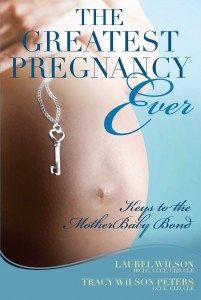
CAPPA linchpins Laurel Wilson and Tracy Wilson Peters are co-authors of a new book, The Greatest Pregnancy Ever, that focuses on the depth, intensity, and value of the MotherBaby bond. As I noted, I listened to Laurel talk about Bridging the Nutrition Gap and to Tracy speak about the “accidental parent.” In both, they addressed the biological wisdom that mothers possess and of the deeply interconnected nature of the maternal relationship.

Laurel reminded us that there is a brain in our gut, essentially. This brain literally tells us how we should be feeling our emotions, based on the nutrition that we’re putting into our bodies. She discussed epigenetics–a term meaning literally “above the gene”—explaining that this is the “translator that ‘reads’ the book of instructions from our genome.” The translator tells the body to turn on or off the genes we’ve inherited from our parents. Epigenetics is essentially the environment–those things in our environment that influence our biology. Laurel pointed out enthusiastically that we want to create an excellent “translator” for our children. She also emphasized repeatedly that one important job of the placenta is to “train” the baby for the environment it will be experiencing. This is why prenatal diet matters, it is helping to prepare the baby to thrive in the environment into which it will be born. So, chronic stress leads to a stressful womb environment, which leads to a baby that is biologically primed to be born into a stressful postnatal environment. Mother’s body primes baby’s body for success in that environment. As I listened to her speak and discuss the things we’ve learned from science about genetics and how our bodies function, I kept thinking: science can do a lot, it can do wonderful things. Mother’s body can do even moreAnd, isn’t that just cool?!

So, what’s going on in the maternal habitat?

One important point Laurel made about prenatal diets was that prenatal diets high in hydrogenated oils predispose mamas to postpartum moods disorders. She said this is because hydrogenated oils essentially “leach” EFA’s out of the mother’s system.

She also noted that mice up to three generations are affected with PCOS by BPA and phthalates (in food packaging. Our food is literally making us sick). These influence change the endocrine system and are connected with reduced sociality and community engagement.

Laurel explained too that no artificial sweeteners are considered safe for pregnant women and that stevia too is linked to epigentic damage. She suggested using honey and molasses as sweeteners if needed.

One tip that I found funny, basic, but so true with regard to choosing healthy foods is to make sure to choose to eat foods that will rot!

In Tracy’s talk she passionately affirmed that we have to eliminate chronic stress from pregnant women’s lives because she is laying an emotional and physical foundation for another person’s life. This matters! Babies are feeling before they are thinking and we are designed to live in the environment we are being born into.

Also remember, babies don’t need to be in nurseries–they need to be with their mothers. This MATTERS!